The music of Giza is a counterpoint between the honking of impatient drivers and the voice of the muezzin. As the call to prayer washed across the Giza Plateau, my ride to the airport came and it was my call to head back home. After all, home is a prayer.
But how can one leave a place when it says goodbye looking like this? Your heart would break a little, too. But then again, what’s a little heartbreak if your heart has not been too well for a while?
The ancient Egyptians believed that when a person died, their heart would be weighed against a feather. It was always a question of whether the heart was heavy or light. As I leave, may the scales find my heart lighter than when I arrived.
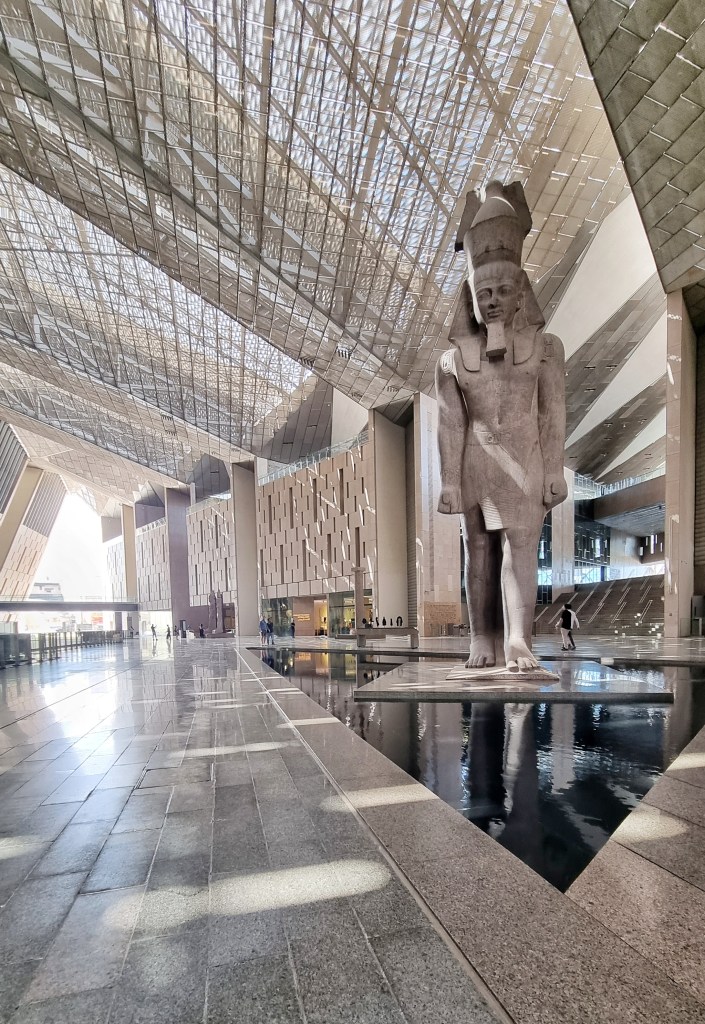
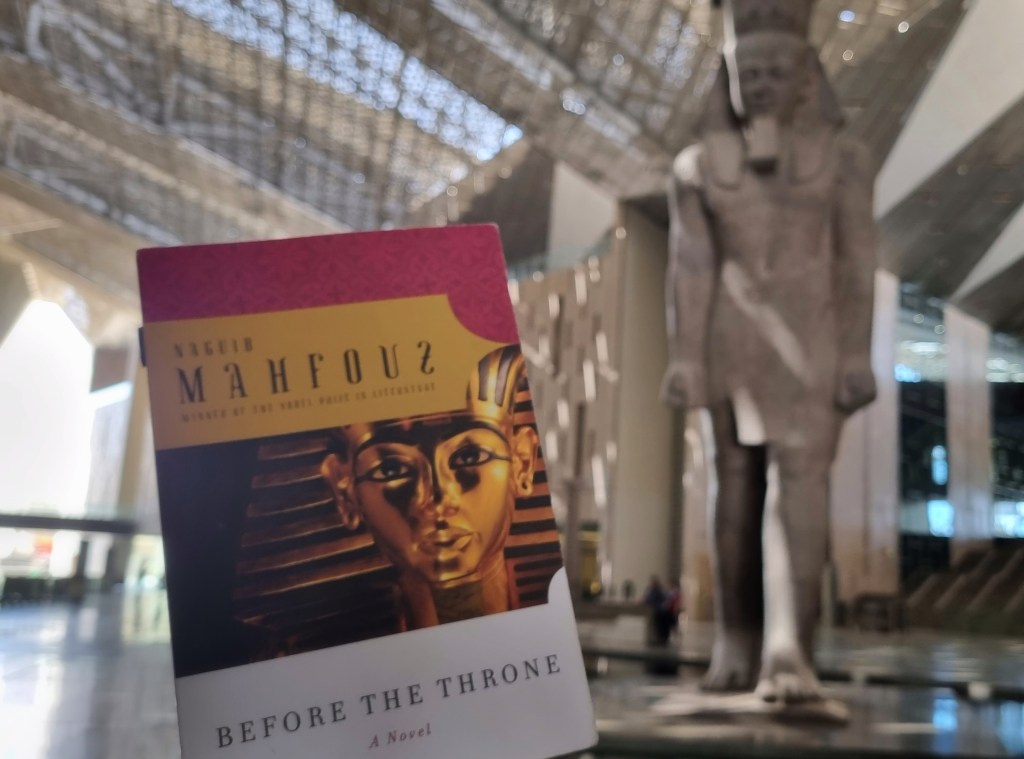
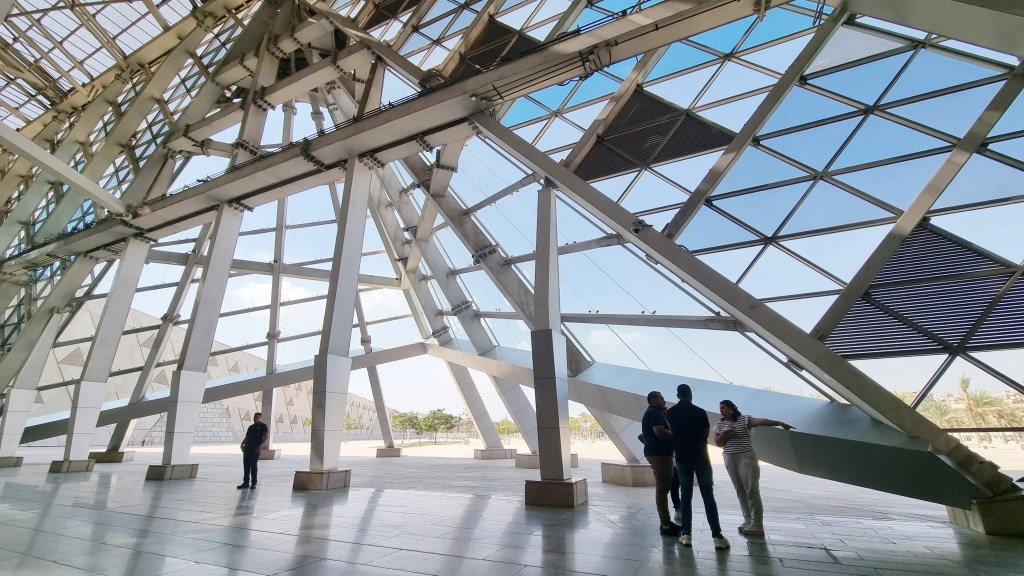
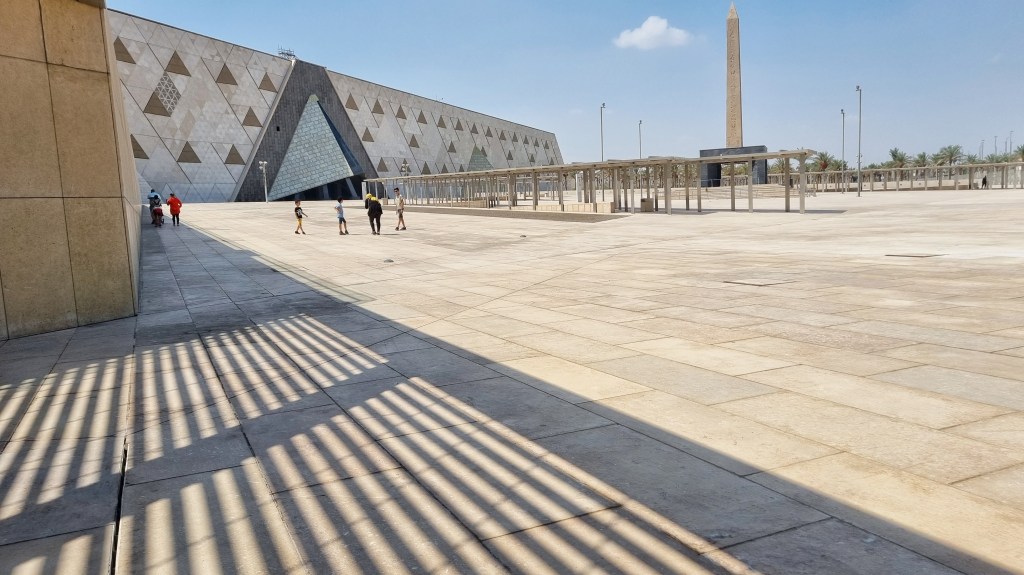
The Louvre, with its iconic glass pyramid, used to be the largest museum in the world at 60,600 square meters. Now it has been surpassed by the Grand Egyptian Museum at 81,000 square meters. It is the largest museum dedicated to a single civilization (the ancient Egyptian civilization), and it boasts of a special panoramic window that opens to… *drumroll* THE Pyramids of Giza!
Not a very subtle way of saying, “Take that, Europe!”
I was told that the story began in the early 2000s when a representative from Egypt attempted to retrieve some of their most valued artifacts from Italy and they were met with a strong refusal. (Figures differ by a number or two, but no more than 30 obelisks have ever been found in Egypt and only 6 remain. The majority of these are in Rome and other capital cities around the world.) The reason for the refusal was that Egypt lacked a proper place to store these treasures. Egypt had to admit that there was truth to this, and the idea of the GEM was born.
While researching for this trip, I wondered why there was never a clear opening date. My curiosity heightened when I arrived in Giza and I could see the GEM through my hotel window looking quite complete and ready! When I asked the guides, they told me it was still closed. My intuition said otherwise, and I went there anyway saying to myself that if it turned out to be closed, at least I could still admire the exterior of the building. When I arrived there, I was greeted by highly trained and professional staff explaining that they were holding a “trial opening” and even though the exhibit halls were still off limits, I was welcome to have a guided tour of the building! The cherry on the top of this whole trip!
My personal take, based on passing insider comments, is that they are hoping for the Rosetta Stone and the Bust of Nefertiti to come home before the grand opening, hence the unclear dates. The odds are low, but I sincerely hope it happens. Egypt lacking a proper place to store these treasures has now become an invalid excuse.
It was comical at first. The sight of the crowd by the entrance told me that I would not be having epiphanies or spiritual experiences.
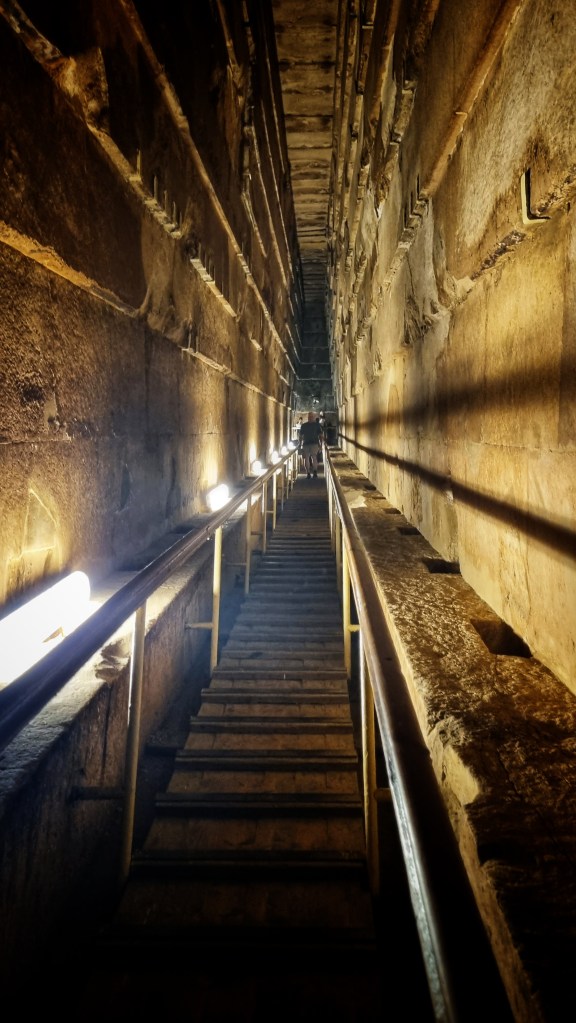
And the guide said that if I wanted to go inside the Great Pyramid, I would have to pay an extra fee, climb a narrow and steep incline that could cause claustrophobia, and see nothing inside.
I paid the fee. Being inside the Great Pyramid is not nothing!
So there I was climbing the steep incline when I noticed figures of a family of three ahead of me. The father muttered, “Kapoya man diay ani! Ta-as pa ni? Mao ra ni makita?”
Bisaya! Inside the Great Pyramid!
Amused and extremely happy to be hearing Binisaya for the first time in over two weeks, I laughed out loud and, even without seeing their faces in the dark, called out to the mom a few feet away from me, “Bisaya diay mo Ma’am? Ako pud! Grabe jud ang Bisaya kay mag-abot bisa’g sulod sa pyramid!” And we laughed our heads off while sweating profusely.
When we finally arrived at the King’s Chamber, instead of having a life-changing experience amidst the rose granite especially chosen for the chamber — the heaviest stones used in the entire pyramid, I acted as photographer for my new friends.
The way out took longer because more people were entering by the time. As I exited back into the glaring sun, the guide was waiting for me. He asked me how it went and I told him I did not regret going in.
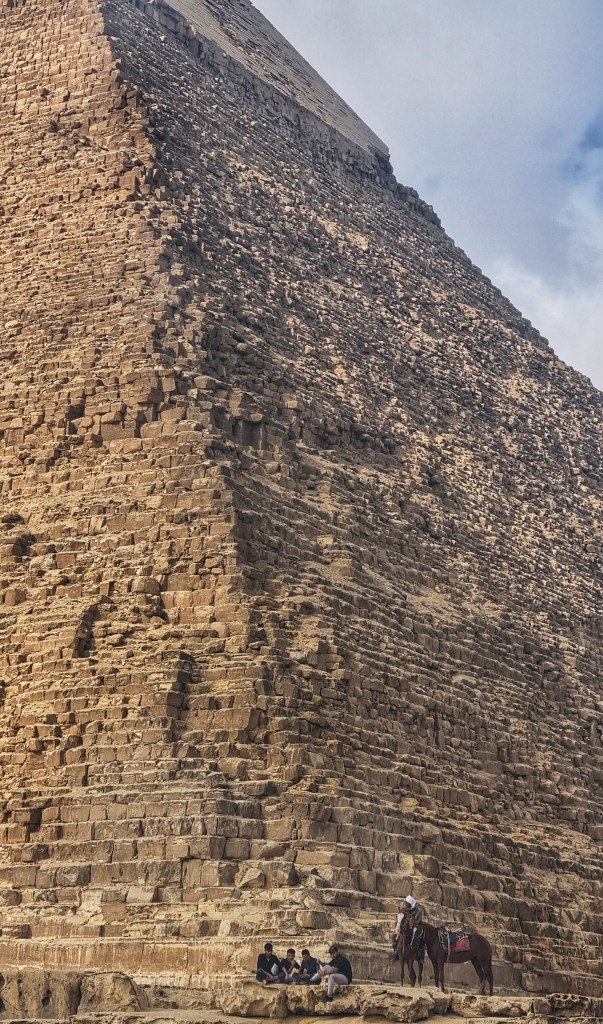
He drew my attention to the limestones of the pyramid. (The smooth outer layer, which was granite from Aswan did not erode through time. They were removed, stolen, and used for other structures by succeeding generations.) He then pointed at several fossils in the limestone. “What does that tell you?” He whispered.
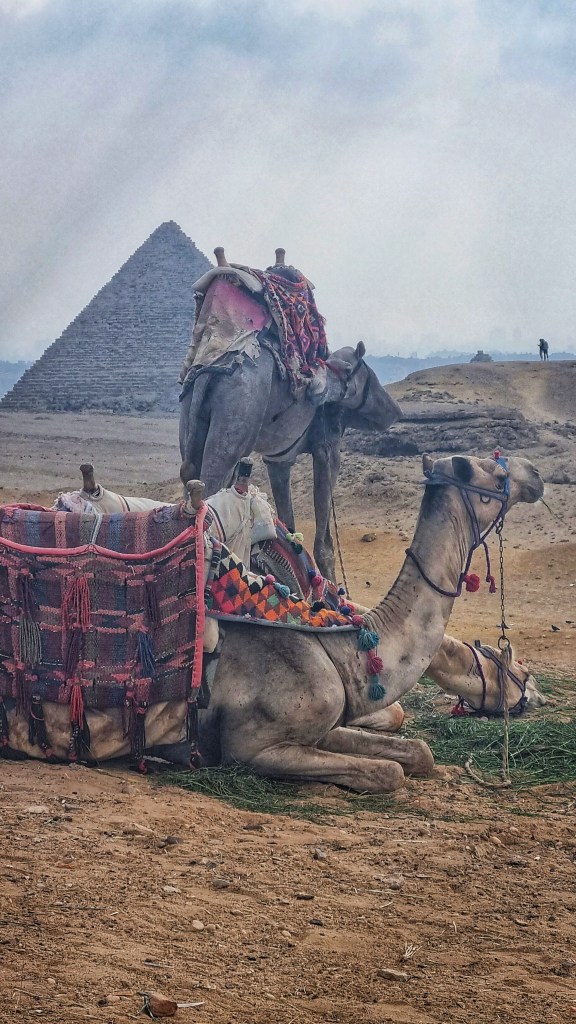
The Pyramid of Khafre. The second largest pyramid in Giza next to the Great Pyramid of Khufu.
All at once a strong emotion took hold of me and I burst into tears. I tried to control myself but I couldn’t. The tears kept flowing. The truth that we don’t really know anything and all we can do is speculate, and the enormity of history was just so overwhelming to me at that moment.
These stones, stacked perfectly on top of each other by who knows who, who knows how, and who knows why… these stones speak to you in a different language. These stones do something to you.
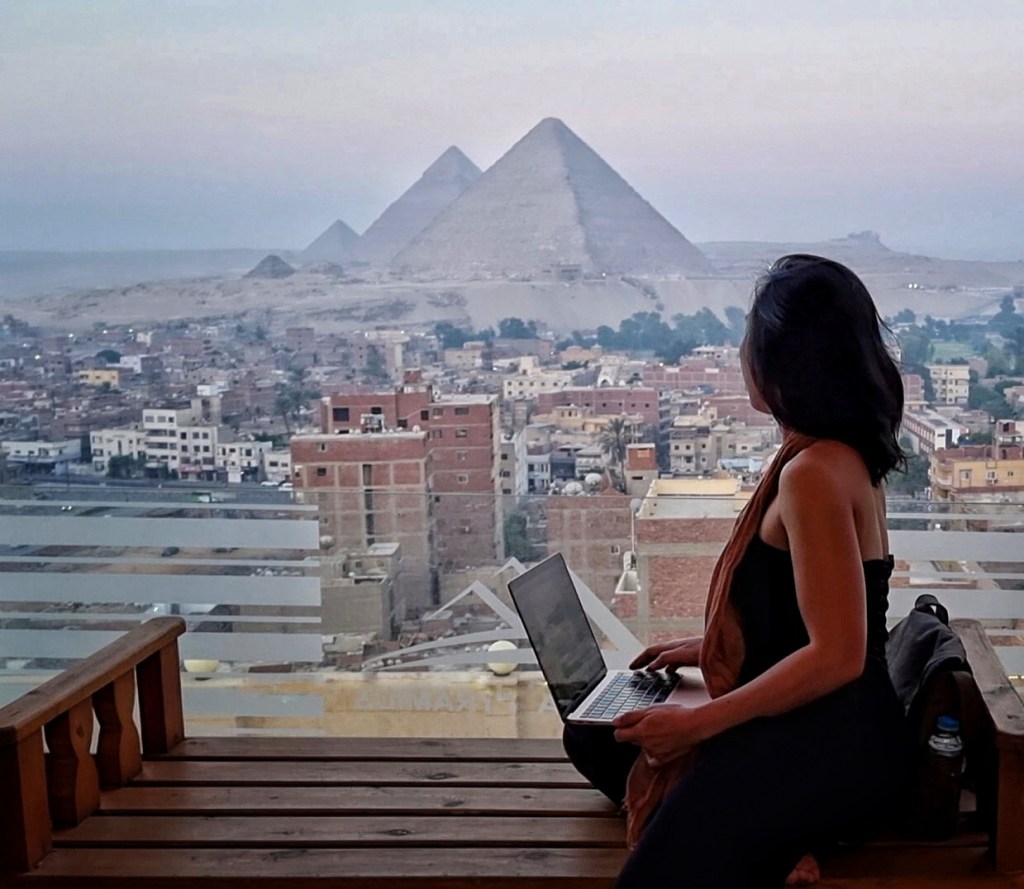
It was surreal to have this view from my hotel bedroom and its roof deck.
Reviewing the photos that the guide took of me during the Saqqara-Memphis-Giza Plateau Tour, I find that at the Great Sphinx of Giza, there is a photo of me grimacing, another one of me rolling my eyes, and another one of me doing a hair flip. Apparently, he kept clicking while I was lightly arguing with him. He was insisting that I do the touristy pose of kissing the Sphinx. I did not, and this set of hilarious photos that will not do justice to the grandeur of the Sphinx is my punishment for not cooperating.
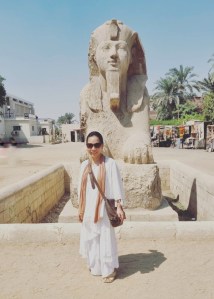
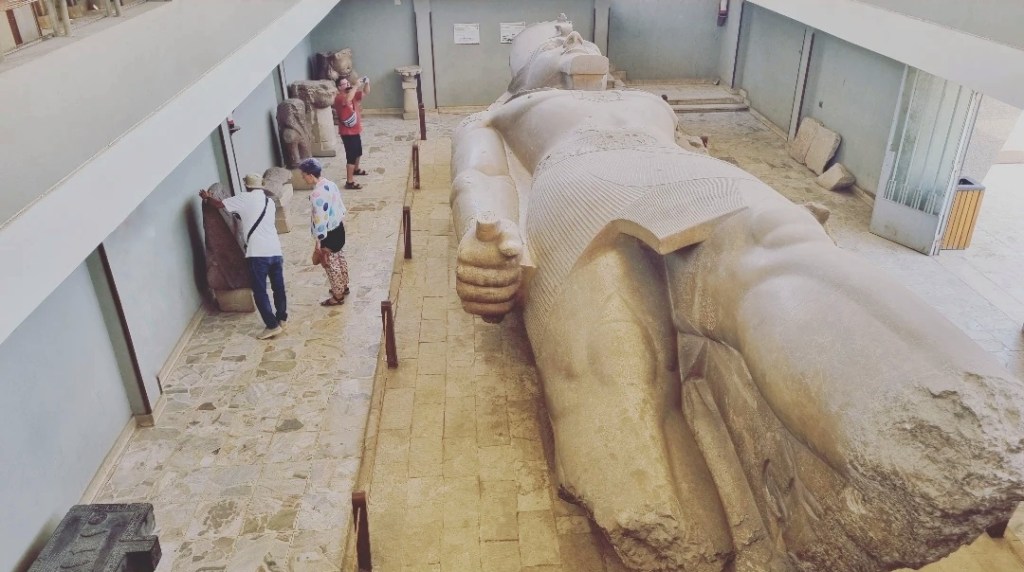
Instead, here is a decent photo of me with the alabaster Sphinx of Memphis. It is so much smaller than the Great Sphinx but it is an elegant and well-preserved remnant of what was once one of the greatest cities of the ancient world. This strategic city at the mouth of the Nile Delta marked the boundary between Upper and Lower Egypt.
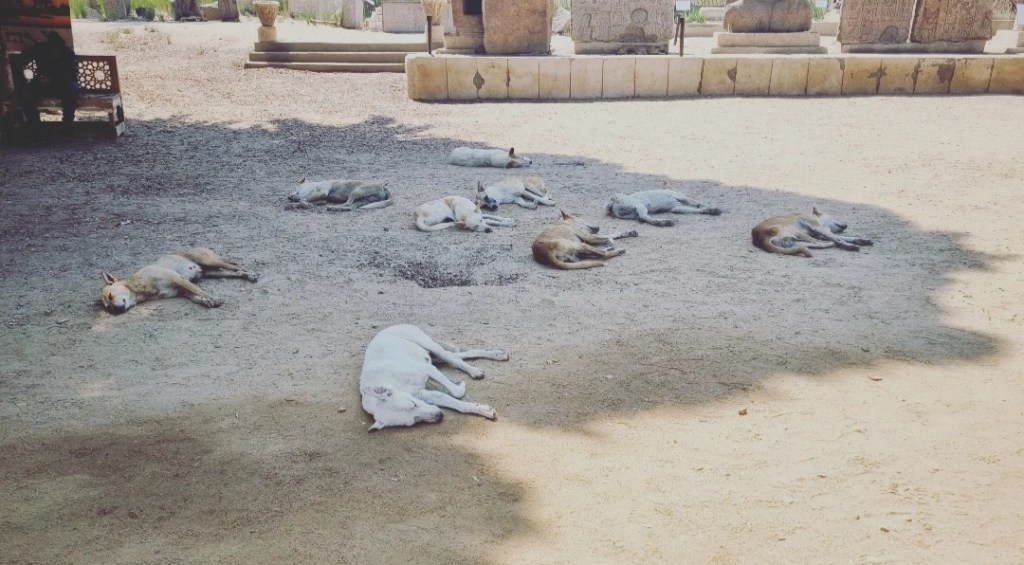
Today, dogs nap lazily under the shade of trees and ruins, seeking shelter from the fierce noonday sun, and very much oblivious to the historical richness of the soil on which they lay.
Memphis was believed to be under the protection of the Egyptian god Ptah, the patron of craftsmen. Nothing much is left of the city save some of its artists’ best crafts.
In many places where nothing of political power and might is left, traces of art remain.
The greatest pharaohs knew that they would not live for hundreds or thousands of years in this world; and therefore needed art and architecture… knowing they wouldn’t… and so that they could.
For now, let’s set aside the magical fact that the crescent moon was directly above the pyramids on my first night in Giza; that the place I booked has a roof deck with a view of the pyramids; and the surreality of the pyramids being right there before my eyes the whole time…
Set that aside and raise your hands if, like me, one of the things you looked forward to at the height of the pandemic was the premiere of Secrets of the Saqqara Tomb on Netflix!
Lugging overweight eyebags with me from a restless night on a bus from Luxor to Giza, I booked a day tour to Saqqara, Memphis, and the Pyramids of Giza.
Saqqara is a treasure trove! Until now they continue to unearth new findings from the site. If not for limited time, I would prefer to spend at least three days exploring Saqqara alone!
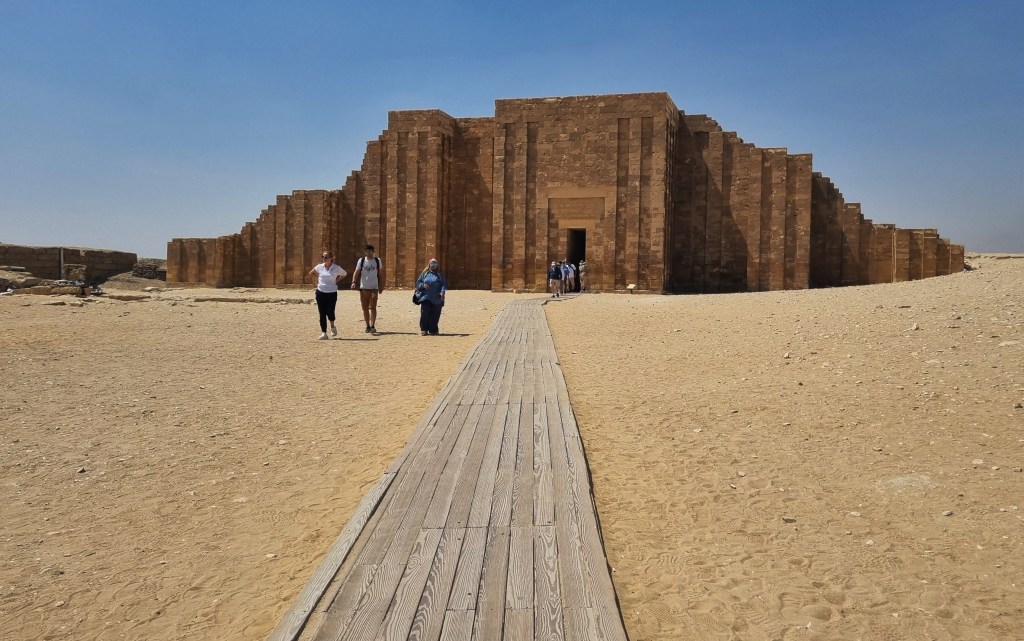
What seems to be a pixelated image of a building is the entrance to the complex, followed by a colonnade made of limestone that pre-dates Doric columns by thousands of years and believed to be its predecessor. The end of the colonnade opens to the Pyramid of Djoser, the oldest pyramid in the world, designed by Djoser’s architect, Imhotep, circa 2630 BCE. By stacking six “mastabas” of diminishing size on top of each other, he created the first step pyramid.
Entombed in Saqqara are kings and noblemen from the first dynasty up to the Ptolemaic period. What differentiates the bas reliefs here from those in the previous tombs I’ve seen are the daily life depictions: There is one of a butcher, a birthing scene, and even a circumcision scene! Details abound! I could hardly believe that I was walking into the documentary that had provided me with so much wonder during the darkest times of the lockdown.
Displaying the souvenir eyebags from the overnight bus from Luxor to Giza.
A podcast episode that I listened to around the same time I watched the documentary pointed out that Cleopatra’s era is closer to the invention of the iPhone than it is to the construction of the pyramids of Giza. It still blows my mind. When dates are mere numbers written on a page, the breadth of history’s timeline cannot be fully grasped until such a comparison is made. The novelists made those epochs come alive for me, but to be here… to be here is entirely something else.
The Pyramid of Djoser. The oldest step pyramid in the world.
Based on the rising and the setting of the sun, the pharaohs built their homes and places of worship on the east bank and their tombs and mortuary temples on the west bank of the Nile. From the Old Kingdom pharaohs who had pyramids constructed without inscriptions inside their tombs, to the New Kingdom pharaohs who preferred elaborately decorated rock-cut tombs in the Valley of the Kings, the same pattern is followed.
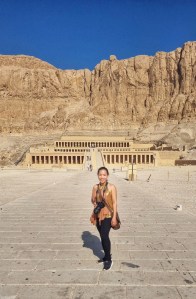
My excursion to the west bank of what once was ancient Thebes began with the grand Mortuary Temple of Hatshepsut that was exploding with sunlight by the time I arrived. At the time it was built, Egyptian architects and artists were believed to be in a phase of reinterpreting the traditional forms of architecture. The temple is said to be an exemplification of this particular period of artistic revolution, and is considered to be one of the architectural wonders of the ancient world.
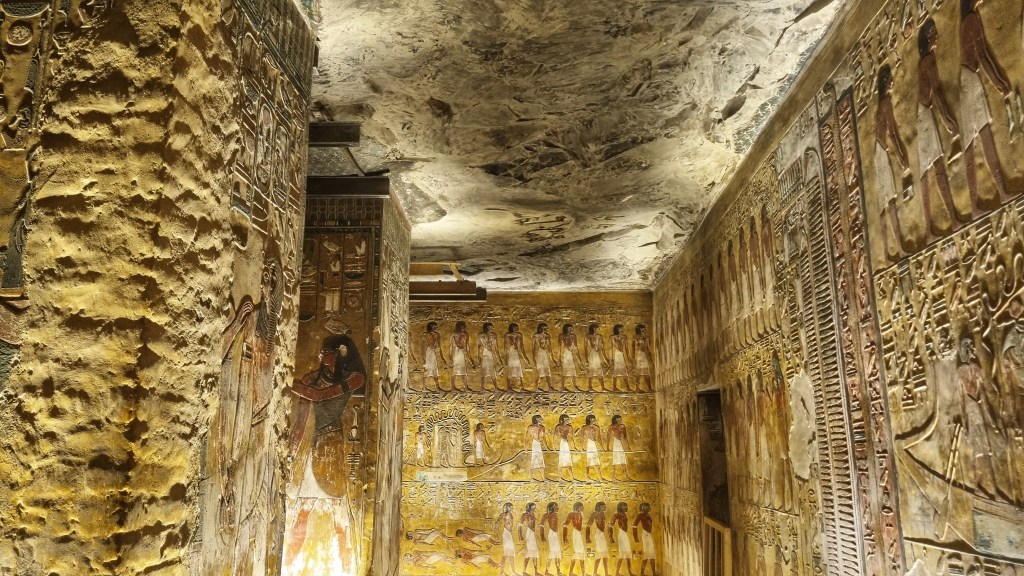
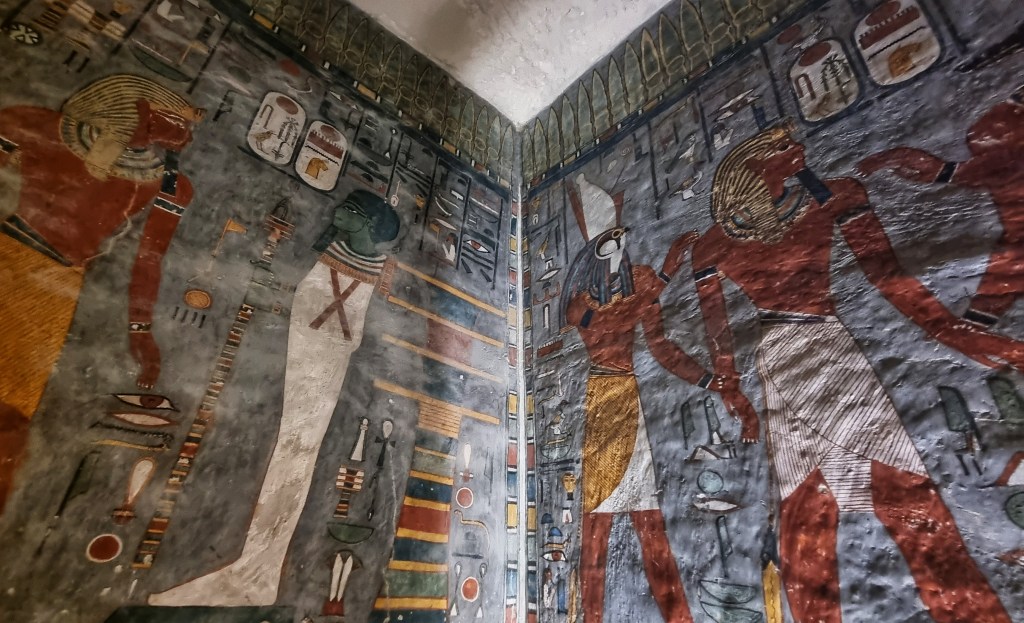
I was already overflowing with thoughts and impressions by the time I proceeded to the shadowy depths of the Valley of the Kings. By the time I finished visiting the tomb of Seti I, one of the most beautiful tombs in the valley; Tutankhamun’s, whose tomb still contains and displays his mummy; and the tombs of the Ramesseses, I was already feeling a sensory overload. But at the same time, hushed. Thoughts of life and death, light and dark. Egypt does this to you so beautifully.
I left Aswan at five in the morning and headed for Luxor. In between these two dominant cities are the two lesser-known cities of Kom Ombo and Edfu. Normally, tourists who want to visit Kom Ombo and Edfu have to book a special tour from either Aswan or Luxor. But here’s a travel cheat: Arrange a private car through your hotel and specify that you wish to stop by the two cities on your way to Luxor. Aside from saving time and getting to explore these sites in your own time without a tour group rushing you, you will pay the same rate as a regular transfer to Luxor and save approximately 100USD for another trip to these cities.
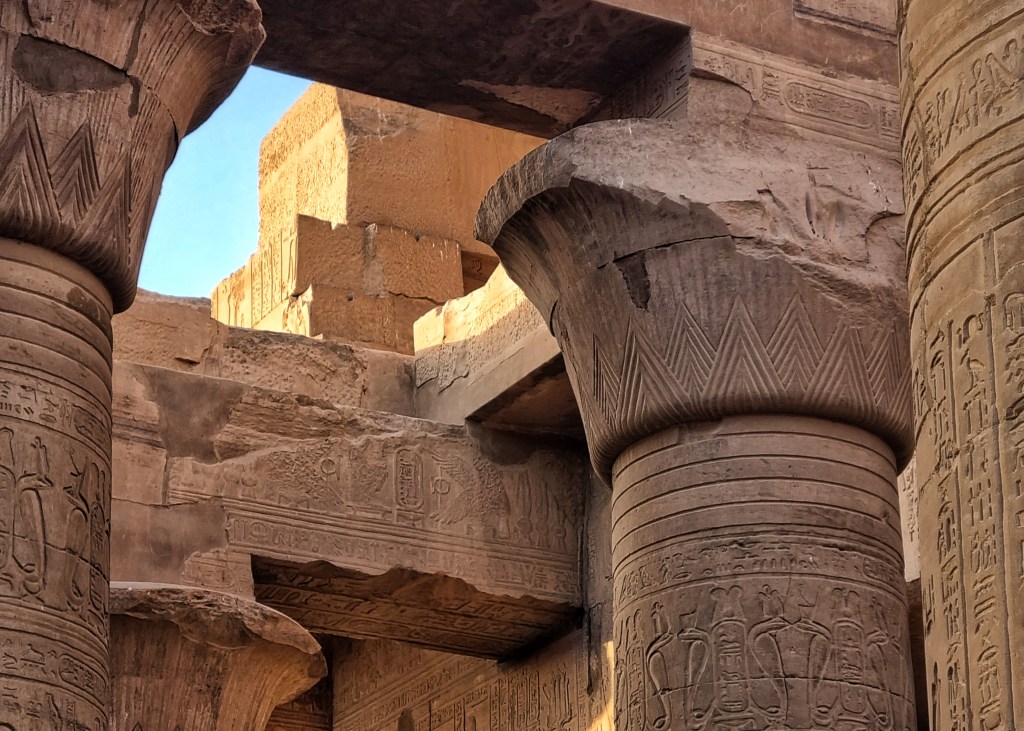
Kom Ombo is unique for many reasons. While it was constructed during the Ptolemaic period, additions were made during the Roman period, making it a double temple with two sets of gods. It does not have a pylon (a monumental gate common to most Egyptian temples), but it features a nilometer (a structure for measuring the Nile’s clarity and water level), and most curious of all, the only set of surgical instruments found in the bas reliefs of ancient Egypt — evidence set in stone of how priests practiced medicine and magic and functioned as doctors.
.
As for Edfu, it is one of the most well-preserved temples in Egypt and its high state of preservation is lure enough. Interestingly, its inscriptions feature the ancient Egyptian creation myth and details of the temple’s construction.
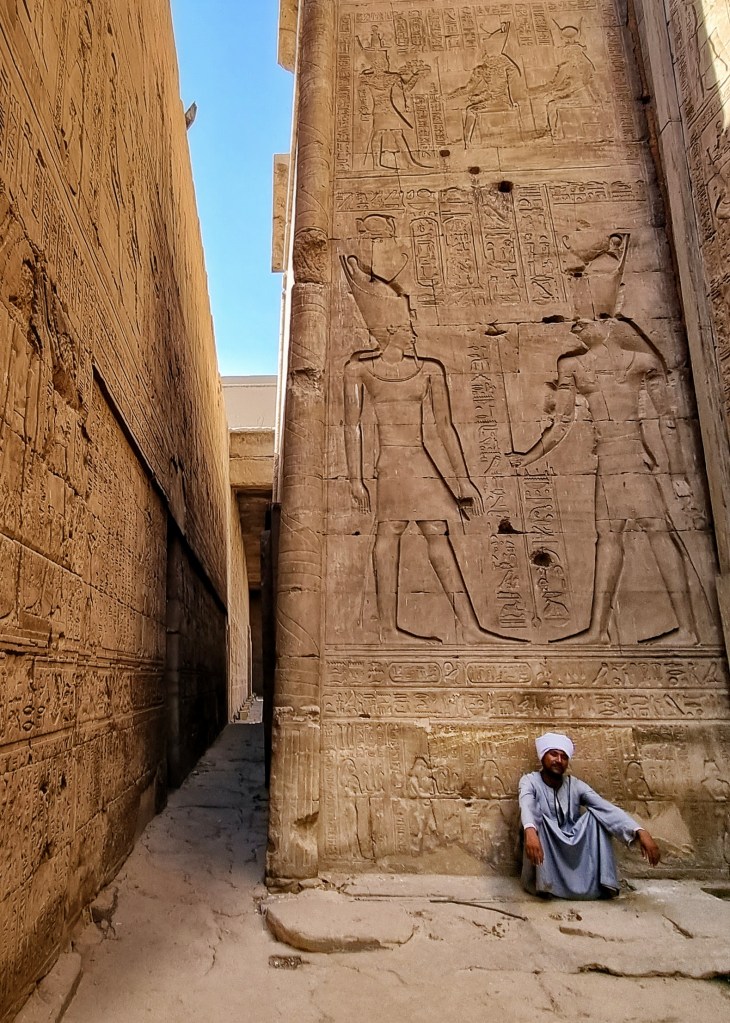
If only I could, I would go to all these ancient sites on sunrise and again on sundown. There is nothing like morning light seeking entry through passageways that only it can beautify. Imagine having a gentle light furnishing columns with a variegated tenderness, and acting as your guide as it paints sections of beams and hieroglyphs golden to call your attention.
The Library of Alexandria was not the first systematically organized library in the world. There was another one that was much older: The great library of Nineveh built circa 668 BCE by Assyrian King Ashurbanipal. Although it shared Alexandria’s fate through destruction by fire, it had another advantage — its clay tablets. Alexandria’s papyrus were reduced to ashes, but Nineveh’s cuneiform clay tablets that exceeded twenty thousand in number were merely baked afresh. Not only did this library preserve the Epic of Gilgamesh for future generations, the Nineveh excavation has become a prime source of information about the Assyrians and the Babylonians whose knowledge and culture they inherited.
We all know Nineveh — this wonder of the ancient world, for a time the largest city in the world — from the Old Testament account of Jonah, but for thousands of years, it could have remained a fictional city for unbelievers until its unearthing. “Without the evidence that these monuments afford, we might almost have doubted that the great city ever existed,” writes Austen Henry Layard.
“Existing ruins show that Nineveh had acquired its greatest extent in the time of the Assyrian kings mentioned in the Old Testament. It was then that Jonah visited it, and that reports of its size and magnificence were carried to the West, and gave rise to those traditions from which the Greeks mainly derived the information they have handed down to us concerning the city.” On a footnote, Layard adds, “With regard to the connection between the ornaments mentioned in the text and those of Greek architecture, it is now impossible to doubt that all that is Ionic in the arts of Greece is derived from the valleys of the Tigris and Euphrates.”
Austen Henry Layard, a name no longer too familiar to our generation, was once a household name in Europe when he discovered Nineveh in the 1840s. Quoting from the introduction, his journals “took Europe by storm and became one of those books that everyone had to read.” It has never gone out of print and is still considered to be among the greatest archaeological books of all time.
Layard being an art historian, a draughtsman, a cuneiformist, and a diplomat, among other things, this book is also so many things at once! The journals have occasional sketches of details from the excavations, he ponders on art, history, religion, civilizations, and takes the reader on his expeditions while painting a vibrant portrait of the time, places, the tribes and people that he encounters on his journeys, and writes vividly of life-threatening experiences. But the best parts are those moments of discovery that lead to spine-tingling wonder! He can be quite poetic, too: “On all sides, as far as the eye could reach, rose the grass-covered heaps marking the site of ancient habitations. The great tide of civilisation had long since ebbed, leaving these scattered wrecks on the solitary shore. Are those waters to flow again, bearing back the seeds of knowledge and of wealth that they have wafted to the West? We wanderers were seeking what they had left behind, as children gather up the coloured shells on the deserted sands.”
Reading this book recalls and intensifies the question that Jason Elliot posed in his book on Iran: “What will future archaeologists think of us when they find what we’ve left for them?”





















 The Book-Butterfly