The transmutation of India into a memory…

And just like that, I am back home, and immediately started teaching a series of online students in the US within the hour I arrived.

When people ask about my trip, I find myself answering that it was eye-opening, very much like reading a satisfying book.

I thought I knew what to expect. I thought I knew what it would be like. I soon learned that what I had in mind was a narrow-minded, stereotype-based, and extremely ignorant idea of India and its people. And to think I read! To think I’ve been lugging books, including all 2000 pages of Paul Scott’s Raj Quartet. How much more if I didn’t?

But the beautiful thing about being a reading traveler is that we do not read or travel for the certainties; and reading and traveling is an intuitive acknowledgement of an ignorance that we treat with a book or a trip.

It was Emerson who wrote, “The mind, once stretched by a new idea, never returns to its original dimensions.” A great book does this. India does this. But only, perhaps, if one pays attention. India has expanded the way I think about places, people, and even design.

“Thank you,” one guide said earnestly, “for paying attention.” After I repeatedly refused his offer to take touristy photos of me, “So you’re not a Tiktok girl, huh? Most of the time people are only interested in having their pictures taken, they don’t even listen anymore.”

We have stereotypes of Indian men and they have stereotypes of us. Fair enough. But would you believe that two of the most cultured, educated, and refined men I have ever interacted with I encountered in a father and son duo in Jaipur? Would you believe that I felt more safe and respected in the company of my guides, drivers, haveli owners, hotel staff, than in one provincial event that I attended back home where a senior and former politician (someone I’m supposed to be able to trust) undressed me with his eyes? But that’s a story for another day. I have way better memories now. 

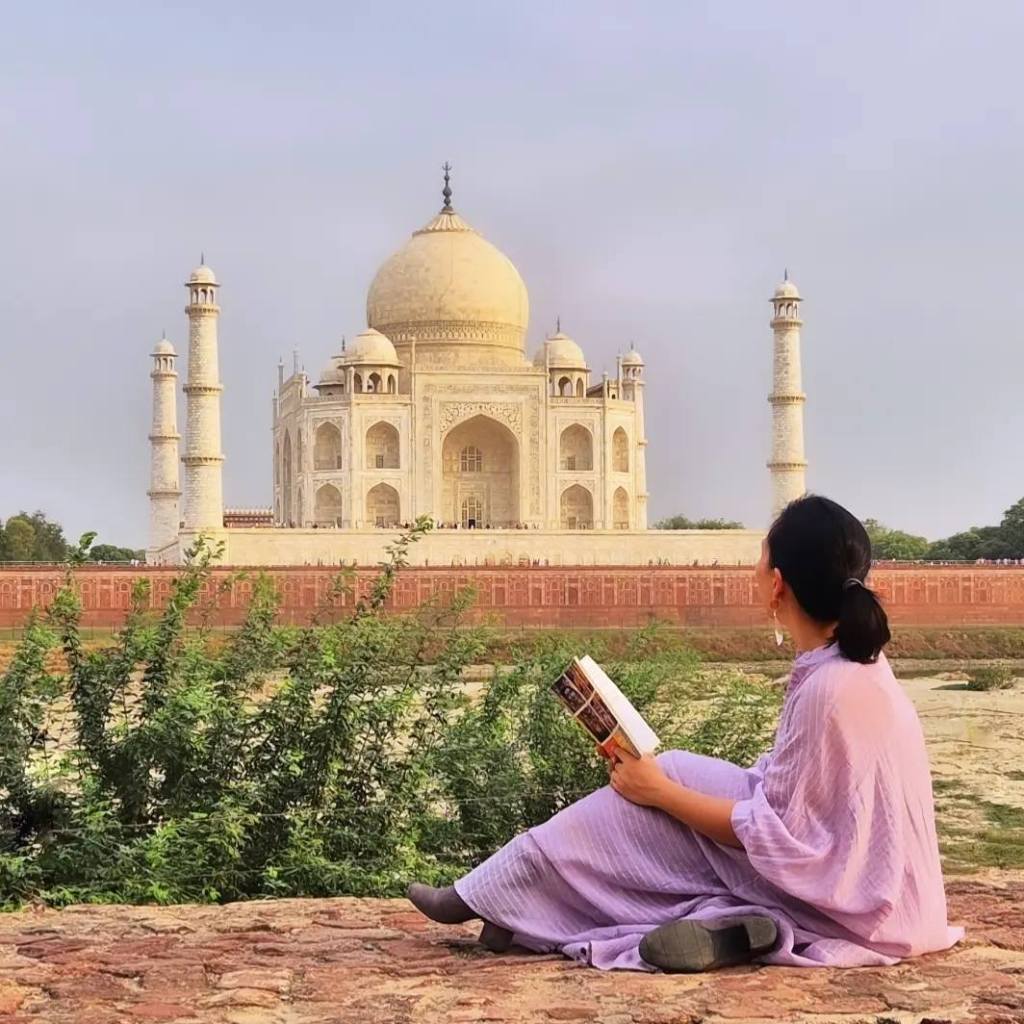
Like this memory of a Mughal garden across the Yamuna River, yet unravaged by the claws of Agra’s over-tourism, where one can spend the entire afternoon reading and contemplating, or gazing at the Taj Mahal. 

Just like that, the transmutation of India into a memory has begun…and what a memory to relish! 

Five Indian Forts

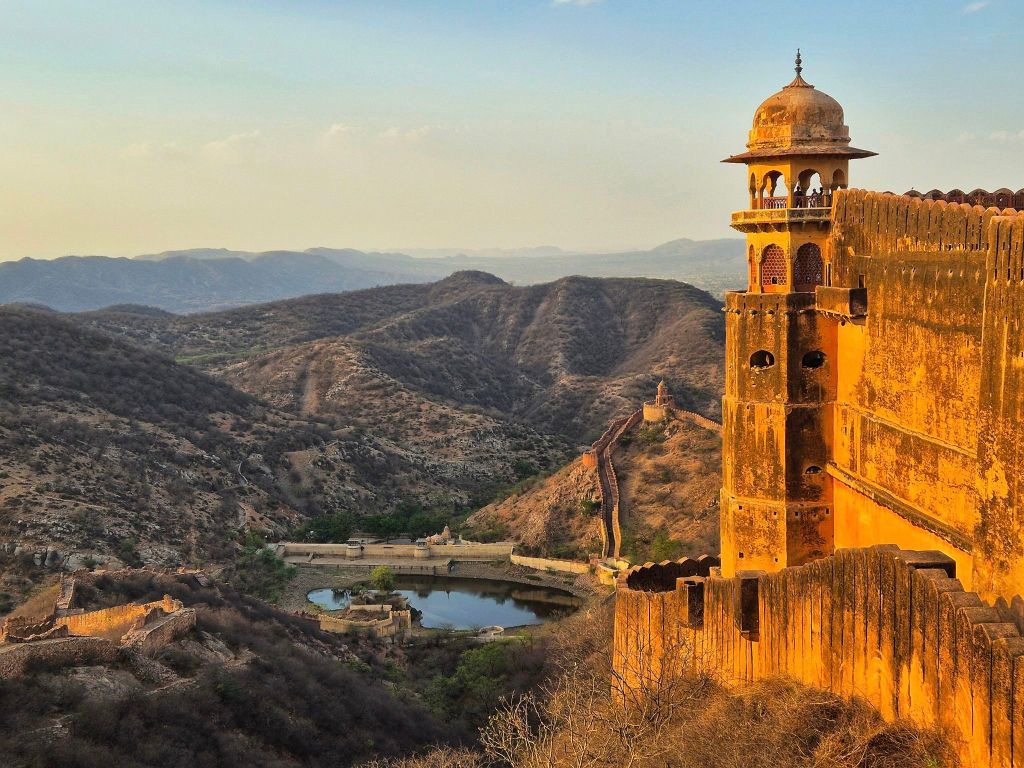
Although the stories about these places are just as intriguing and twisted as Game of Thrones, what may look like promotional shots for season two of House of the Dragon, are photos of five out of approximately a thousand forts in India that are triumphs of strategy and engineering.

Amber Fort: The most picturesque. Jaigarh: Where one will find what used to be the largest cannon in the world, and along with Amber Fort and Nahargarh, has the best views overlooking the city of Jaipur and the sunset. Chittorgarh: The largest living fort in Asia, and where I was congratulated for being named “Mira” and being a musician, as Chittor residents are devotees of the mystic musician, Meera, or Mirabai. Agra Fort: The only Mughal fort among these, commanding a majestic view of the Taj Mahal, standing since 1530 and is still being used by the Indian Army up to this day!


June 2024 – The Taj and Other Mahals

The sky is despondent in Agra. I also saw an Indian vulture perch on the Taj Mahal and camouflage itself against the cornelian and onyx marble inlay. It has made me pensive. Maybe it should. After all, two of the main sites here are mausoleums: The Taj Mahal and the Tomb of I’timād-ud-Daulah, often misnamed “Baby Taj”, despite being the predecessor.

So little is said about the latter, but it literally sets in stone the transition period of Mughal architecture from red sandstone to intricately inlaid marble. Its details made me gasp! And to my surprise, no one else was in sight!

But the Taj, the Taj… when you’ve seen it so many times in friends’ pictures, and in books, you think you already know what it looks like. Nothing prepared me for how much it moved me! Something stirred in me when I came closer, when I felt the inlaid precious stones with my fingers, when I looked through the delicate lattices carved from entire slabs of marble… now I know what Victor Hugo meant when he described architecture as, “the handwriting of the past.”

We all know the story: 20,000 workers, 24 hours a day for 22 years. Its maintenance workers of today are descendants of the original construction workers 17 generations down. All these, to eternalize this handwriting of love… which, of course, Mumtaz never read, or laid eyes on.


Mahal in Filipino means either love or expensive. (Their synonymity is relative and will depend on how much, or what, love cost you. Haha) Mahal, in these parts, means palace. And yet, this is not a palace, but a mausoleum. It is, however, expensive; and is probably the world’s best-known and well-preserved expression of love.

It is interesting how this particular Mahal, the Taj, the crown of all Mahals, is ironically inaccurate in Urdu and accurate in Filipino.