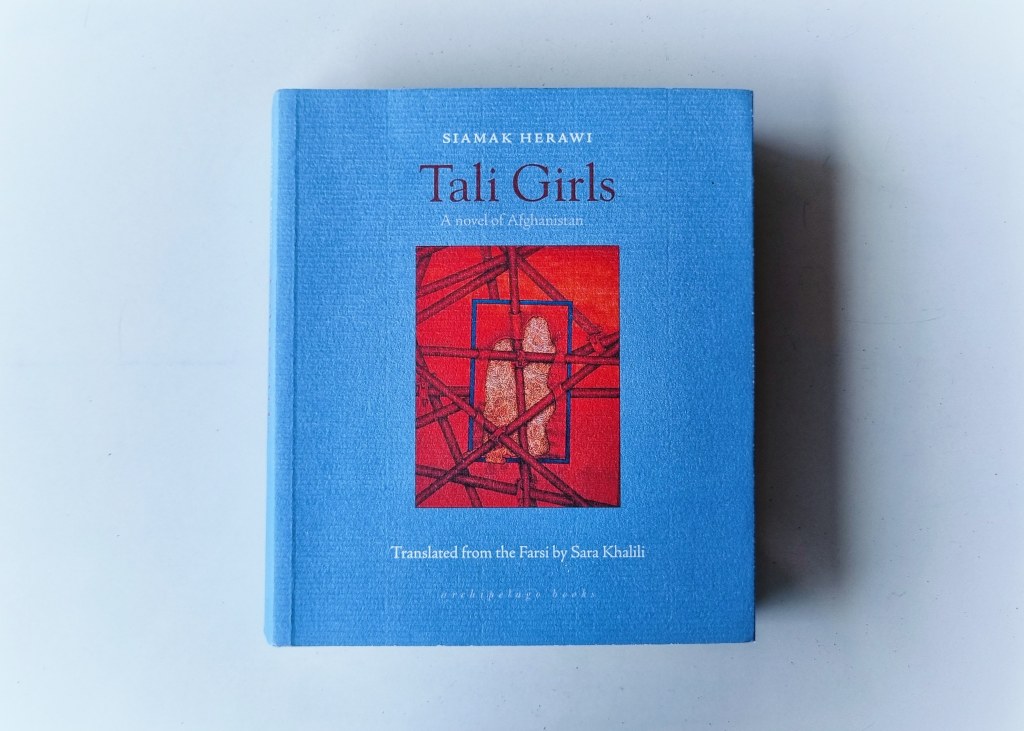
It’s almost absurd to expect happy novels from Afghanistan. I knew I had sorrow coming when I selected this as my third book of 2024. I could have shelved it for later, but how could I resist this blue from Archipelago Books, translated from the Farsi to boot? How often can one find literature translated from the Farsi?
So it was on me when it started to break my heart and made me recoil from the brutality.
Unlike most books about Afghanistan, the characters are not caught in the crossfire of any of the wars that have ravaged Afghanistan for decades.It is set in a picturesque mountain village in the early 2000s when life was simple and young girls were allowed to dream about education and love, and villagers were content with raising livestock and planting their own wheat, beans, and melons. That is until the Talibs discovered the beauty of their nine-year-olds and found their land ideal for the cultivation of poppy to be sold to the “infidels”. Tali Girls is based on true events.
The first person narration shifts from one character to another, effectively and intimately thrusting the reader into a world plucked from its innocence.
I would be reluctant to recommend this for the anguish that it contains, but I am more inclined to listen to one of this novel’s wisest characters:
“‘Remember,’ he says, sitting in his library, ‘the more your eyes open to the world, the more you are likely to suffer. But better that you learn and understand… Read, Kowsar, read to understand the world around you.”
I call it my Fertile Crescent and Silk Route Reading Project and yet there is a glaring dearth of Chinese writers in my literary diet. Maybe because I know that Chinese literature is a sort of Pandora’s box disguised as an ornate lacquer case. One that would release a curse upon the reader. The curse of wanting to read and acquire more.
Unready for another full-blown obsession, this is me prying the lid of that box ever so gently.
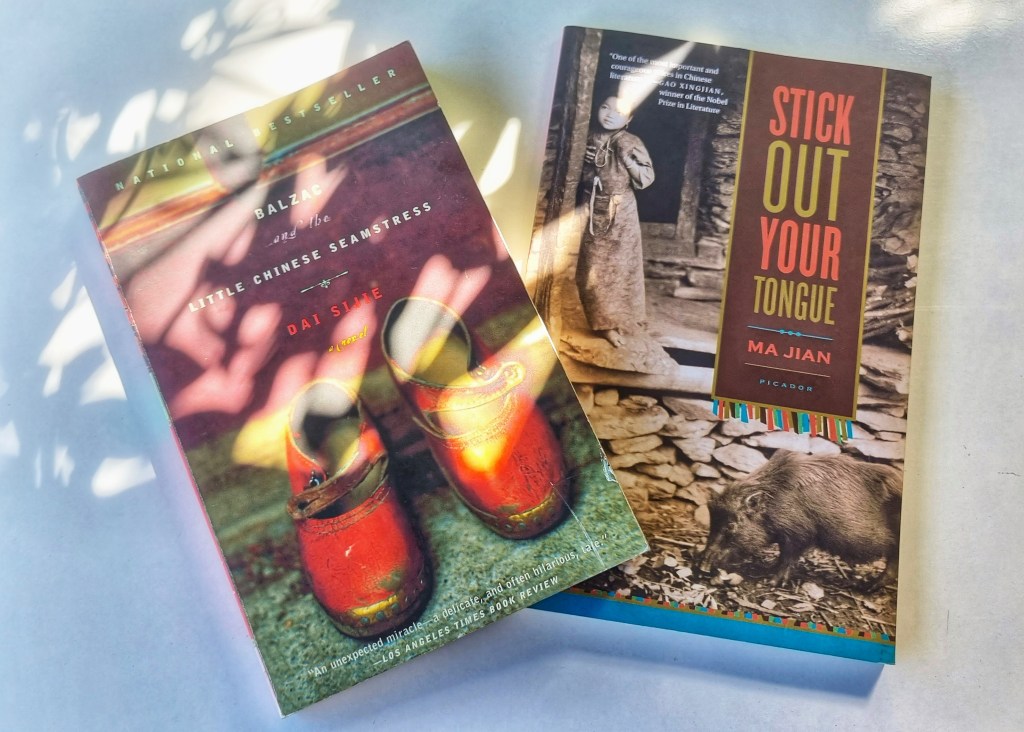
Dai Sijie’s Balzac and the Little Chinese Seamstrees is closer to Chinese fast food and so much easier and more pleasant to swallow than Ma Jian’s Stick Out Your Tongue; and I can only be glad that I read these two in succession so they could balance each other out.
Stick Out Your Tongue is the slimmer volume and yet its morbid stories of sky burials, incest, and disturbing Buddhist initiation rites juxtaposed with Tibet’s harsh landscape shakes one to the core. I cannot even think of recommending this book. But it is the afterword that I find especially striking as it draws attention to the destruction that the Chinese government has wrought in Tibet, or the fact that over a million Tibetans have died due to political persecution or famine — yet another case of a people denied control of their lands and destinies by a powerful bully.
Balzac and the Little Chinese Seamstress, on the other hand, offers more heartwarming and comic imagery as two bourgeois teenage boys navigate their “re-education” in the countryside during China’s Cultural Revolution. They were among the millions of China’s youth who were sent to the rural areas to be re-educated by peasants from the mid-60s to the mid-70s. Their lives take a turn when they meet the little Chinese seamstress, but these lives are truly altered when they unexpectedly encounter French literature at a time when “ignorance is in fashion”. It may not be classified as a literary masterpiece but it is a celebration of the transformative power of literature; and I can’t blame you if this book made you scour bookshops and the internet for a definitive English translation of Romain Rolland’s Jean-Christophe. That’s what it made me do.
Adania Shibli is the queen of stark but poignant and powerful prose. I’d feel pretentious if I tried to say more than necessary.
Having read Minor Detail already, I downloaded these books in response to her unjustly cancelled award ceremony at the Frankfurt Book Fair that was supposed to take place on October 20, 2023. Shibli’s first two works are described as non-political. I disagree. But maybe they are, if one compares them to Minor Detail, her most famous work, which exposes the rape and murder of a Palestinian girl by Israeli soldiers.
In these two books there is no talk of occupation or governments, most characters do not have names, locations are vague, they recount ordinary lives; but I don’t think it takes a genius to notice that the dismal lives depicted in these earlier works are consequences of systemic trauma and oppression.
For books such as these, it is not the reader’s duty to offer literary analysis, or to say whether they liked it or not. It is the reader’s duty to empathize. Because today, even empathy is hard to come by.
“I felt as if I had come not home, not at all home, but to a place which had some strange meaning, which I must try to dig up. I felt this about the whole Black Sea, but most at Trebizond.“
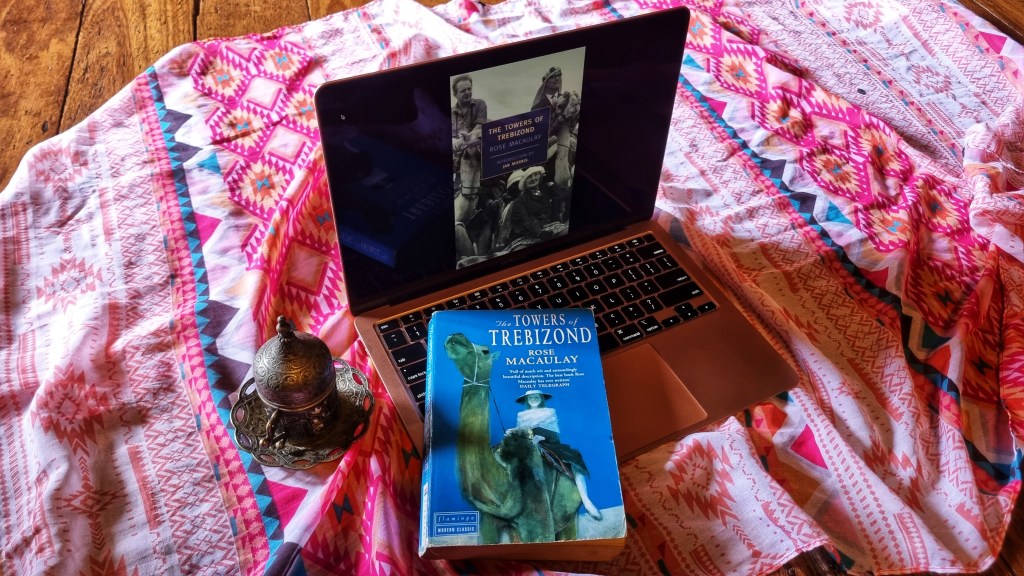
Feeling like I was not ready to tackle heavier themes than those in real life, I took this “adventure” novel out for a spin. It took me a while to warm up to it because it also took me a while to realize that this is not exactly a regular travelogue.
I see it as something else disguising as an adventure book. For beyond the mirage of exciting escapades in Turkey and the Middle East, it is a humorous critique on religion — different kinds. That being said, it is not a travelogue for the easily-offended. After all, Laurie is an agnostic narrator who admits to having a difficult relationship with religion, but sometimes has an outsider’s advantage of seeing through the hypocrisies and bigotries of the seemingly religious.
As our adventuress and her unlikely companions go deeper into the direction of historic Trebizond (Trabzon in modern Turkey) on camel-back, the ruminations on morality also deepen.
“I do not remember when I was in Cambridge we talked about such things… though we talked about everything else, such as religion, love, people, psycho-analysis, books, art, places, cooking, cars, food, sex, and all that. And still we talk about all these other things, but not about being good or bad.”
The ending confirms my hunch that while there is a literal Trebizond of which she writes, there is also another figurative Trebizond to which she refers. In a way, I am glad that this book did not turn out as I expected, and that it turned out to be so much more.
While I debate whether to order the NYRB edition solely for the Jan Morris introduction, I leave you with this poignant and relevant passage about Jerusalem:
“But what one feels in Jerusalem, where it all began, is the awful sadness and frustration and tragedy, and the great hope and triumph that sprang from it and still spring, in spite of everything we can do to spoil them with our cruelty and mean stupidity, and all the dark unchristened deeds of christened men. Jerusalem is a cruel, haunted city, like all ancient cities; it stands out because it crucified Christ; and because it was Christ we remember it with horror, but it also crucified thousands of other people, and wherever Rome (or indeed anyone else) ruled, these ghastly deaths and torturings were enjoyed by all, that is, by all except the victims and those who loved them, and it is these, the crucifixions and the flayings and the burnings and the tearing to pieces and the floggings and the blindings and the throwing to the wild beasts, all the horrors of great pain that people thought out and enjoyed, which make history a dark pit full of serpents and terror, and out of this pit we were all dug, our roots are deep in it, and still it goes on… And out of this ghastliness of cruelty and pain in Jerusalem that we call Good Friday there sprang this Church that we have, and it inherited all that cruelty, which went on fighting against the love and goodness which it had inherited too, and they are still fighting, but sometimes it is a losing battle for love and goodness…”
“I saw with my own eyes the end of a world… opened my eyes to the cruelty of the world. Isn’t that the point from which to date my break with childhood?”
It was not a reading slump. My readings simply could not veer away from articles on the Israel-Hamas war. Since October 7, reading for leisure felt so much like what Gideon Lasco would call “an embarrassment of privilege”.
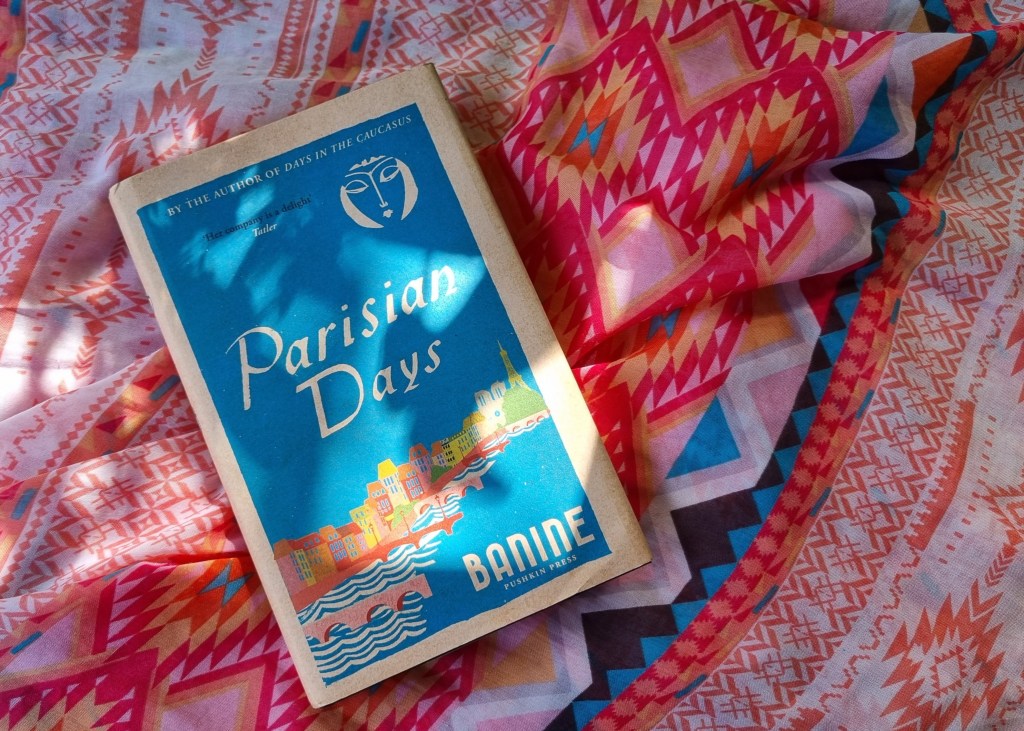
But upon arriving from another short trip to the capital, a two-month late parcel containing Pushkin Press books that I ordered for Women in Translation Month greeted me. And because I am a strong believer in the seemingly late but apt arrival of books in our lives, I couldn’t resist picking up Banine.
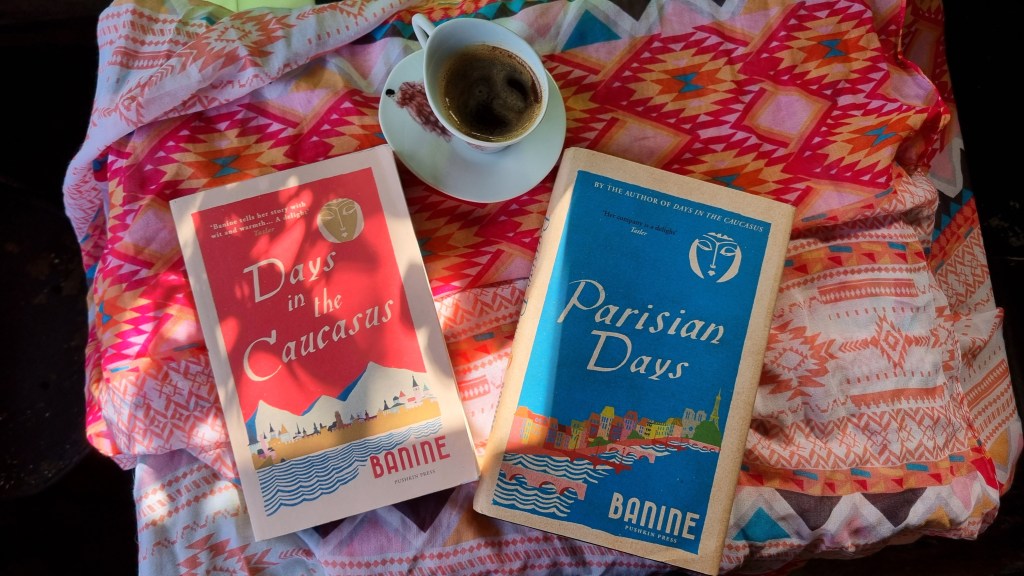
Although set over a century ago and published in 1946, Days in the Caucasus is not far removed from current events; freedom for women meant gaining precedence over the veil, climate change was already felt by our perceptive narrator, and it even offers a glimpse of the long-standing conflict between Azerbaijan and Armenia that made headlines again last month. As readers, we have also learned by now that a coming-of-age story is an unceasing current event.
But oh, to have Banine as a narrator is such a whiff of fresh air! There is already a Tolstoyan flavor in the first line of Days in the Caucasus when she opens with, “We all know families that are poor but ‘respectable’. Mine, in contrast, was extremely rich but not ‘respectable’ at all.” And thus begins a witty narration of an extraordinary place, an extraordinary time, and an extraordinary life.
Banine, born at the turn of the 20th century into a family of oil magnates in Baku when Azerbaijan was still part of the Russian Empire. That information alone heralds upheavals of every kind, yet she colors this turbulent part of life and history with an irresistible charm.
This heiress who lost her home, her freedom, and fortune when the Bolsheviks came into power had a special relationship with nature (“…they did not play dead with me; they replied in a simple language, sufficient for those who knew how to hear…”), loved playing the piano (“I was fortunate to have a consolation that I turned to with greater frequency — my piano …only the piano found favor with me…”), loved to read but also acknowledged its limits (“…those who claim that reading is a consolation for everything cannot feel very deeply — a powerful emotion leaves no spare mental capacity; it takes over, hypnotizes you, stops you thinking of anything else…”).
Parisian Days chronicles her subsequent life in Paris as an adult and an émigré. In it we see her humor and astute observations aging like fine wine. It makes one realize that these are some of the shoulders on which the Annie Ernaux-es of today have stood in order to write fearlessly about society and a woman’s intimate thoughts.
Banine is a lovely companion of a narrator who, whilst making light of her tragedies, makes us recognize our privilege of experiencing the loss of home and freedom only through the books and stories of others.
“In this atmosphere, everyone enjoyed every freedom as long as it didn’t impinge on the freedom of others.And isn’t that the definition of freedom?”
“It revealed to me an eternal truth: as long as the flight of a bird, the soughing of leaves, the wash of the sea bring joy to your senses and mind, life remains a precious gift.”
“Life was waiting for me. I had to go and meet it despite the burden of my reluctant heart.”
The music of Giza is a counterpoint between the honking of impatient drivers and the voice of the muezzin. As the call to prayer washed across the Giza Plateau, my ride to the airport came and it was my call to head back home. After all, home is a prayer.
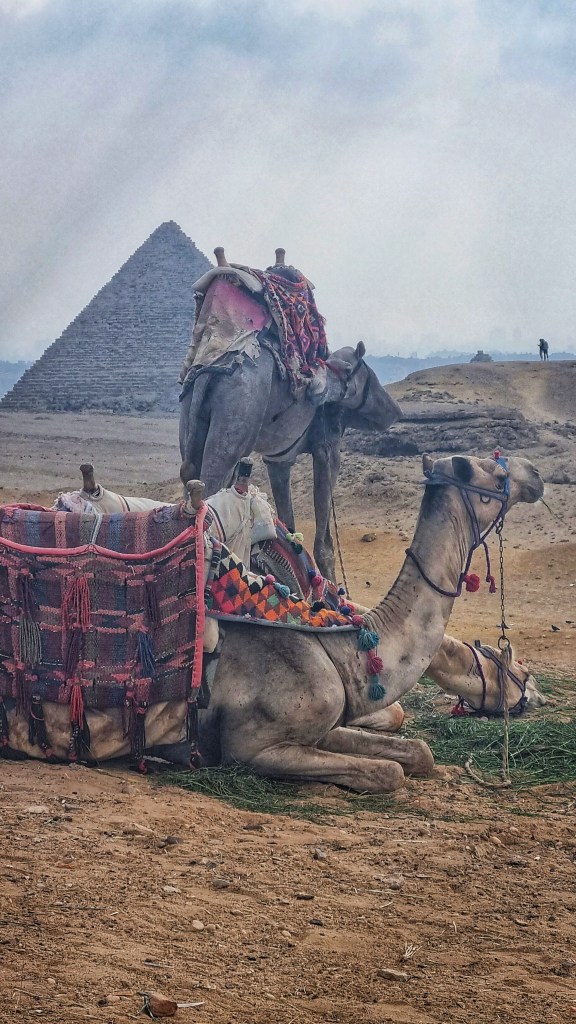
But how can one leave a place when it says goodbye looking like this? Your heart would break a little, too. But then again, what’s a little heartbreak if your heart has not been too well for a while?
The ancient Egyptians believed that when a person died, their heart would be weighed against a feather. It was always a question of whether the heart was heavy or light. As I leave, may the scales find my heart lighter than when I arrived.
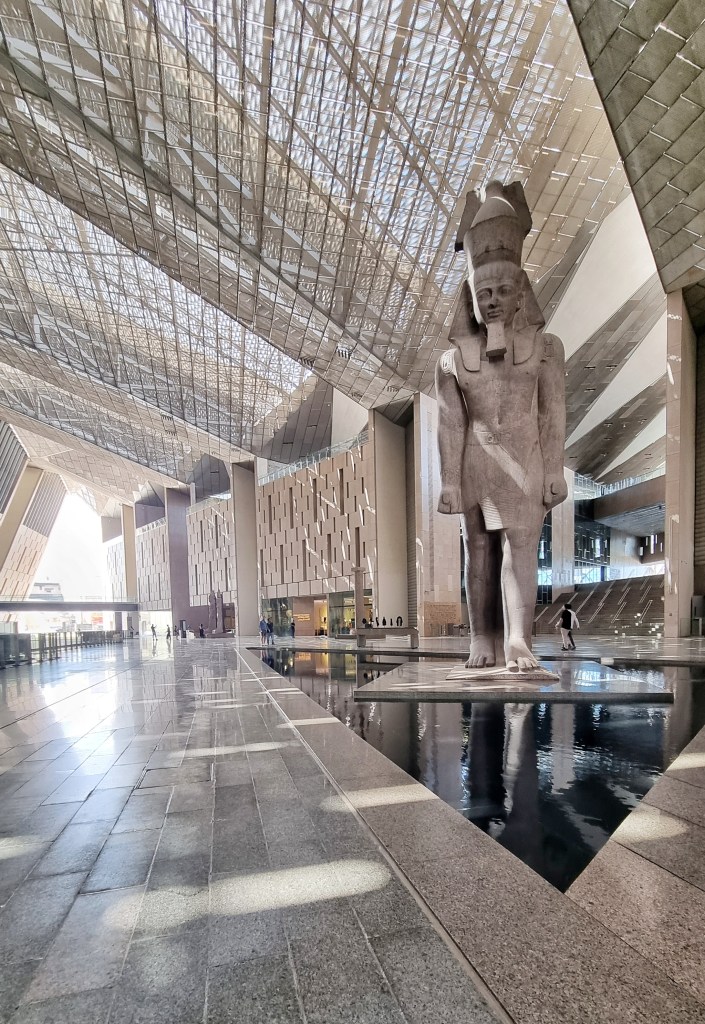
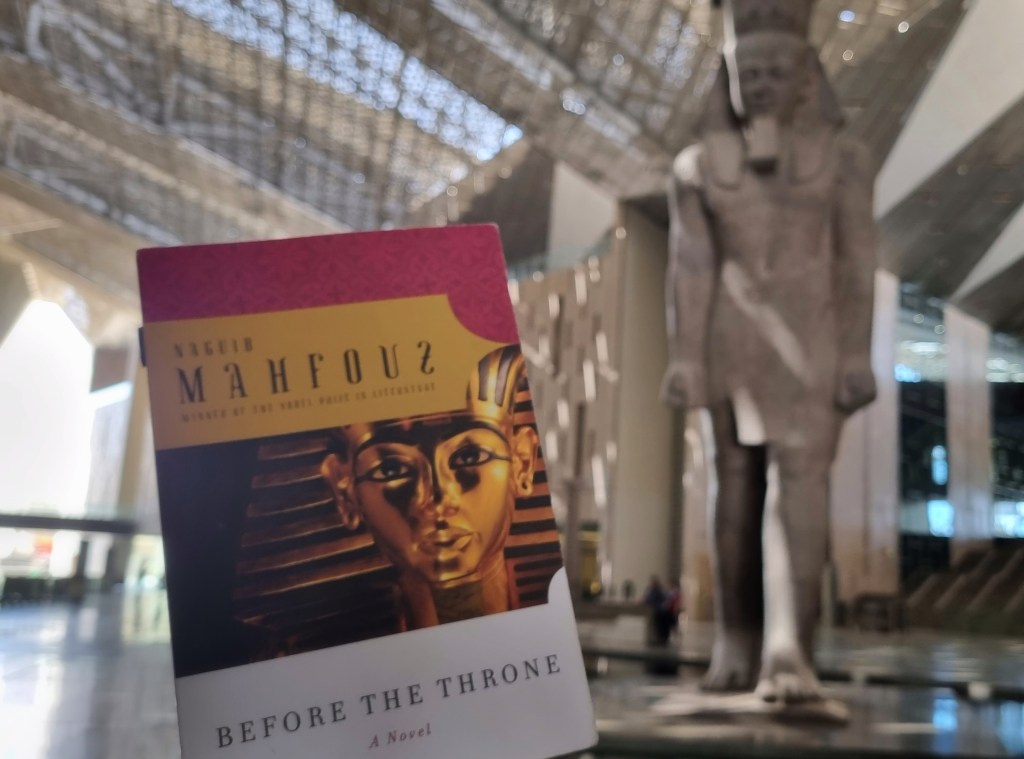
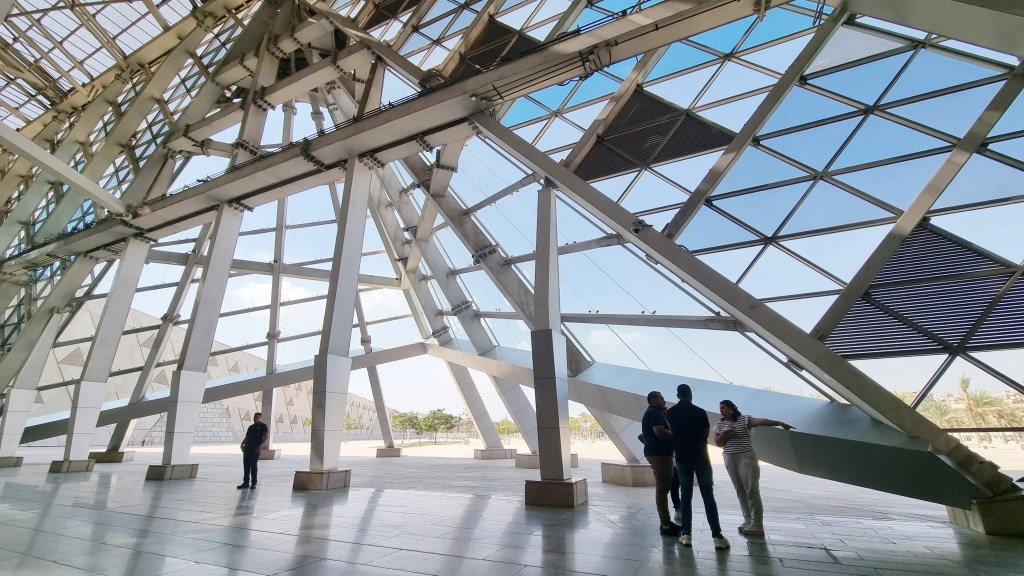
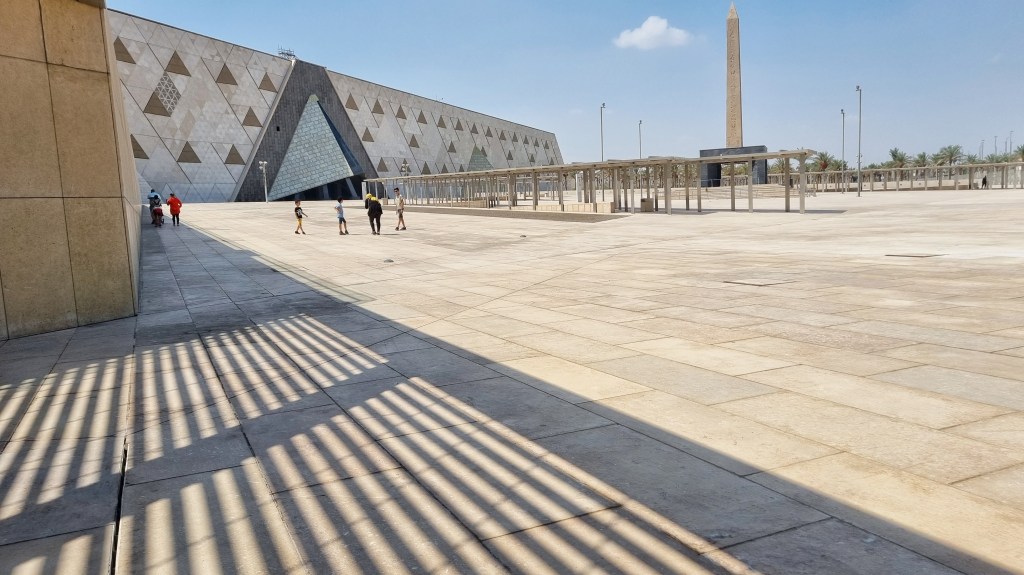
The Louvre, with its iconic glass pyramid, used to be the largest museum in the world at 60,600 square meters. Now it has been surpassed by the Grand Egyptian Museum at 81,000 square meters. It is the largest museum dedicated to a single civilization (the ancient Egyptian civilization), and it boasts of a special panoramic window that opens to… *drumroll* THE Pyramids of Giza!
Not a very subtle way of saying, “Take that, Europe!”
I was told that the story began in the early 2000s when a representative from Egypt attempted to retrieve some of their most valued artifacts from Italy and they were met with a strong refusal. (Figures differ by a number or two, but no more than 30 obelisks have ever been found in Egypt and only 6 remain. The majority of these are in Rome and other capital cities around the world.) The reason for the refusal was that Egypt lacked a proper place to store these treasures. Egypt had to admit that there was truth to this, and the idea of the GEM was born.
While researching for this trip, I wondered why there was never a clear opening date. My curiosity heightened when I arrived in Giza and I could see the GEM through my hotel window looking quite complete and ready! When I asked the guides, they told me it was still closed. My intuition said otherwise, and I went there anyway saying to myself that if it turned out to be closed, at least I could still admire the exterior of the building. When I arrived there, I was greeted by highly trained and professional staff explaining that they were holding a “trial opening” and even though the exhibit halls were still off limits, I was welcome to have a guided tour of the building! The cherry on the top of this whole trip!
My personal take, based on passing insider comments, is that they are hoping for the Rosetta Stone and the Bust of Nefertiti to come home before the grand opening, hence the unclear dates. The odds are low, but I sincerely hope it happens. Egypt lacking a proper place to store these treasures has now become an invalid excuse.
It was comical at first. The sight of the crowd by the entrance told me that I would not be having epiphanies or spiritual experiences.
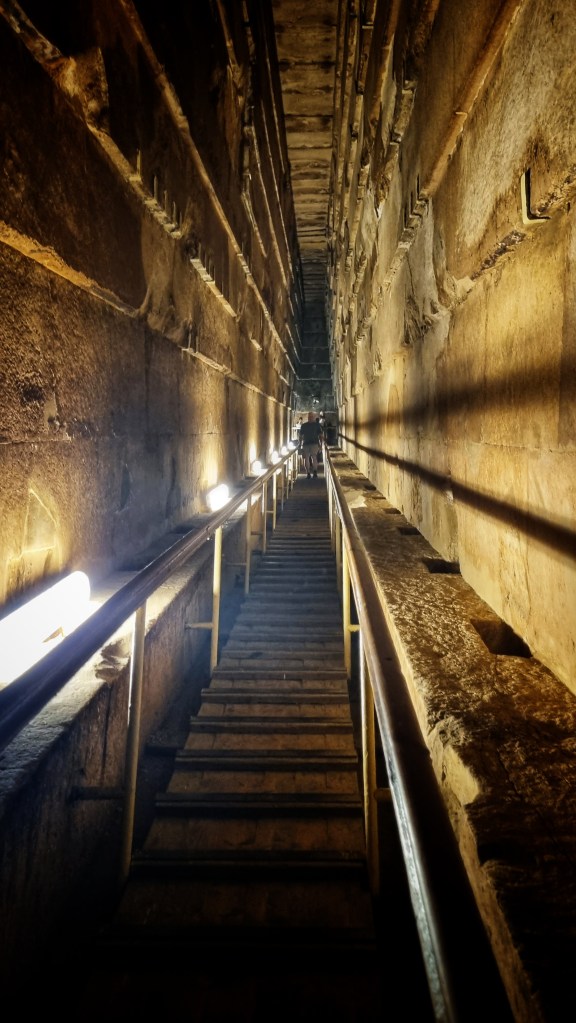
And the guide said that if I wanted to go inside the Great Pyramid, I would have to pay an extra fee, climb a narrow and steep incline that could cause claustrophobia, and see nothing inside.
I paid the fee. Being inside the Great Pyramid is not nothing!
So there I was climbing the steep incline when I noticed figures of a family of three ahead of me. The father muttered, “Kapoya man diay ani! Ta-as pa ni? Mao ra ni makita?”
Bisaya! Inside the Great Pyramid!
Amused and extremely happy to be hearing Binisaya for the first time in over two weeks, I laughed out loud and, even without seeing their faces in the dark, called out to the mom a few feet away from me, “Bisaya diay mo Ma’am? Ako pud! Grabe jud ang Bisaya kay mag-abot bisa’g sulod sa pyramid!” And we laughed our heads off while sweating profusely.
When we finally arrived at the King’s Chamber, instead of having a life-changing experience amidst the rose granite especially chosen for the chamber — the heaviest stones used in the entire pyramid, I acted as photographer for my new friends.
The way out took longer because more people were entering by the time. As I exited back into the glaring sun, the guide was waiting for me. He asked me how it went and I told him I did not regret going in.
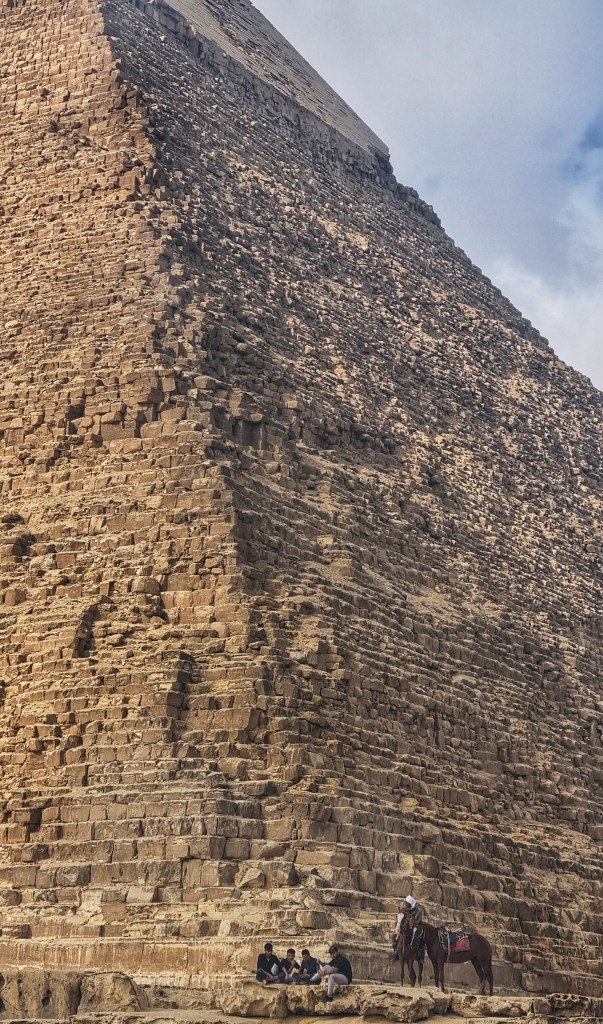
He drew my attention to the limestones of the pyramid. (The smooth outer layer, which was granite from Aswan did not erode through time. They were removed, stolen, and used for other structures by succeeding generations.) He then pointed at several fossils in the limestone. “What does that tell you?” He whispered.
The Pyramid of Khafre. The second largest pyramid in Giza next to the Great Pyramid of Khufu.
All at once a strong emotion took hold of me and I burst into tears. I tried to control myself but I couldn’t. The tears kept flowing. The truth that we don’t really know anything and all we can do is speculate, and the enormity of history was just so overwhelming to me at that moment.
These stones, stacked perfectly on top of each other by who knows who, who knows how, and who knows why… these stones speak to you in a different language. These stones do something to you.
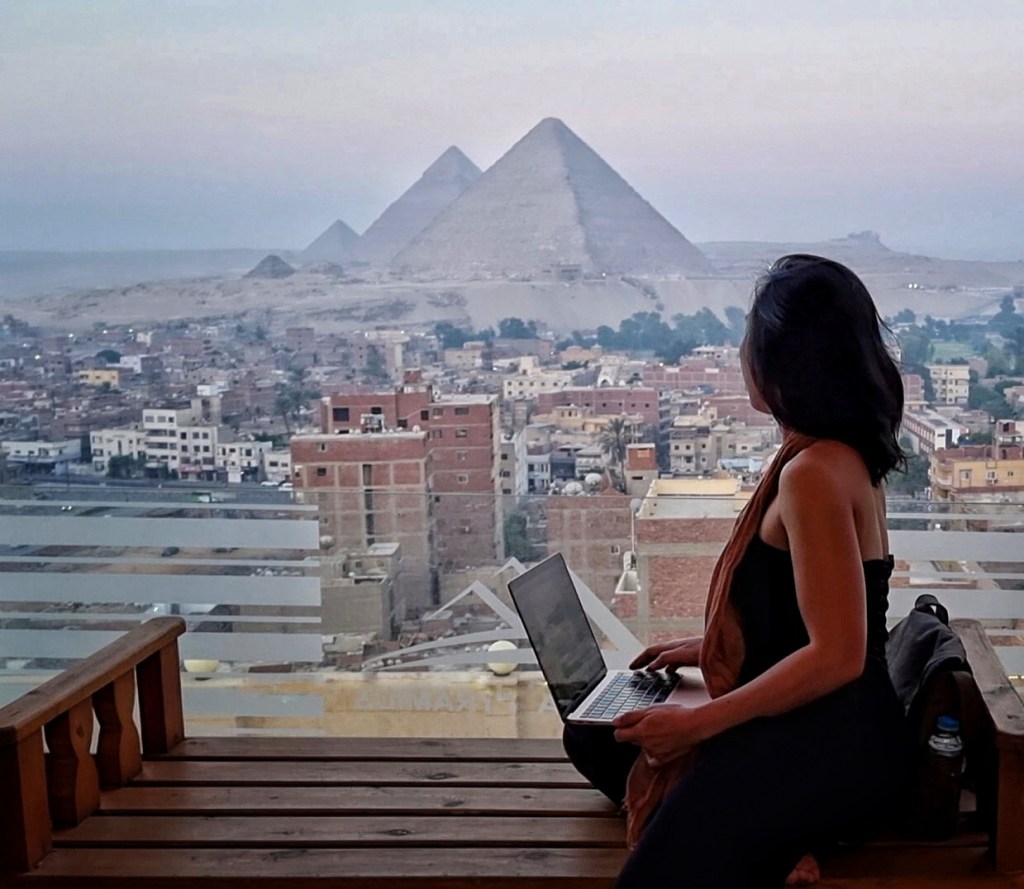
It was surreal to have this view from my hotel bedroom and its roof deck.
Reviewing the photos that the guide took of me during the Saqqara-Memphis-Giza Plateau Tour, I find that at the Great Sphinx of Giza, there is a photo of me grimacing, another one of me rolling my eyes, and another one of me doing a hair flip. Apparently, he kept clicking while I was lightly arguing with him. He was insisting that I do the touristy pose of kissing the Sphinx. I did not, and this set of hilarious photos that will not do justice to the grandeur of the Sphinx is my punishment for not cooperating.
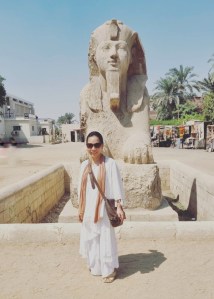
Instead, here is a decent photo of me with the alabaster Sphinx of Memphis. It is so much smaller than the Great Sphinx but it is an elegant and well-preserved remnant of what was once one of the greatest cities of the ancient world. This strategic city at the mouth of the Nile Delta marked the boundary between Upper and Lower Egypt.
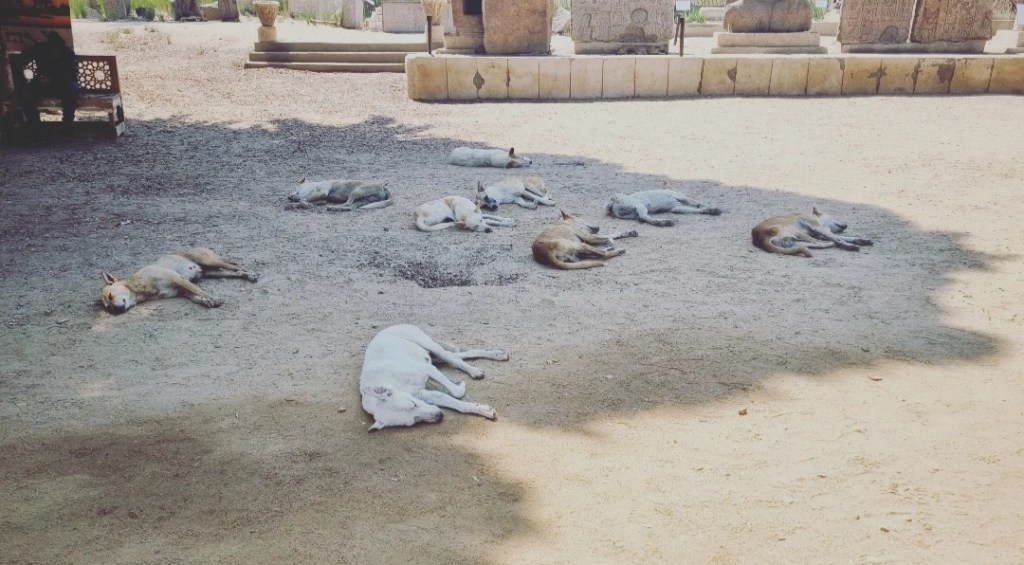
Today, dogs nap lazily under the shade of trees and ruins, seeking shelter from the fierce noonday sun, and very much oblivious to the historical richness of the soil on which they lay.
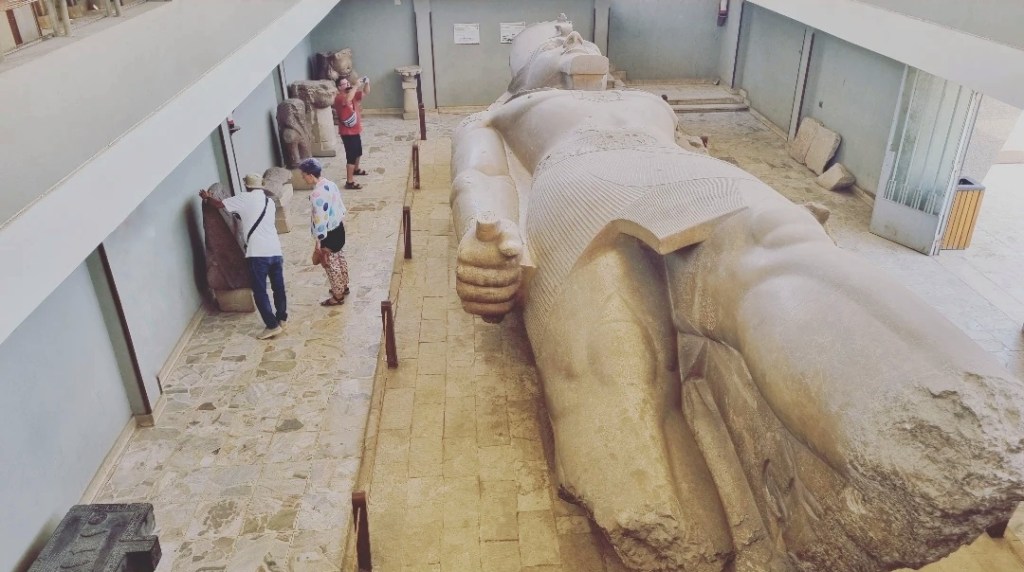
Memphis was believed to be under the protection of the Egyptian god Ptah, the patron of craftsmen. Nothing much is left of the city save some of its artists’ best crafts.
In many places where nothing of political power and might is left, traces of art remain.
The greatest pharaohs knew that they would not live for hundreds or thousands of years in this world; and therefore needed art and architecture… knowing they wouldn’t… and so that they could.
For now, let’s set aside the magical fact that the crescent moon was directly above the pyramids on my first night in Giza; that the place I booked has a roof deck with a view of the pyramids; and the surreality of the pyramids being right there before my eyes the whole time…
Set that aside and raise your hands if, like me, one of the things you looked forward to at the height of the pandemic was the premiere of Secrets of the Saqqara Tomb on Netflix!
Lugging overweight eyebags with me from a restless night on a bus from Luxor to Giza, I booked a day tour to Saqqara, Memphis, and the Pyramids of Giza.
Saqqara is a treasure trove! Until now they continue to unearth new findings from the site. If not for limited time, I would prefer to spend at least three days exploring Saqqara alone!
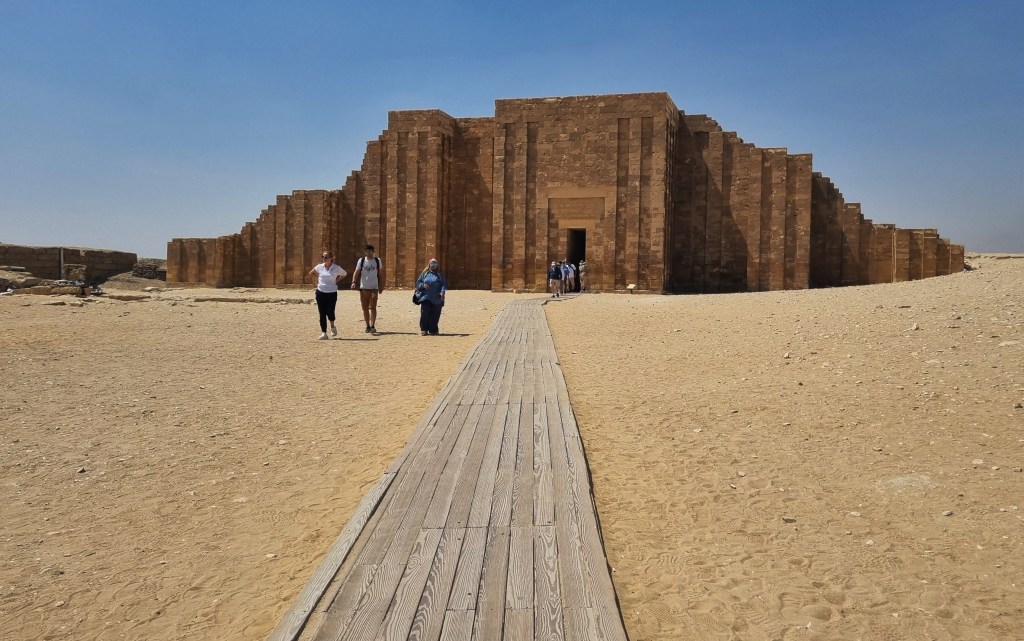
What seems to be a pixelated image of a building is the entrance to the complex, followed by a colonnade made of limestone that pre-dates Doric columns by thousands of years and believed to be its predecessor. The end of the colonnade opens to the Pyramid of Djoser, the oldest pyramid in the world, designed by Djoser’s architect, Imhotep, circa 2630 BCE. By stacking six “mastabas” of diminishing size on top of each other, he created the first step pyramid.
Entombed in Saqqara are kings and noblemen from the first dynasty up to the Ptolemaic period. What differentiates the bas reliefs here from those in the previous tombs I’ve seen are the daily life depictions: There is one of a butcher, a birthing scene, and even a circumcision scene! Details abound! I could hardly believe that I was walking into the documentary that had provided me with so much wonder during the darkest times of the lockdown.
Displaying the souvenir eyebags from the overnight bus from Luxor to Giza.
A podcast episode that I listened to around the same time I watched the documentary pointed out that Cleopatra’s era is closer to the invention of the iPhone than it is to the construction of the pyramids of Giza. It still blows my mind. When dates are mere numbers written on a page, the breadth of history’s timeline cannot be fully grasped until such a comparison is made. The novelists made those epochs come alive for me, but to be here… to be here is entirely something else.
The Pyramid of Djoser. The oldest step pyramid in the world.














 The Book-Butterfly