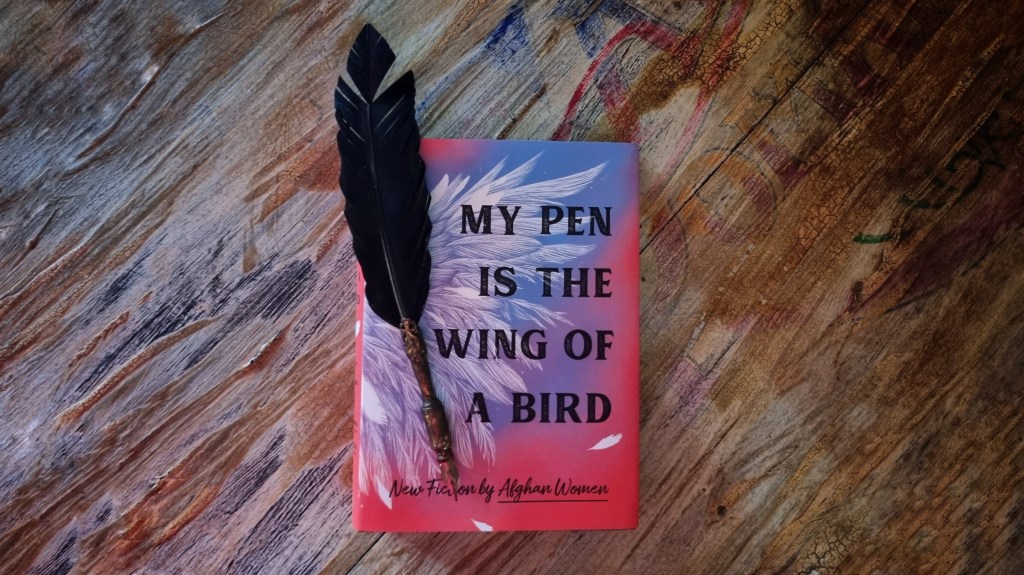
My Pen is the Wing of a Bird: New Fiction by Afghan Women

This book came into my possession on International Women’s Day. That day I was asked to speak at an event in celebration of Woman; and as one who never goes out without a book (in case of emergency), I slipped this in my bag on the way out. I was early at the venue so I took this out and flipped the title page. It read:

“My pen is the wing of a bird; it will tell you those thoughts we are not allowed to think, those dreams we are not allowed to dream.”

Batool Haidari, Untold Author, International Women’s Day 2021

The line was written on exactly the same day three years earlier. That’s when I knew I brought the right book with me.

The first open call inviting Afghan women to submit short fiction came in 2019. The creation of this anthology and the translation of the pieces from Afghanistan’s two principal languages, Dari and Pashto, pressed on through more than just power outages and internet service interruptions, but also a global pandemic lockdown and the Taliban takeover in 2021. The book that now sits on my shelf is a triumph.

As anyone might have guessed, there is little happiness here. But it makes us see that there is humanity, kindness, and so much more to Afghanistan’s stories than just war. As in any short story collection, some stories have more literary merit than others, but every single one deserves our attention if we wish to educate ourselves and see a more thorough picture of Afghanistan and the world we live in — especially when their humanitarian crisis continues even as the world’s attention is no longer on them.

“My pen is the wing of a bird; it will tell you those thoughts we are not allowed to think, those dreams we are not allowed to dream.”

This line made me realize the wide gulf between literature by women from places of conflict and the first world. In literature from the first world, this would refer to careless and obsessive romantic affairs, and the women who write about these things are lauded for their rawness and honesty. In literature from marginalized communities, the thoughts they are not allowed to think and the dreams they are not allowed to dream are education, work, the freedom to do the right thing, and the freedom to live. A dose of the latter is always a healthy reality check on the disparity present even within women’s literature.
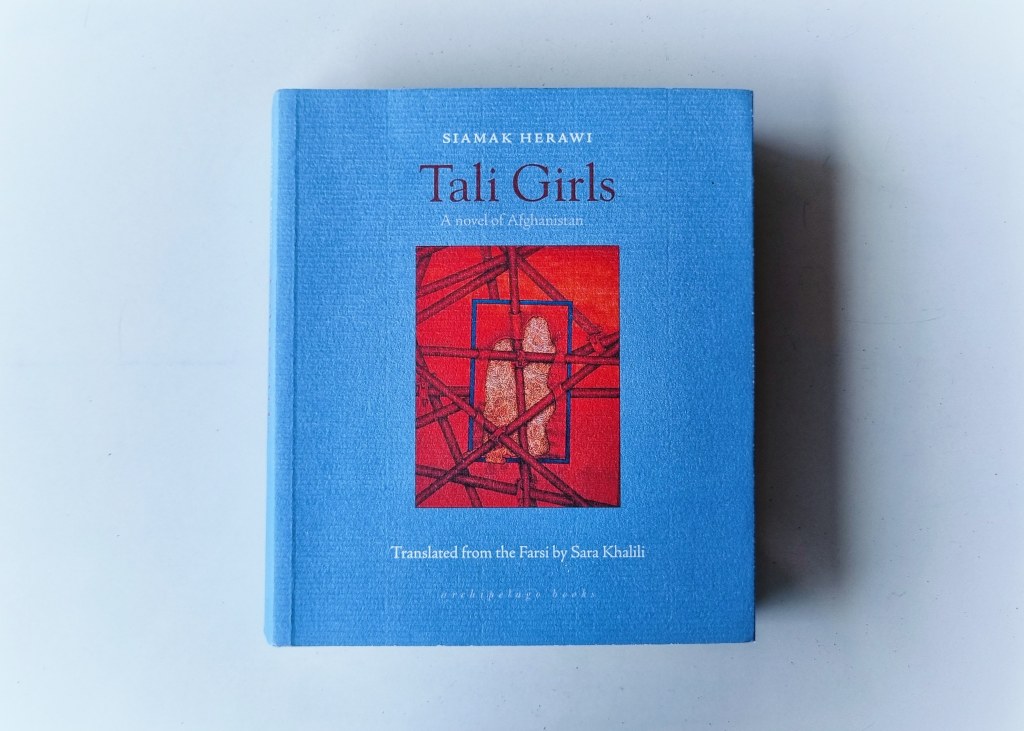
Siamak Herawi: Tali Girls

It’s almost absurd to expect happy novels from Afghanistan. I knew I had sorrow coming when I selected this as my third book of 2024. I could have shelved it for later, but how could I resist this blue from Archipelago Books, translated from the Farsi to boot? How often can one find literature translated from the Farsi?

So it was on me when it started to break my heart and made me recoil from the brutality.

Unlike most books about Afghanistan, the characters are not caught in the crossfire of any of the wars that have ravaged Afghanistan for decades. It is set in a picturesque mountain village in the early 2000s when life was simple and young girls were allowed to dream about education and love, and villagers were content with raising livestock and planting their own wheat, beans, and melons. That is until the Talibs discovered the beauty of their nine-year-olds and found their land ideal for the cultivation of poppy to be sold to the “infidels”. Tali Girls is based on true events.

The first person narration shifts from one character to another, effectively and intimately thrusting the reader into a world plucked from its innocence.

I would be reluctant to recommend this for the anguish that it contains, but I am more inclined to listen to one of this novel’s wisest characters:

“‘Remember,’ he says, sitting in his library, ‘the more your eyes open to the world, the more you are likely to suffer. But better that you learn and understand… Read, Kowsar, read to understand the world around you.”

And so, we read. We must.

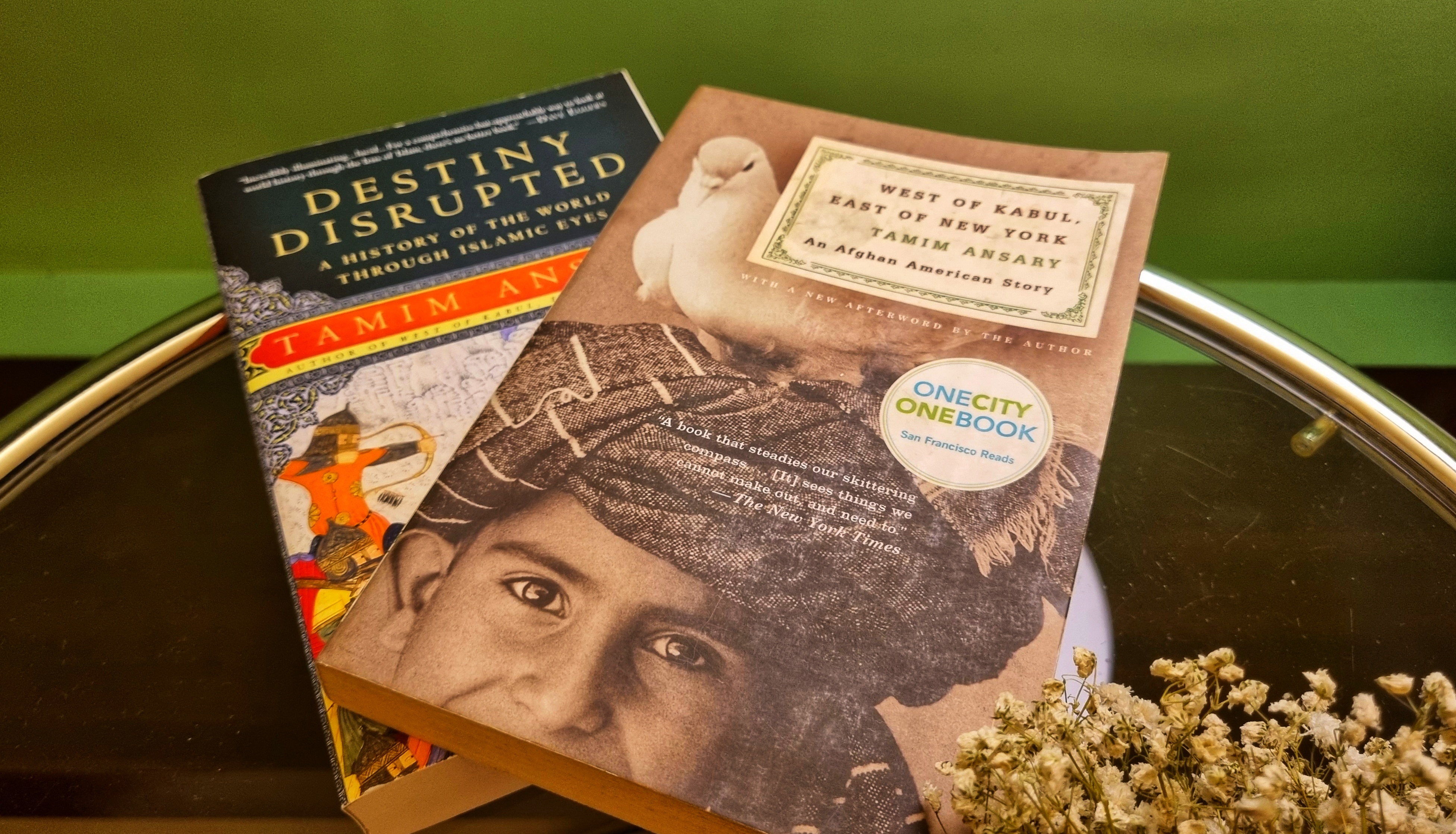
Tamim Ansary: West of Kabul, East of New York

I finished reading this book the day an article from the New York Times came into my inbox: “Afghanistan Has Become the World’s Largest Humanitarian Crisis.”

A passage from page 59 immediately came to mind: “We just shared the towering profundity of our loss, tasting that resignation to fate that came to us from our Afghan soil, for even as children, we knew that loss would deepen us. That’s what it means to be an Afghan.”

Published after 9/11 when it was Osama bin Laden and the Taliban that put Afghanistan on the map of the majority of Western consciousness, and during a time when the world was angry and calling for the bombing of Afghanistan as retribution, Ansary felt an urgency to let the world know that the Taliban and Bin Laden are not Afghanistan. 

“It’s not only that the Afghan people had nothing to do with this atrocity. They were the first victims of the perpetrators… Some say, Why don’t the Afghans rise up and overthrow the Taliban? The answer is, They’re starved, exhausted, hurt, incapacitated, suffering… There are millions of widows. And the Taliban has been burying these widows in mass graves. The soil is littered with land mines, the farms were all destroyed by the Soviets.”

“We come now to the question of bombing Afghanistan back to the Stone Age. Trouble is, that’s been done. The Soviets took care of it already.”

Make the Afghans suffer? They’re already suffering. Level their houses? Done. Turn their schools into piles of rubble? Done. Eradicate their hospitals? Done. Destroy their infrastructure? Cut them off from medicine and health care? Too late. Someone already did that.”

And yet, this memoir gave room to a heart-warming aspect of Ansary’s writing. From his childhood in Kabul and Lashkargah to adulthood in the United States, there was still space for life, love, friendship, and even for travel.

Unfortunately, 20 years after this book’s publication, the dam is breaking in Afghanistan once more.

History is like a river, except people can only live in lakes, so they dam the current and build villages by still waters — but the dam always breaks.”

Tamim Ansary: Destiny Disrupted


“Destiny Disrupted is neither a textbook nor a scholarly thesis,” goes the preface. “It’s more what I’d tell you in a coffee house.” 

Isn’t that how we’d rather have history presented to us anyway? Wasn’t it just days ago when supposedly smarter people bashed a purported Nadine Lustre account for tweeting a derogatory remark about history as a subject in school? “Stupid. Go back to being an actress,” they said.

I wouldn’t go so far as to say that history is “a waste of time,” but don’t you agree to some extent that most teaching methods and a majority of the curricula need some overhauling for the study of history to become more engaging and internalized? To be so effective that hardly anyone becomes apologists for an evident human rights violator? To have a healthy amount of eastern perspective to balance the overwhelming eurocentrism?

For most students, history has been reduced to a series of unfortunate dates and names that they have to memorize for an exam. So, yeah. Don’t coffee house conversations stay with us longer and give space for our own thoughts? More space to consider one view alongside another?

If the answer is yes, there is a huge possibility that you will find this book well-organized, entertaining, and illuminating. Perhaps not all-encompassing, but that is why it is accessible. Frankopan’s The Silk Roads is a panoramic view, Maalouf’s The Crusades Through Arab Eyes focuses on a specific sequence of events, Ansary’s Destiny Disrupted zooms in and out so that it does not only provide particulars but also a bird’s eye view. All eye-openers, but among the three, I find this to be the most well-written.

I started 2021 with The Silk Roads, 2022 with Destiny Disrupted. This will make a good reading tradition — new year, new eyes. We can use a pair every now and then. 

Happy new eyes, everyone! 

Qais Akbar Omar: A Fort of Nine Towers

“I know of no other book in which the complex realities of life — and death — in contemporary Afghanistan are so starkly and intimately portrayed,” says Jason Elliot, a favorite travel writer who has written about Iran and Afghanistan, of this autobiography by Qais Akbar Omar.

I wholeheartedly agree. It is the first published memoir about growing up in Afghanistan. So beautifully written, it describes an extraordinary life and country, its marvels, its fascinating ethnic groups, the history of its conflicts, and the horrors of three tempestuous decades.
“Pain was our way of life now,” Omar writes. The book brims with pain and loss, but it is also full of life. To have been written by someone who found solace in literature during the darkest times, and who suffered but endured the cruelty and futility of wars, makes “extraordinary” an understatement.

I read from and about these places of conflict to learn, but I have been asking myself why I have also grown to love and seek out their literature. This book illuminates one of the answers: I am drawn to how their sensitivity to beauty is commensurate with their heightened awareness of the fragility of life.

And if it is this that their lives and words constantly teach me, among a hundred other things, then I will continue to read from this part of the world.