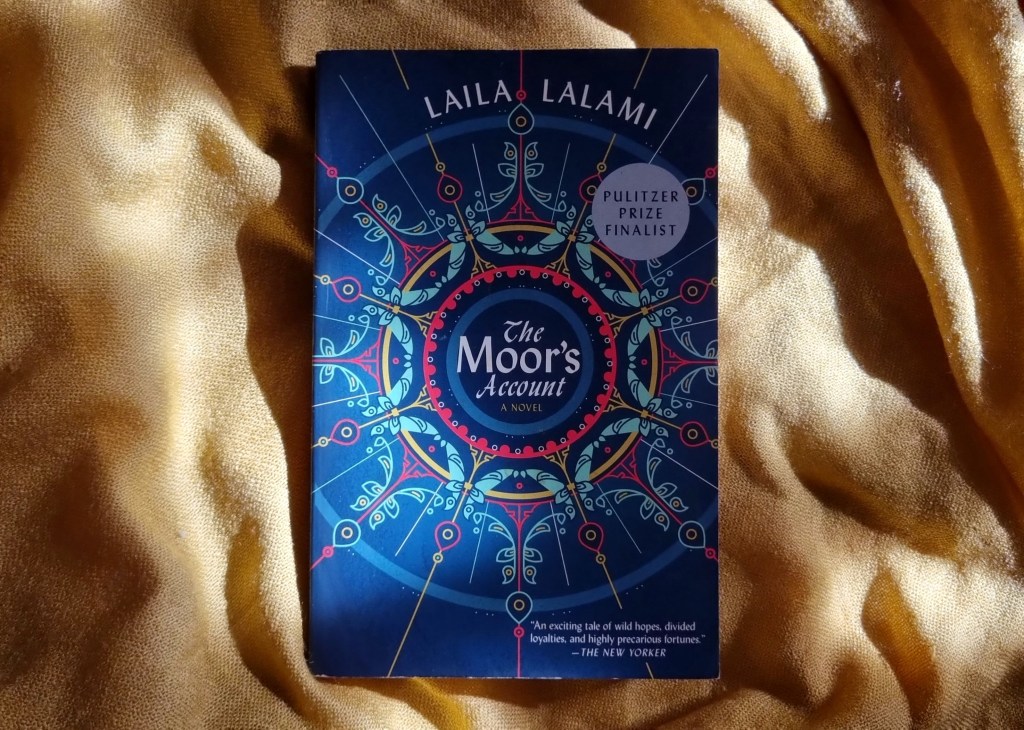
Literature continues to witness the exciting rise of old stories and histories told in new perspectives. We now have Greek mythology narrated through the vantage point of the misunderstood or footnoted women, we have world history that challenges purely Eurocentric lenses, the Crusades recounted through the Arab viewpoint, and various retellings of otherwise prevailing narratives that have been unquestioned for years.
The Moor’s Account falls in the category of books that offer readers a new point of view. It is an imagined memoir of the first black explorer to the Americas. Although history will not remember him as such, as he was the Moroccan slave of Andrés Dorantes de Carranza. Together they would be half of only four survivors of the unfortunate Narváez Expedition, a Spanish expedition that set sail in 1527 with the aim of establishing settlements in La Florida.
The Moor in question is Mustafa al-Zamori, baptized Estebanico when he became a slave. This event at the beginning already hints at how, through an imposed name change, an entire history is erased: “A name is precious; it carries inside it a language, a history, a set of traditions, a particular way of looking at the world.” It was the first of many erasures, Estebanico would later learn.
My first attempt at reading this book was unsuccessful, but the recent announcement of Pulitzer nominees reminded me of this 2015 finalist that has remained sitting on my shelf for a while. Now that I have finally reached its last page, I have realized that the value of this novel lies in its reflections on identity, in its acknowledgment of the precarious power of stories, and in its critique on how history is written — how “unfounded gossip can turn into sanctioned history if it falls in the hands of the right storyteller.”
“How strange, I remember thinking, how utterly strange were the ways of the Castilians — just by saying that something was so, they believed that it was. I know now that these conquerors, like many others before them, and no doubt like others after, gave speeches not to voice the truth, but to create it.”
After dodging an ambush led by Indians, I found in Ruiz, a member of the expedition, an arrogant colonizer who felt victimized when natives tried to protect what was theirs — an embodiment of entitled powers that still plague the present: “‘Do you think we did something to them?’ Ruiz said. ‘No one did anything. That is just how the heathens are. Look what they did to me. He pointed to the dark socket where his left eye had been, oblivious to the role he had played in his own predicament.’”
This book does not contain literary acrobatics. The style is quite simple. But it lends the reader old truths and a new set of eyes.
 The Book-Butterfly
Another one for my list….
Meanwhile I just finished A Little Luck. Oh my, what a story! How freaking good is Piñeiro? What a find of an author she has been for us! Thanks as always for opening my eyes to new possibilites! X
LikeLiked by 1 person
This one turned out to be quite Maalouf-ish in style! So my wrong memory of you recommending this book is slightly justified. Hahaha 🤣
Isn’t Piñeiro an amazing storyteller?! I’m just glad there are people like you with whom I can share great reading finds!
LikeLiked by 1 person