The Museum of Books

“Is this the way to the Museum of Books?” The main entrance where a statue of Shota Rustaveli stood guard seemed to have been closed for an indefinitely long time, so I had to walk around the loggia and look for another door.

“Follow me,” the guard said without hesitation and led me through office backdoors and hallways lined with filing cabinets and some curious eyes peering through them when the rhythmic footfalls of my boots echoed through the corridors.

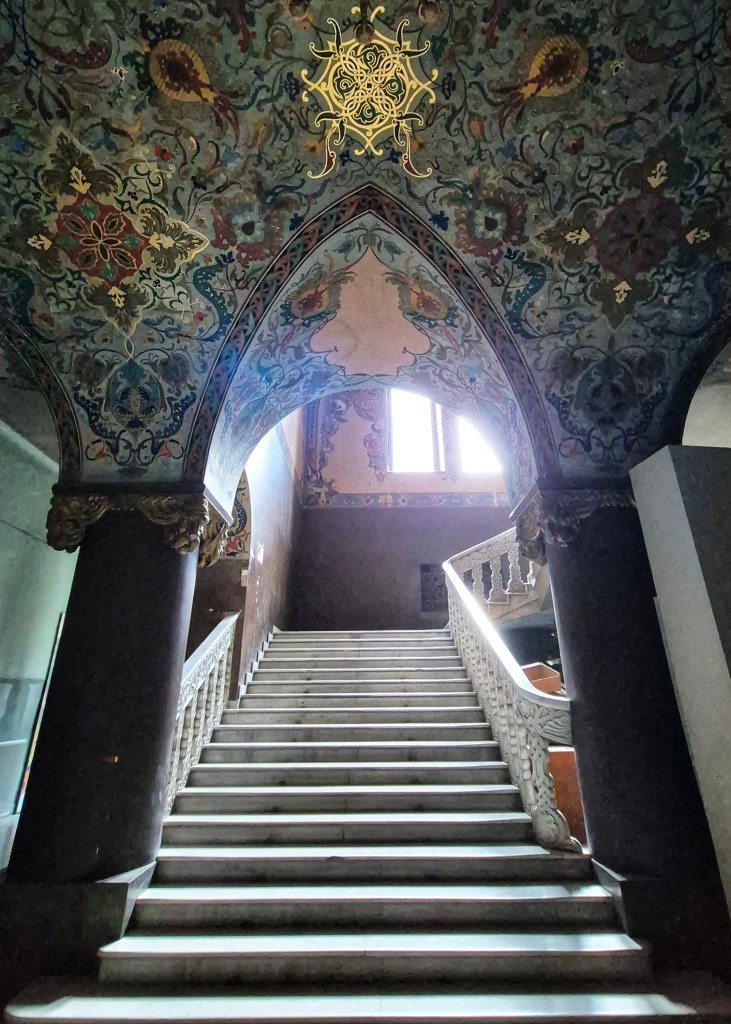
Just as I was feeling a little lost and self-conscious for being the only non-employee around, he turned around and said, “When you’re done, just exit the way you came in.” He left me, alone, staring open-mouthed at what was the entrance hall of Tbilisi’s Museum of Books.

Amber sunshine streamed through the windows, casting light on intricate adornments that I had never seen applied to buildings before. It was as if I was drawn inside a page of a medieval illuminated manuscript.

I soon learned that the building is a collaboration between the architect Anatoli Kargin and well-known painter Henry Hrinevski, who was also a book illustrator and manuscript illuminator as well as a scholar on traditional Georgian architecture, but who was sadly arrested and killed during Stalin’s Great Purge.

The building was completed in 1916 and erected as a bank, but became part of Georgia’s series of libraries, fittingly so, in 1931. It is Building I out of V monumental buildings housing the National Parliamentary Library of Georgia.

Recognized as one of the finest museums dedicated to the written word, it boasts of personal libraries of Georgia’s eminent authors, the first book printed in the Georgian language, and autographed works by famous writers including Victor Hugo.

I went there for the books but came out deeply impressed knowing that the building that holds such treasures is, itself, one for the books.

Celebrating 40 in Georgia

To celebrate my 40th in Iran, that was the dream. It was supposed to be Iran.

But life often has a knack of improvising on my dreams. Flights to Iran were suspended as I was about to book tickets; and it wouldn’t have been good for my parents’ hearts had I forced it at this volatile time in history.
Iran chose to remain elusive. Then I was reminded of a line from Ali & Nino: “Surely love is the same in Georgia as in Iran.” Georgia, or Gurjistan, was one of the Persian “stans,” after all, and was under Persian suzerainty for centuries. And surely, if love is, as they say, the same in Georgia as in Iran, then perhaps celebrating 40 in Georgia wouldn’t be too different either? (“But there are protests,” they said. “At least there are no missiles,” I answered.)

The time had come for Georgia to be lived, aside from being read — for the literature of the Caucasus to be finally given the chance to lend depth and texture to my travels, and to the narrative of my experience.

Little did I know that the flight route from Doha to Tbilisi would fly over Shiraz and Isfahan. As if on cue, there was a sudden otherworldly sunset display through the airplane window just as we flew over Isfahan. Instead of Isfahan’s Eternal Flames, I was given the sun. And through the clouds, I saw traces of Isfahan down below; appearing to reassure me that it would be there waiting until the right time came along.

Then a full moon ushered me to Georgia. And I soon learned that Georgia, for a nation so tiny, is a generous country — not just in their wine servings, but in beauty and unforgettable experiences. (Maybe therein lies the advantage of smaller countries: beauty is concentrated, undiluted, and undiffused.) All at once, Georgia felt right.

Hopefully, someday, Iran will feel right, too. But at this particular point in life, Georgia is exactly what I needed. The trip was a gift that I’ll always be grateful for — a melding of deeply beautiful things and non-things, as if traveling knew no other way to be.

I’ve been asked what being forty feels like. With books (and maybe an occasional glass of wine haha) by my side, forty feels right. 🤍

Georgia’s peaceful pathways

“I hope you’ll remember me,” one of my guides said after a lovely day. “If not me, I hope you’ll remember my people and my country. I hope you’ll remember us as people who know how to live, and I hope your trip taught you a thing or two about how to live. I hope you love your country as much as we love ours.” Then he held out his glass of wine and said, “May this be the worst day of our lives. Gaumarjos!”

How their words for saying “cheers” and “hello” are rooted in the word for victory already speaks volumes of their history. Geographically flanked by some of the greatest empires the world has known, this isthmus connecting Europe to Asia has been bathed in blood for centuries. It is crazy to think that I have lived far longer than their democracy.

I have written my guide’s words in my journal, and they keep coming back to me as news of the intensifying protests reaches me here at home. I witnessed the peaceful protests in Tbilisi first-hand and it made me question if the media had exaggerated things. But I just saw a tranquil avenue I walked through many times swarming with protesters, now I’m not sure what’s really happening out there anymore. I can’t ask the people I’ve met because, as a rule, I rarely exchange contact details with people I meet in my travels.

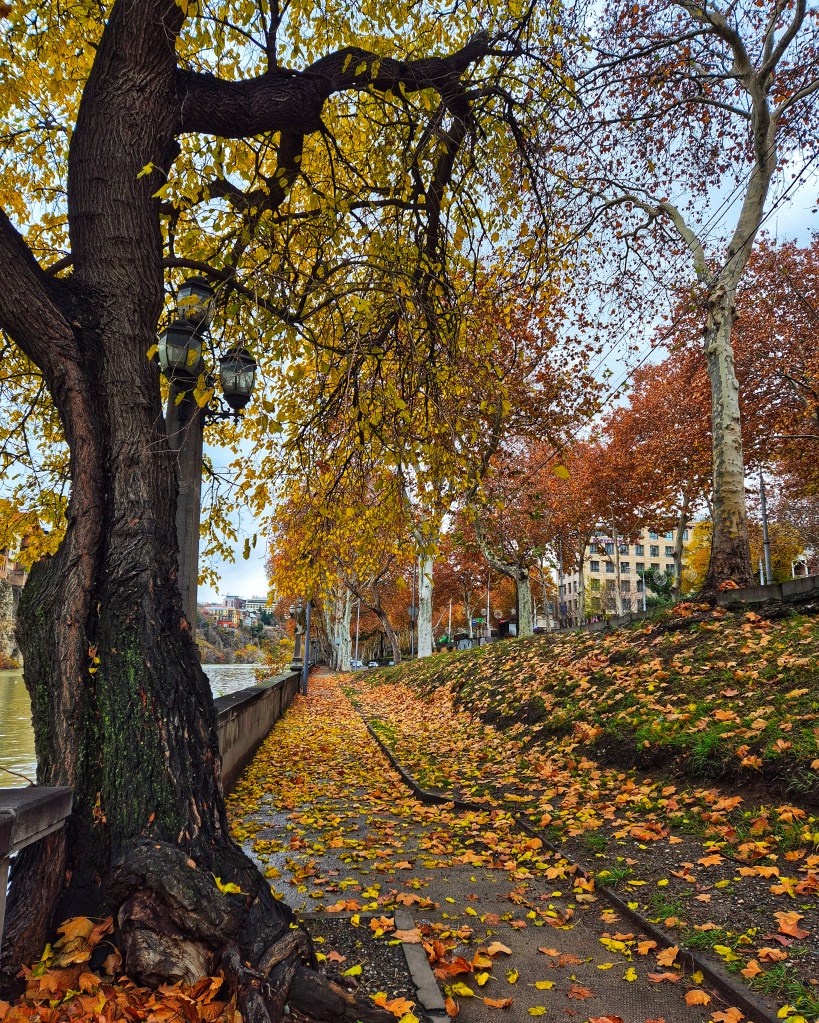
But I do keep Georgia and her people on my mind. I remember them as people who know how to live. I know how much profound pride and love they have for their country, far from the shallow, sloganeering kind of pride and love for country. I hope their streets and their pathways remain free from conflict and violence, because I, for one, found peace walking down those avenues and through those pathways.

“On hills of Georgia lies the covering of night…”

“On hills of Georgia lies the covering of night…”

Thus begins one of Pushkin’s most personal and most poignant poems, it inspired the composer, Rimsky-Korsakov to set it to music.

The full moon, an air balloon, and the Bridge of Peace over the Kura River

“Such sadness and such ease; my melancholy’s light…”

Has any other poet ever expressed this exact point in loving and having lost; when there is still sadness, but there is now ease; when there is melancholy, but it has become light?

On hills of Georgia lies the covering of night. There is darkness, but there is beauty, and there is light.

Sulphur Baths of Tbilisi, “The Place of Warmth”

The sad thing about being a Filipino in colder climes is that you’ve still got to have that daily bath no matter how cold it is outside. 😆 But this was one long bath that I could not complain about and which I truly enjoyed.

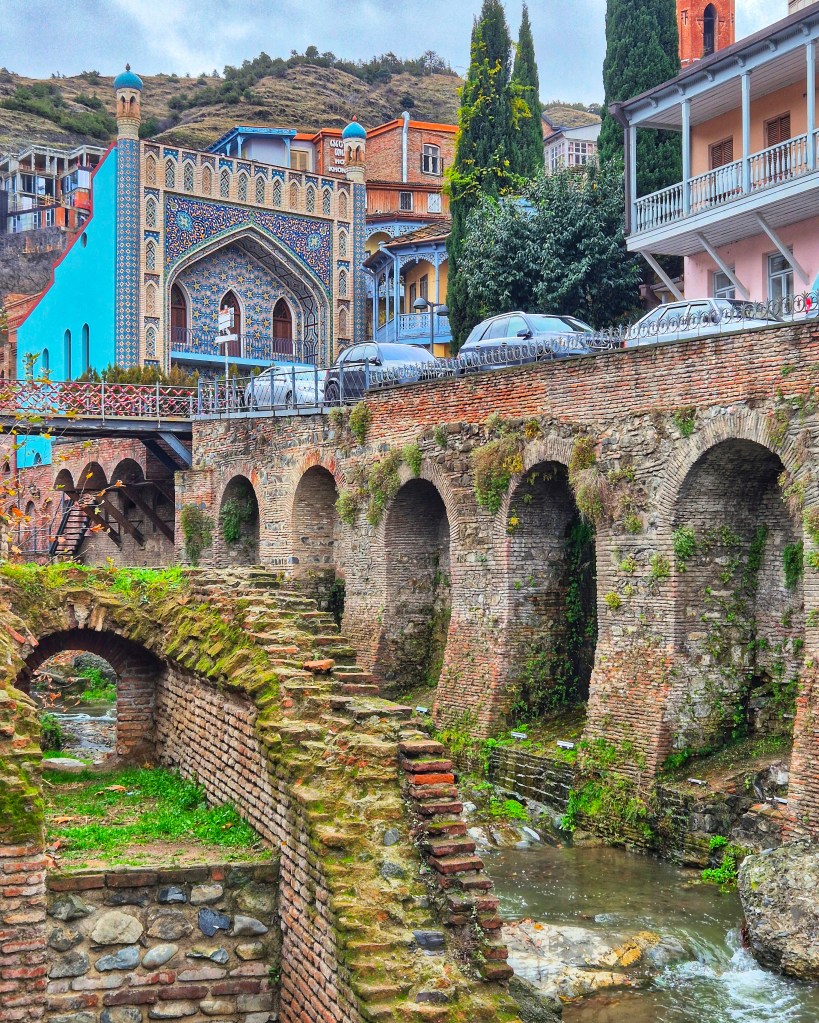
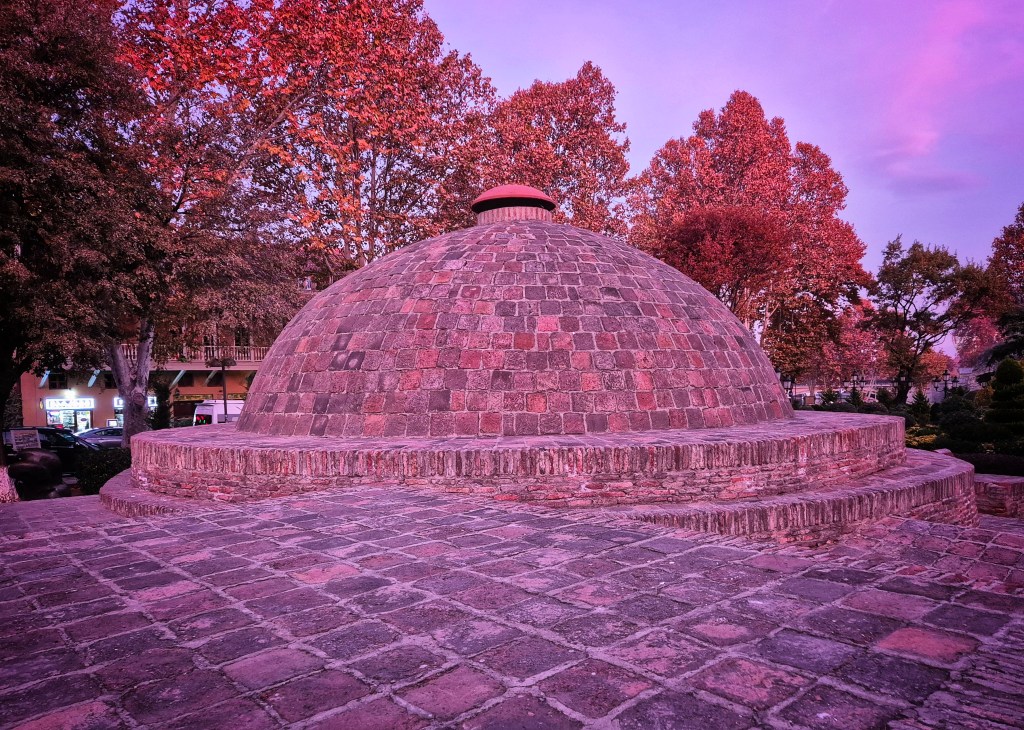
Many conquerors including Tamerlane, and Genghis Khan’s son, Chagatai, have bathed in these waters. And these steaming domes with beautifully-tiled hammams underneath them have become landmarks of Old Tiflis. 

“I have never encountered anything more luxurious than these Tbilisi baths, neither in Russia nor in Turkey,” Pushkin declared during his visit in 1829. Chekov and Dumas have also written about their experiences here, although it was through Ali & Nino, the most well-loved novel of the Caucasus, where I learned of how King Vakhtang Gorgasali discovered these sulphuric hot springs while hunting. 

Being here in late autumn and already feeling the season giving in to winter, I can understand why the 5th century king was moved to transfer his capital where the hot springs are and call it “the place of warmth” — Tpili in Old Georgian, Tiflis to the Persians, or Tbilisi.

To experience these baths is to experience Tbilisi.

An Unexpected Supra in Sighnaghi

The Caucasus Mountains is a sight that cannot be dismissed in Sighnaghi, and so is the thought that


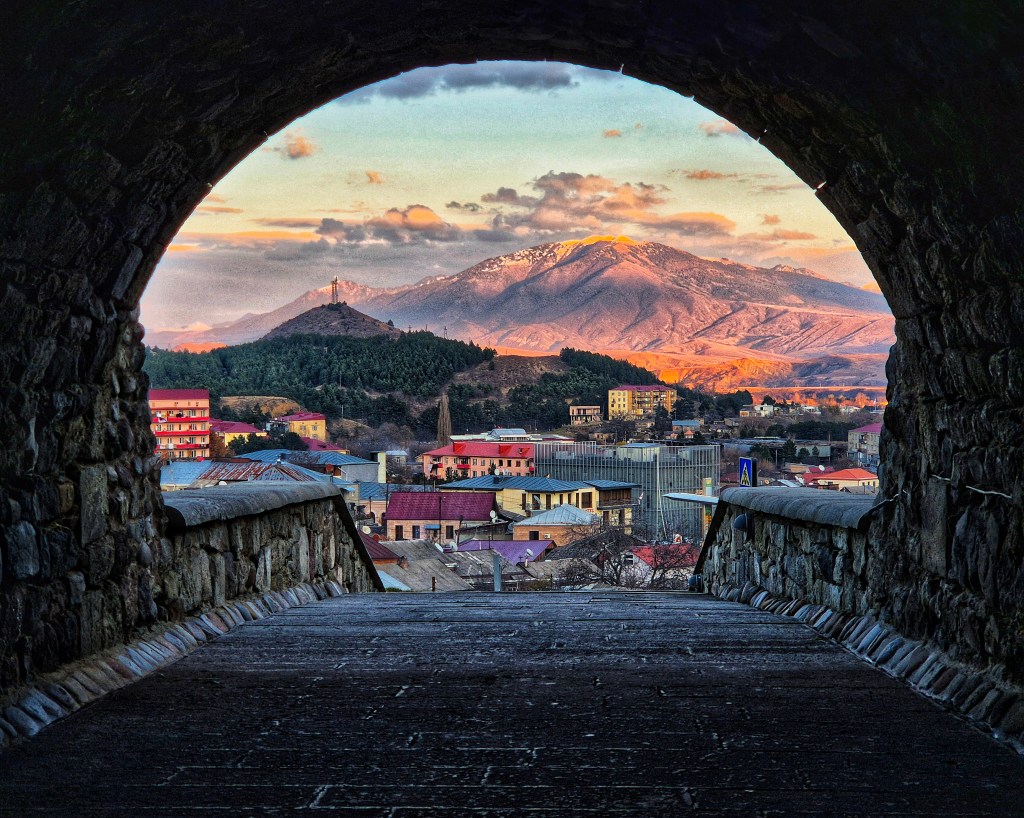
The Caucasus Mountains is a sight that cannot be dismissed in Sighnaghi, and so is the thought that beyond that horizon is Russia. 

This was the setting for my first and unexpected “supra”. I have read about these intimate feasts that are inextricable from Georgian culture; and dreamt of experiencing at least one during this trip; but at the same time, setting realistic introvert expectations that I could not simply get myself invited into one. 

By lunchtime, however, I found myself in a group of two Uzbeks, two South Koreans, two Australians, a Spaniard, and a Georgian. The Georgian decided to perform the duties of a “tamada” to our very own supra. Simply put, a tamada is a toastmaster; although the role and significance of a tamada cannot be fully encapsulated in just one word.

Traditionally, a tamada is a family patriarch or a village wise man, and as he steers the course of the supra, the feasting is not merely on food and wine, but also on meaningful conversations.

And there we were. The united nations. The food was relished, the “kantsi” (a drinking vessel made from ram horn and filled with wine) was passed. After a poignant discussion on the two main topics that should be avoided — geopolitics and religion — our tamada prodded us to express what was important to each of us: Peace, said the Georgian. Love, said the Spaniard. Friendship, said the Korean. World leaders who are not war freaks, said the Uzbek. Meaningful experiences and learning about different cultures, said the Australian. Gratitude, said the Filipina. And even though we said different things, we all meant the same thing. If only the world could be one big supra…

Like drinking the sunlight of a Georgian autumn

November 16, 2024 — That cliché about turning forty? I don’t buy it. People shouldn’t wait that long for life to begin. I am, however, a believer in new stories and new adventures beginning at forty. 

As light often precedes sound, the moon casting an ethereal halo over the city greeted me as the plane landed. The polyphony followed; of old and new, of east and west, of a language that sounds like a blend of High Valyrian and Dothraki, of autumnal chill and inner fire. 

It is almost midnight in yet another junction of the immeasurable Silk Route, one of the oldest trade centers in the Caucasus. A stone’s throw from where I’m staying is an underground market that was part of a network of tunnels dating back to the 4th century where East and West have traded goods and stories for hundreds of years. 

It is safe to walk at night. I have only encountered friendly faces and a group of men intoning the most otherworldly polyphonic singing at a roadside table as if it were the most natural thing on earth. At every turn lingers the influence of Scheherazade, mother threader of stories in the East, and Penelope, mother un-threader of storytelling in the West. Here, the narratives do not seem to contrast, they coexist. They take turns coaxing travelers to find their own stories to weave, and to unravel. 

Looking around and looking within, I can tell you that forty (and Old Tiflis), is a wonderful place to be. And I cannot wait to see Old Tiflis (and forty) shimmering in the sunlight!


November 20, 2024  “It’s likely and unfortunate that you are probably only dimly aware of Georgia—the country, not the state. It’s tucked away beneath Russia, next to Turkey, a contentious, strategic piece of real estate under constant pressure.

You should know Georgia because it’s nice. Because the food is excellent. The country is beautiful—some of the most beautiful scenery on Earth. It’s a place you should absolutely visit if given the chance.

But you should know it as well because it’s important. Because it emerged from years of Soviet rule into a chaotic, awful, lawless period, yet managed to turn itself around into a functioning democracy in a few short years.

And because, as you will see, it is still under constant threat from an increasingly belligerent Russia.

It’s a fascinating and very welcoming country. And I hope we convince some of you to visit it.”

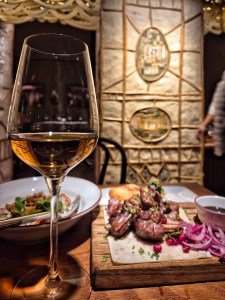
Don’t take my word for it. Take Anthony Bourdain’s. He said that, and I took his word for it. And so the first restaurant I checked out was one that he visited, and I ordered a dish that he also had (lamb ribs “semichka” with pomegranate sauce). Since that first dinner I haven’t had bad food or bad wine. 

I’ve been pairing most of my meals with the amber wine for which Georgia is known, and I don’t even know where or how to begin with Georgian wine. But as a preview, let me just say that it tastes exuberant. It’s like drinking the sunlight of a Georgian autumn.


In autumn, Sighnaghi is tinted by all the colors of Georgia’s wines.

The Georgia Book Stack


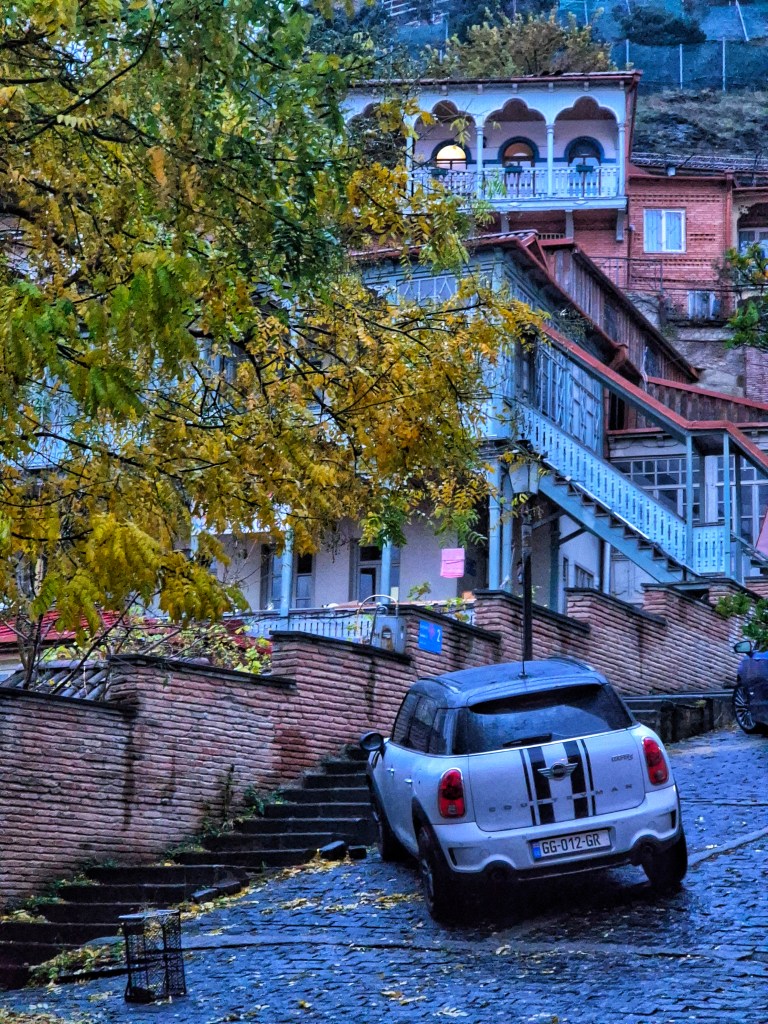
A light rain was falling, a fine spray, unlike what rain is in the tropics. Within a couple of hours the deep purple of evening entered through that same window and transformed the spray into delicate snowflakes that vanished even before you could touch them; inconspicuous magic in the micro details when one season gives way to another.

It was toward the end of the trip when I took this photo of my traveling companions on the windowsill. Absent from the stack, but verily lodged in my consciousness, are Euripedes’ Medea and Percival Everett’s For Her Dark Skin.

I went to Georgia accompanied by seven books, and after jaunts to Tbilisi’s charming bookshops, a modest number of three Georgian masterpieces were read on the train and during long drives, then added to the pile. 

The eclectic curation is an education in itself as it includes a Greek tragedy, a rather feminist and modern retelling of the tragedy, a wonderful and informative chronicle of Georgia’s unique wine culture, journalistic reports and stories from the early years of post-Soviet Georgia, the greatest love story of the Caucasus, literary criticism, a portrait of young Stalin that is also a portrait of a nation, a painful recollection of the Georgian-Abkhazian armed conflict in the 90s, epic poetry, and Tolstoyan short stories.

Once again, people wondered whether I had gone to another destination just to read. But I know they’re only kidding. 

For who isn’t aware that reading and traveling are not separate experiences? They are halves of a whole that lend clarity and depth to each other.

In our travels, what we notice, perceive, and experience — and what we contribute to meaningful interactions, or how we overflow — largely depend on what is already inside us. “Nothing flows out of a jar except that already inside it,” writes the preeminent Georgian author, Shota Rustaveli in The Knight in the Panther’s Skin.

In life, reading and traveling are merely expressions of how one chooses to take their fill.