The sad thing about being a Filipino in colder climes is that you’ve still got to have that daily bath no matter how cold it is outside. 😆 But this was one long bath that I could not complain about and which I truly enjoyed.
Many conquerors including Tamerlane, and Genghis Khan’s son, Chagatai, have bathed in these waters. And these steaming domes with beautifully-tiled hammams underneath them have become landmarks of Old Tiflis.
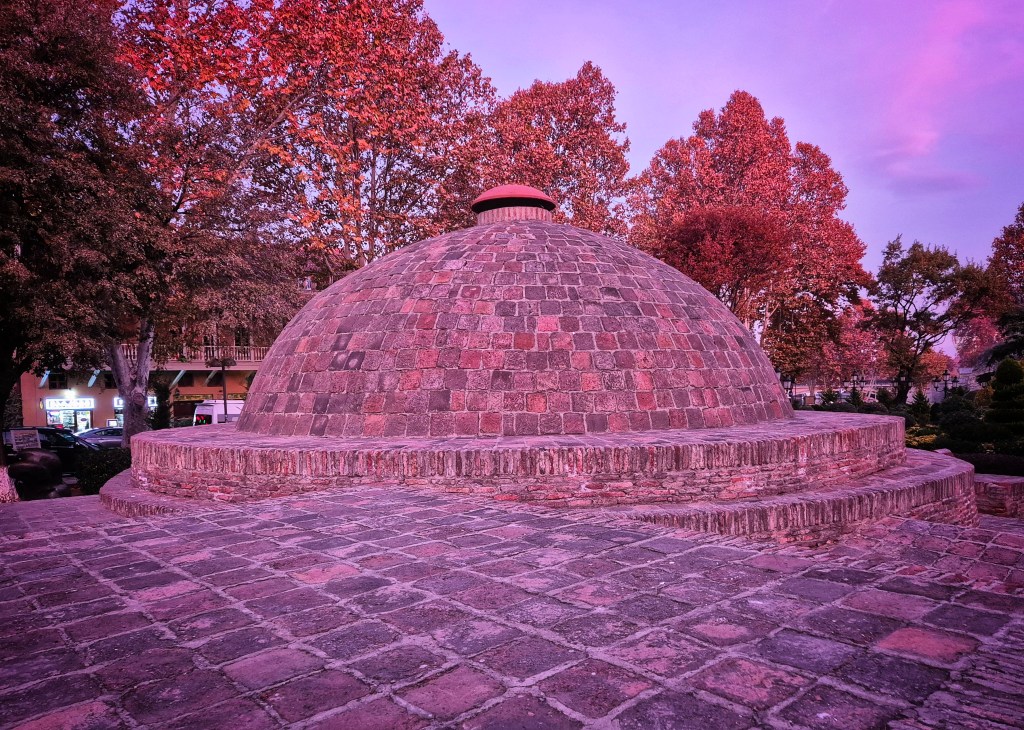

“I have never encountered anything more luxurious than these Tbilisi baths, neither in Russia nor in Turkey,” Pushkin declared during his visit in 1829. Chekov and Dumas have also written about their experiences here, although it was through Ali & Nino, the most well-loved novel of the Caucasus, where I learned of how King Vakhtang Gorgasali discovered these sulphuric hot springs while hunting.
Being here in late autumn and already feeling the season giving in to winter, I can understand why the 5th century king was moved to transfer his capital where the hot springs are and call it “the place of warmth” — Tpili in Old Georgian, Tiflis to the Persians, or Tbilisi.
To experience these baths is to experience Tbilisi.

 The Book-Butterfly