February 2, 2021
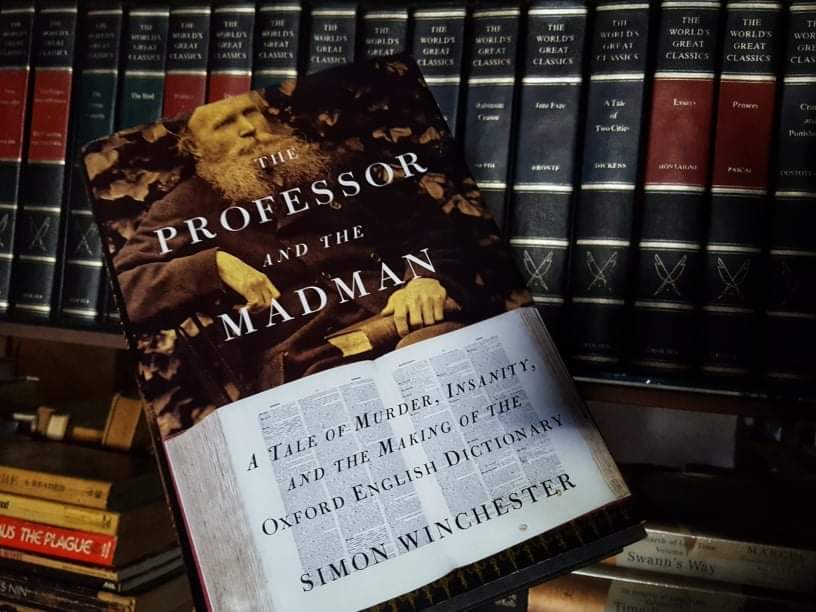
What book comes to mind when you read the lines, “One of the greatest romances of English literature?” or “One of the greatest literary achievements in the history of English letters”? This masterpiece of twelve volumes on its initial edition took almost eighty years to create — the Oxford English Dictionary.
When the British Empire was approaching its pinnacle and English was on the verge of becoming a global language, there was an urgency to “chart the life of each word, to offer its biography… to have a record of the register of its birth,” when it was first written down. “And at the heart of such a dictionary, should be the history of the life span of each and every word. Some words are ancient and exist still. Others are new and vanish like mayflies. Still others emerge in one lifetime, continue to exist through the next and the next, and look set to endure forever… There should be sentences that show the twists and turns of meanings — the way almost every word slips in its silvery, fishlike way, weaving this way and that, adding subtleties of nuance itself, and then perhaps shedding them as the public mood dictates…”
This book unravels the remarkable men behind such a momentous and historic undertaking: “Their scholarship sheer genius, their contributions to literary history profound. But who remembers them and who today makes use of all that they achieved?”
And yet the most astonishing question of all; what if we were told (the way this book exquisitely does) that the making of the Oxford English Dictionary is a tale of murder and insanity?
This story, at times tragic, at times disturbing but with slivers of hope and redemption, most of the time incredible, has the sort of narrative that I usually find in fiction; and it is written in such an absorbing manner that I had to check many times if it was really a work of non-fiction!
At the core of the story are the two learned men to whom we owe the success of the OED: Professor James Murray, the distinguished editor, and a surgeon whose contributions were vital, Dr. William Chester Minor. The two men maintained a correspondence for years but had never met, the latter constantly refusing invitations for a meeting in person. It was only after two decades when Prof. Murray discovered that Dr. Minor was the longest-staying resident at the Broadmoor, England’s harshest asylums for criminal lunatics.
I think this is essential reading for those who love history and words, and the history of words!
“I am not so lost in lexicography as to forget that words are daughters of earth…”
P.S. Just as I thought I veered away from the East and Iran, there is apparently a movie based on this book starring Mel Gibson and Sean Penn, and the movie is directed by Farhad Safinia, an Iranian.