“Because when I read, I don’t really read; I pop a beautiful sentence into my mouth and suck it like a fruit drop, or sip it like a liquer until the thought dissolves in me like alcohol, infusing brain and heart and coursing on through the veins to the root of each blood vessel.” This is how Bohumil Hrabal’s Haňta reads — or how he doesn’t really read.
This is how I read, or how I did not really read, The Hills Reply by Tarjei Vesaas. I do not think there is any other way to read, or to not really read, this book.
What is this book? I can say, “A collection of sixteen short pieces of literature.” Or I can also say, “A lyrical poem, two hundred and seventy five pages long.”
But I’d rather say: A Lispector attuned to nature. An impressionistic artwork so keenly aware of the elements, of the light in different times of the day, and of its sounds and its silences. A swan song of sheer beauty that leaves you quiet and asks your heart, for the time being, to dwell inside its pages… a heart so full, so open, it breaks.
“With these words, she drew back the bolts that Kolbakur had made to fasten her window frame, pulled the frame aside, and let the man into her bower. Images of gods were carved on the bower’s pillars and stiles and rails of her chair, but they were only half done — Christianity having come to Iceland before the artist completed his work.”
And with this fleeting imagery, a beautiful and ingenious depiction of the religious landscape in which the story is set. An age on the cusp between the fading world of paganism and the force of a new religion of peace, ironically preached by adventurers and men waging selfish crusades in the name of Christ. It was this melancholy conflict that I heard playing as a soundtrack throughout its pages.
It seemed revolutionary when Hollywood recently began to highlight the dark side of legends and heroes. These have become sombre reminders that even superhuman abilities are not enough to protect one from ego, the perilous thirst for fame, power, revenge, and from mere mortals’ tragedies.
Then there’s Halldór Laxness who had Wayward Heroes published way back in 1952, part of the body of work that earned him the Nobel Prize in 1955.
Written in the style of ancient Icelandic sagas, it is replete with violence, adventures amorous and otherwise, and the barbarism of medieval Europe. But how wonderfully Laxness refashions the old to become accessible and relevant to the new.
On the surface, these are the exploits of blood-brothers, Þorgeir and Þormóður. One can read it as such and it will remain entertaining. But one can always choose to go beyond that and take note of the language, the veiled ironies, how wit and sarcasm remain elegant, and the subtleties that only a master can pull off, and how this story remains especially timeless for being a cautionary tale about the heroes, kings, and causes to whom and to which we pledge fealty.
“What did I do with my hands as a free man?” he asks himself.
A bearded guard leads him from his solitary confinement to another cell. He is on a leash, and he knows that he is in the central prison of the Holy Republic. This is all he knows. Severe torture has made him forget everything else, including his name.
With such a dismal opening, one can excuse why I shelved this, the heaviest volume on my Iran book stack, for over a year despite my deep fascination for the region and its extremely underrated writers.
My personal reading prompt for September was to go through an NYRB editions reading spree. But is there a more pressing reading prompt than the ongoing protests in Iran? I realize that we — as readers, and through our reading choices — have the power to call attention to things happening across the world and to rally with those who need a voice.
I instantly felt it was time to meet this unnamed character who is forced to admit guilt to an unknown sin that, along with his name, he cannot recall. Through daily episodes of psychological and physical torture, he slips in and out of consciousness, reality and dreams. Fragments of his childhood and of his life tease his sanity, the key players of society whose ideologies and actions lead to the revolution take shape in his mind, and the story unfolds. He begins to remember Sahar, a twin sister whom he loved deeply; and by and by his desire to die begins to be replaced by the desire to know what happened to her.
‘Sahar is dawn,’ I say, ‘the end of darkness, when the sun comes out. Daylight trapped in night.’
Categorized as a work of magic realism, I find that the magic realism is, at first, subdued, but one which crescendoes into an anarchy. Readers who are not enthusiasts of the genre should not be dissuaded, however, because we eventually recognize that it is merely our tortured character’s memories and hallucinations merging with reality, metaphors, and childhood fantasies.
This is Farnoosh Moshiri’s first novel, but its depth and calibre surpass many works by more established writers. I have not read a more harrowing ending, but I also have not read a more excellent Iranian novel.
Here is an apt literary device condemning oppressive governments that incapacitate people to distinguish nightmare from reality, and condemning regimes that engender systemic mind-conditioning that edge a nation into losing its identity — those tyrannies that ultimately coerce you into forgetting who you are.
What are we doing with our hands as free men and women; what are we doing with freedom? I ask myself.
“…and if we are lies we shall be lies of our own making.”
“Mark these words of mine, my son. Has not the country become independent? Have we not become free men in our own country? Be sure, though, that they will direct our affairs from afar. This is because they have left behind them people who think as they do.”
– – –
Could dictatorships in developing countries be a side-effect of colonialism?
The effects of colonialism do not end after a nation’s independence, the same way the effects of a dictatorship do not end after a people’s revolution.
Colonialism has defenders who maintain that they served whom they oppressed, dictatorships have the same apologists; but do not both warrant that succeeding leaders would grapple with a democratic exercise of authority — among many other ills they leave in their wake?
Perhaps I am late to these reflections, but there are many people still who do not understand that colonialism and dictatorships have a profound impact on political structures that one simply cannot move on from.
– – –
Season of Migration to the North was the catalyst for these thoughts; a dark and rather absurdist but lyrical depiction of the post-colonial struggle; not an angry tirade but one that challenges opposing views.
It overshadows The Wedding of Zein in many ways, tempting me to say that if there’s one Salih work you must read it should be Season of Migration to the North. On the other hand, The Wedding of Zein comes with two of his finest short stories: One of them is The Doum Tree of Wad Hamid that wistfully contemplates on the clash of social modernity and traditions.
“There will not be the least necessity for cutting down the doum tree… What all these people have overlooked is that there’s plenty of room for all these things.”
So, perhaps it’s wise to read these books together.
Sudan, the largest country in Africa that shares a border with nine other countries including Egypt. And yet we read so little of/from them. It’s time we do. We (I speak as a Filipina reader) share so much more in common than we think.
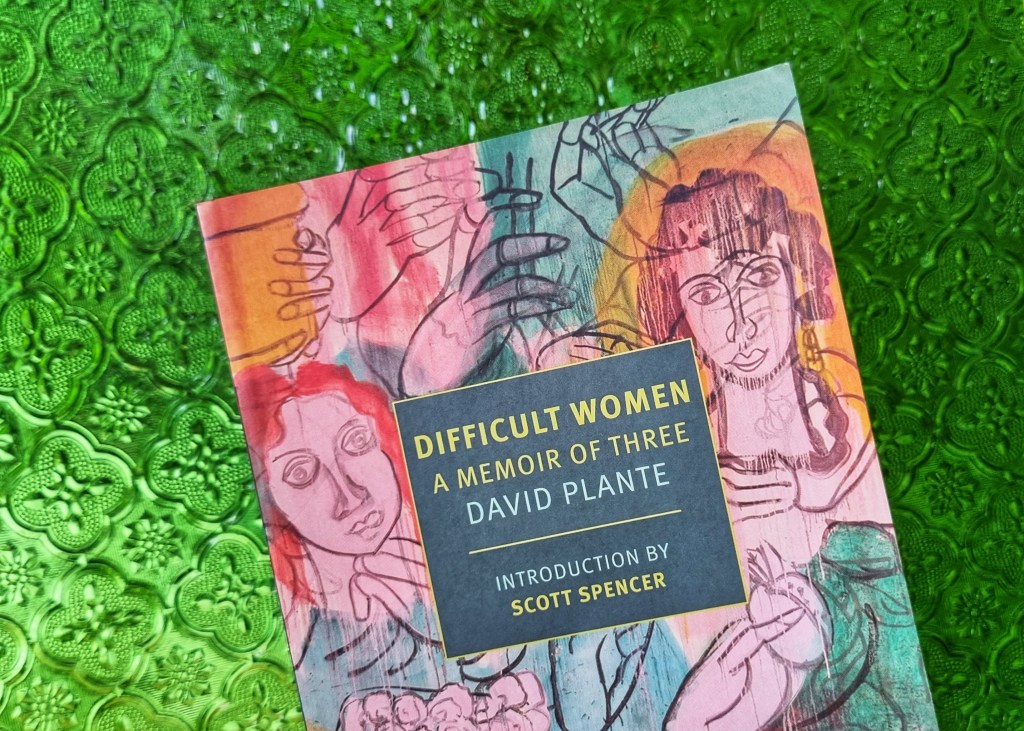
Difficult Women. Difficult reader. This book and I did not mix well.
I found no satisfaction or pleasure in reading this, although I did not feel arrogant enough to consider it a bad book deserving to be consigned to the DNF pile. There must be something to be learned here.
To be appreciated, these sketches of Jean Rhys, Sonia Orwell, and Germaine Greer through David Plante’s personal encounters with them in the 70s, should probably be read as a literary specimen: a study on the microscopic boundaries between honesty and invasion of privacy; a rare sample that lays bare the characters of these women at particular points in their lives; an excision of the writer’s intentions, for scrutiny; and the final diagnosis that literary figures are just as human and as difficult as the rest of us. And perhaps, that’s what makes this… well… difficult.
“In any work of literature the most interesting bits are in the detail,” Kőnig had often said in his lessons. “Be sure to attend to them closely.”
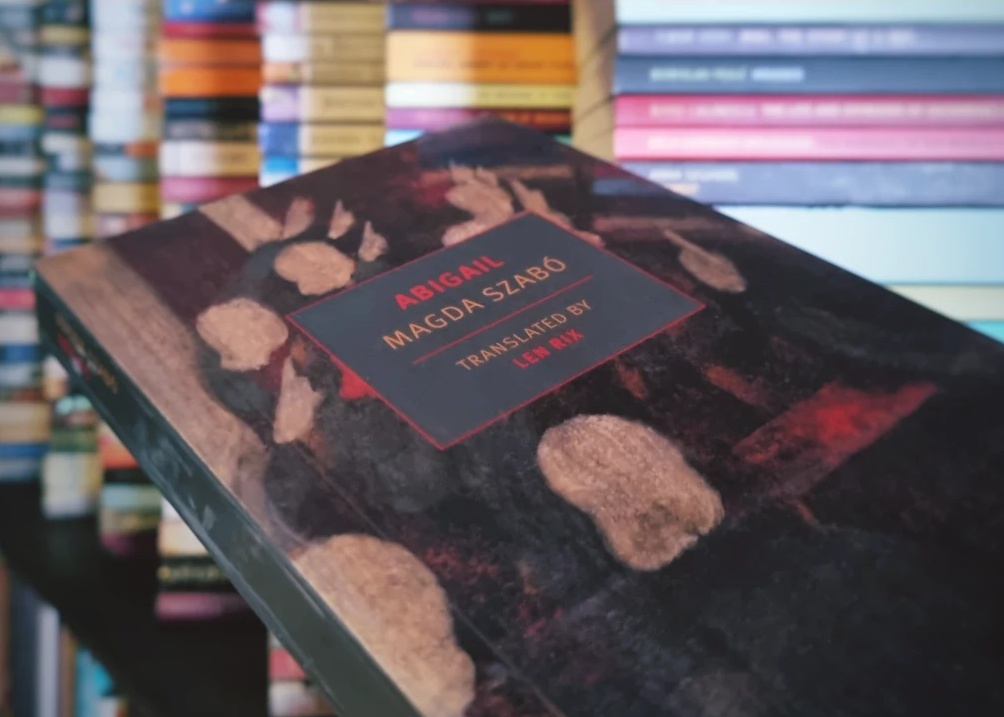
If I had a daughter, she’d find this book in a collection I created for her.
Reading this, she’d be reminded that heroines do not have to be faultless; that the surest assumptions can often be wrong; that no matter how clever we think we are, there are people wiser still; that actions always have consequences; that friendship is precious; that even in the most repetitive of routines and what we deem the bleakest of days, life will find ways to astound or surprise us.
If she philosophizes and reads deeper into the book, as I suspect a daughter of mine will, she will venture to question where childhood ends and adulthood begins, and attempt to come up with answers of her own, or a hundred questions more.
If she develops an awareness of history and politics, as she must, she will be sensitive to Magda Szabo’s subtle activism and glean the lessons of sacrifice and duty.
And I imagine this book — so engaging and difficult to put down — will only fuel the love for reading in her.
Can you tell that I read this through the eyes of a wide-eyed adolescent, and not through the eyes of an adult still haunted by the painful and confounding strains from Iza’s Ballad and The Door but who, nonetheless, acknowledges that Magda Szabó has now become a favorite?
Iza’s Ballad and The Door gnaws at the soul. Abigail educates the heart.
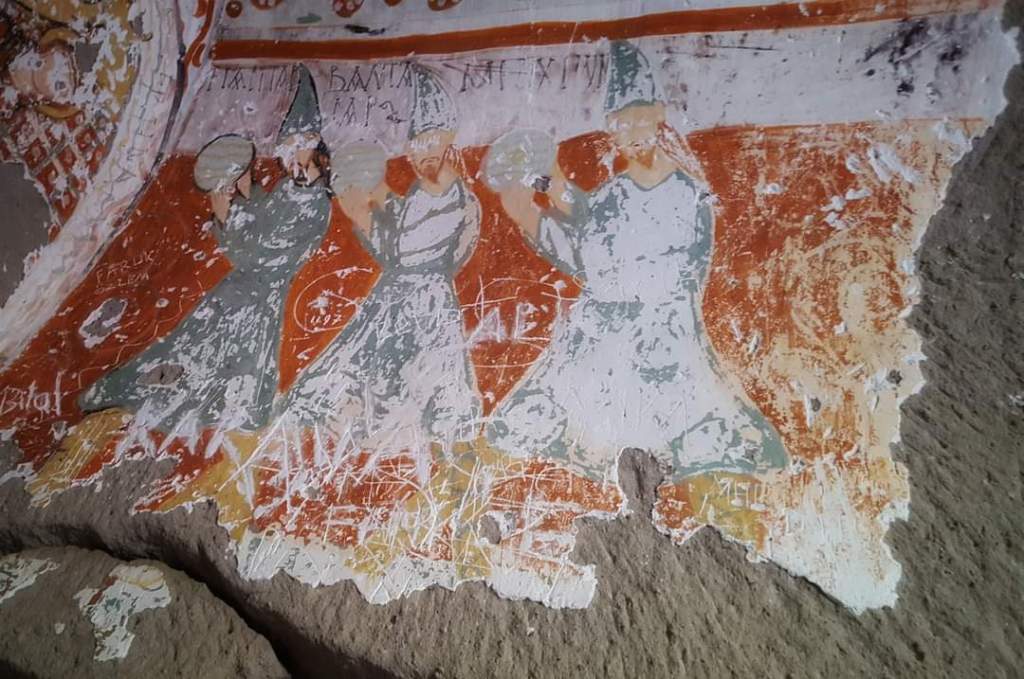
The book had me at its cover; a landscape distinctly Cappadocia, one of my favorite places in the world, however otherworldly.
It had me at the introduction by Karen Armstrong. Who else more suited to introduce such a book?
Patrick Leigh Fermor had me at, “The book was based — whole passages of it word for word — on letters I wrote at the time to a correspondent (whom I later married) without the remotest thought of publication.”
He had me the entire time because reading his prose felt like meditation.
A Time to Keep Silence is a lovely exemplification of that Thomas Merton line I encountered through Rebecca Solnit earlier this year: “The inner journey is the interpolation of the meanings and signs of the outer pilgrimage. One can have one without the other. It is best to have both.”
Known for traveling to Turkey on foot and for being one of the finest travel writers of the past century, this is a record of Fermor’s travels to a more inward direction. Through Europe’s monasteries with their divine libraries, chanting monks, cloistered lives, and vows of silence, and to Cappadocia’s abandoned rock monasteries, we are made recipients of their histories and these letters, too; but most of all, of the contemplation on modern man’s need for silence and solitude.
For someone who recently took three weeks off from social media to retreat from its noise and with only one foot back inside, this book expressed many of my unspoken thoughts, and I can only agree with a constant book friend who thinks that the only problem with this book is that it is too short.
Here’s to places, experiences, or books where “…the troubled waters of the mind grow still and clear, and much that is hidden away and all that clouds it floats to the surface and can be skimmed away; and after a time one reaches a state of peace that is unthought of in the ordinary world.”
“A concern for truth did not always accord with political expediency.”
There is much to mull over and absorb that I took my time with this book. Maxime Rodinson does not only paint a portrait of realism of a man, but also a stunning landscape of a world and age.
The portrayal is constructed based on meticulous research, and because it is not always compatible with prevailing ones, he treads on dangerous ground. In fact, censorship issues led the American University in Cairo to halt its publication in 1998.
“The picture is not a simple one. It is neither the static monster of some or the ‘best of all created things’ of others, neither the cold-blooded impostor nor the political theorist, nor the mystic wholly in love with God. If we have understood him rightly, Muhammad was a complex man, full of contradictions… But there was a power in him which, with the help of circumstances, was to make him one of the rare men who have turned the world upside down.”
“Let us, with undue naivety or too many illusions, acknowledge the greatness of the creators of the systems which have played so large a part in the world; and among them, Muhammad.”
This is a work of history. But history is a tricky issue, especially in the Philippines right now. Rodinson, however, poses this challenge in the introduction: “If one is to criticize in turn, in order to reject its conclusions, one must study and refute its findings according to the same critical standards with regard to sources.”
_ _ _
A confession: While reading this, there was a constant imagining of how it would have turned out had Olga Tokarczuk written it. It would surely have been just as carefully researched but peppered with literary mischief and, perhaps, slightly more entertaining.
Only slightly because Rodinson, a historian of Islam, does not write drably either. For Edward W. Said to claim that there can be no doubt about this book being “the major contemporary Occidental work on the Prophet and is essential reading” was recommendation enough for this reader.
This reader, a nonbeliever of Islam and an amateur on the subject but who has, through an ongoing reading project, realized that even a humble comprehension in the war of succession after Muhammad’s death between his father-in-law and son-in-law that created the Sunni and Shia chasm can allow one to grasp better the complex relationships or conflicts between Islamic nations and organizations. And so, with this realization, the acknowledgement of how taking a small step can open doors to understanding.
I hadn’t built anything, I’d demolished myself. Here, look!
In that sublime realm where literature and architecture meet, Hugo’s Notre Dame and Calvino’s Invisible Cities occupy the high throne. I nominate Pekić’s Houses to sit with them.
One would expect this book to be political, Borislav Pekić being a founding member of the Democratic Party in Serbia. And indeed, it is.
Belgrade’s turbulent history of clashing ideologies is not an undertone in this novel but a counterpoint to an unusual but brilliant motif that is architecture — which is, of course, political.
What took me by surprise, despite the obvious title and the summary about an eccentric character who loves houses more than the average person does, was the non-perfunctory view on the subject. The discourse ranges from houses being compared to human souls, to the ideal harmony of a building with urban space and its character, to how preservation is of great importance to a place, to criticisms on the sacrificing of aesthetic quality for the sake of profit, to describing a particular house as like an erratum, a coarse printing error in the elegant context of the street, and even to the communion with buildings as if they were alive, which in fact they were!
Of course I can’t say that those books about architecture made me fall in love with houses. They only explained to me why I love them. From them I was schooled in houses’ physiology, their circulatory system, their epidermic defensive envelope, even their stomachs, their sensitive stomachs, not to mention their life process… From books, then, I had come to know the mysterious process of a house’s conception, initiated long before its violent birth on the building site.
Arsenie Negovan is an imperfect but intriguing man who will irritate you or gain your sympathy. He makes a name for himself as a builder and a lover of houses, but after an existential maelstrom, he withdraws himself from the world and allows himself to be oblivious to the unrelenting flow of time for twenty seven years.
When at last he decides to come out of his self-alienation, he is an old man in the process of writing his will, and he soon begins to suspect a great divide between the world in his mind and the world in reality.
Houses is one of the most intelligent novels I have ever read. With the absence of chapter breaks, I found myself being pulled steadily towards its exceptionally executed finale. Its abstract metaphors grant liberal spaces for contemplation as they convey nagging questions on possession, and on building and ruin, whether concerning a city, society, a house, or a life.
While most of its readers describe the progression of the story as a descent into madness, I choose to see it as an awakening.
So, my friend, time is passing. We’re all in the power of time. So hurry and come here. Come and see the city of Delhi, and the realm of beauty, for both are waiting for you. Come and join them, before silver fills the part in her hair, and your head becomes a drift of snow, and our lives are merely a story.
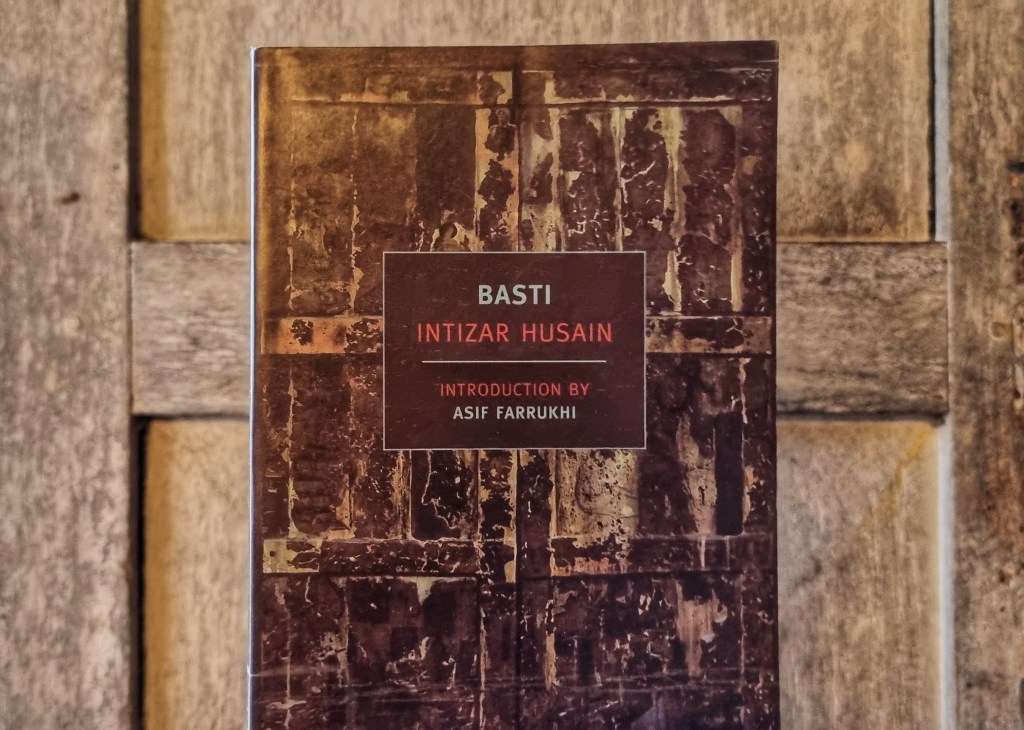
Basti is a lovely Urdu word that hints at space and community, a human settlement of any dimension, from a few houses to a city.
The word alone is enough to pique my interest. But because some books lead you to other books, that is exactly what Geetanjali Shree’s Tomb of Sanddid for me. I stopped counting at six — the number of times Intizar Husain’s name was raised in the novel.
Now I see why. Basti can be looked upon as a literary father of Tomb of Sand in the family of borderland literature. Both also defy the borders of literature.
Basti maps the life of Zakir who experienced the divisions that created Pakistan that created Bangladesh that separated him from the love of his life.
I have to admit that it took nearly half of the book before I was able to get into its rhythm and flow, but I allowed its poetic beauty to lead this reader from outside the Indian subcontinent to be drawn into its history and heritage; and sadly, into the tragic quotient of its divisions.






 The Book-Butterfly