In some editions, the full title is The Sun King: Louis XIV at Versailles. This is more apt because the book is not an exhaustive portrait of Louis XIV but a well-researched record of the workings of the French Court in Versailles, its intrigues and its scandals, and the intimate lives of its prominent figures.
It is rather detailed in a sense, and to a fault, that if not for Nancy Mitford’s entertaining wit, it would have bored me to read about the rivalries of the mistresses and the parts that read like royal gossip.
But I would still recommend reading this book on a weekend when one would prefer something that does not weigh on the emotions. Of course, a better recommendation would be to bring this book on a trip to Versailles. At a hundred and sixty nine pages, it is a none too heavy starting point for one interested in reading about the birth of the ostentation that led to the Revolution two kings and less than a century later; and yet another reminder of how quickly and drastically the tides of history turn.
…because I would immediately pick up a novel of/from Iran without any prodding.
It took me almost halfway through to get into the book’s rhythm, however: Apart from being surprised that it is not set in contemporary Iran but pre-revolutionary Iran (and horrified to think that things have only gotten worse for women in post-revolution Iran), one main character irked me, and I kept weighing it up against another Iranian work of magic realism that remains unsurpassed in my books. But as I read on and the threads of the story came together, I came to appreciate Women Without Men for its own merits. It is, after all, about women overcoming hardships and breaking free from the conventions that Iranian society imposes on them. It is therefore no surprise that it was banned shortly after its publication.
The lives of Iranian women and the experiences depicted here are not isolated cases, and they bring to mind a line from Universal Compassion, an essay by Natalia Ginzburg: “We have come to recognize that no event, public or private, can be considered or judged in isolation, for the more deeply we probe the more we find infinitely ramifying events that preceded it…” Thence the problems that the characters face are not merely personal. In an ideal world, these are issues that an entire civilization must address.
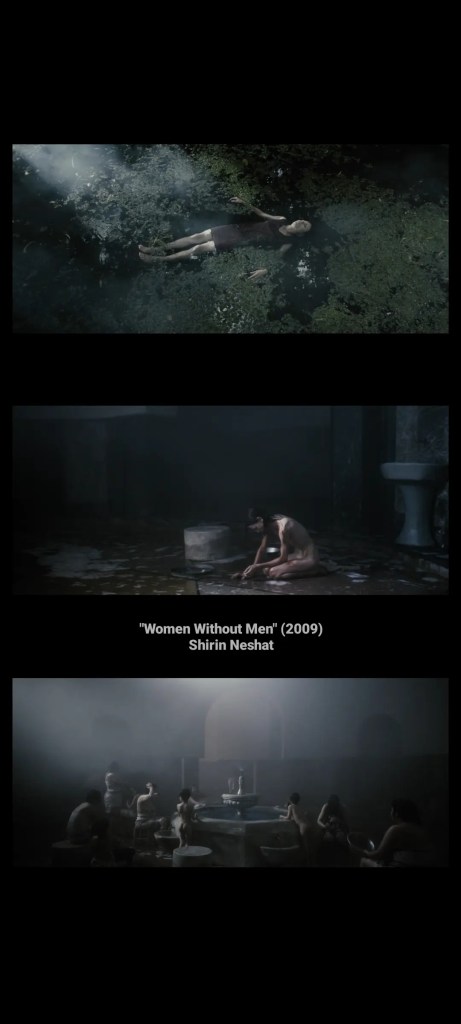
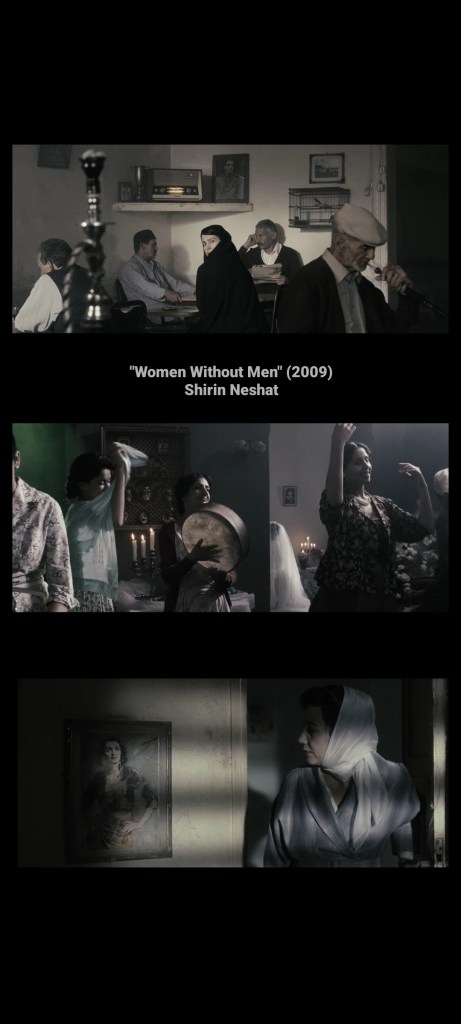
The book naturally ushered me to the screen adaptation. The director, who wrote the preface for this edition, worked closely with the author and the collaboration seems to have led to a beautiful fleshing out of ideas. Being a fan of Iranian cinema — because no one does cinema like the Iranians! — I am tempted to say that I like the film more than the book. But for an exceptional experience, allow me to suggest a book-movie-pairing instead; because what was ambiguous and abstract in the novel became poetry in the film; and if not for the book, there would be no film.
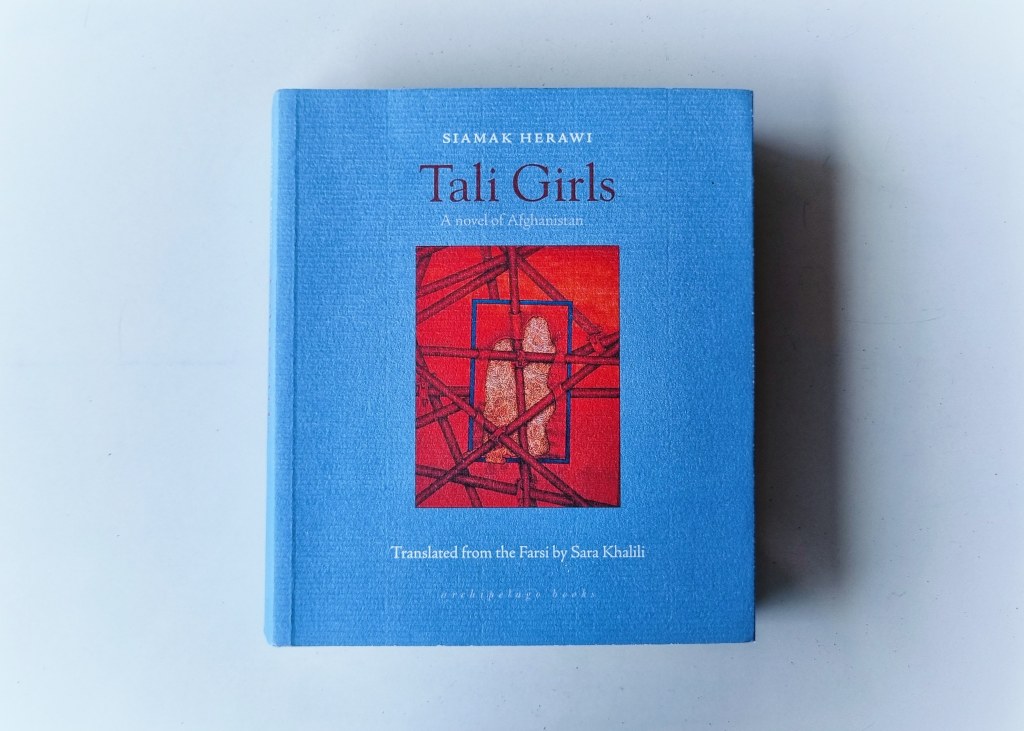
It’s almost absurd to expect happy novels from Afghanistan. I knew I had sorrow coming when I selected this as my third book of 2024. I could have shelved it for later, but how could I resist this blue from Archipelago Books, translated from the Farsi to boot? How often can one find literature translated from the Farsi?
So it was on me when it started to break my heart and made me recoil from the brutality.
Unlike most books about Afghanistan, the characters are not caught in the crossfire of any of the wars that have ravaged Afghanistan for decades.It is set in a picturesque mountain village in the early 2000s when life was simple and young girls were allowed to dream about education and love, and villagers were content with raising livestock and planting their own wheat, beans, and melons. That is until the Talibs discovered the beauty of their nine-year-olds and found their land ideal for the cultivation of poppy to be sold to the “infidels”. Tali Girls is based on true events.
The first person narration shifts from one character to another, effectively and intimately thrusting the reader into a world plucked from its innocence.
I would be reluctant to recommend this for the anguish that it contains, but I am more inclined to listen to one of this novel’s wisest characters:
“‘Remember,’ he says, sitting in his library, ‘the more your eyes open to the world, the more you are likely to suffer. But better that you learn and understand… Read, Kowsar, read to understand the world around you.”
New year, new eyes: This has become an annual theme for my first book of the year, and it has usually involved non-fiction that prod me to look at history, music, literature, life, or the world with a set of new eyes.
This year, I was not able to plan my first book. My younger brother was home for the holidays and reading was not part of the itinerary. We spent most of our time adventuring in the kitchen and binge watching shows that I would normally forgo for reading if left to my own devices.
And it was on a brief solitude after lunchtime when I realized that it was already 2024 and I was without a reading plan.
Then these two books that haven’t yet made their way into my shelf caught my eye, presents from a dear friend who recently traveled to Japan. They came with a note that said, “Our hotel in Kyoto had a bookstore right across it…”
I flipped through There Was a Knock by Shinichi Hoshi because the author is not as widely known here in the Philippines as Natsume Sōseki. The next thing I knew, I was at the last page wanting more!
The few times I felt this entertained by a writer’s cleverness it was with the likes of Queaneau’s Exercises in Style and Calvino’s If on a winter’s night a traveler! But rather than being variations on a theme, each of Hoshi’s fifteen stories are unpredictable and different, and they only have one thing in common — the first line: There was a knock. Needless to say it’s a literary gem!
Botchan by Natsume Sōseki, on the other hand, took me more than halfway to warm up to the main character whom I found rather judgmental and cynical. It was Sōseki’s humorous and engaging writing that kept me going, but only to make me understand in the end that this is ultimately a book about human nature.
At first glance, I wouldn’t have considered any of these two as candidates for my annual first book of the year theme, but here we are and I do not regret it!
Perhaps that’s what having new eyes is all about, too!
Happy New Year and Happy New Eyes, dear fellow readers!
“Ikaw si Peter?!” It was more verdict than question.
They insisted he was Peter over and over again as they beat him up mercilessly.
How did his late evening drive to 7-Eleven turn into a nightmare? It all happened so fast.
The last thing he remembered was stopping at a corner to respond to a message when several men grabbed him, one on each arm and one on each leg. They thrust him into a van and assaulted him.
He was only certain of one thing: He was not, never was, never will be, Peter.
He was not Peter, but the men turned out to be cops on a buy-bust operation. And they forced him to admit, forced him to be Peter.
He who was not Peter was locked up for two days in one of those horrible Philippine detention cells until he was able to contact a good lawyer and apply for bail. The cops raised a case against him. They claim he was caught buying drugs from another man. They accused him of resisting arrest. They put him on the watch list.
He is not Peter. I would know. I’ve known him since forever, and he’s been one of my dearest friends almost right from the moment we met as kids. Alongside his best qualities, I know his sins and his faults. The use of illegal drugs is not one of them. But don’t take my word for it. Trust the two drug test results, urine and hair follicle. Both turned out negative.
Despite that, the case continues. It has been going on for over a year. He has had to go through every single hearing, tremble in his seat each time and listen to the cops pile lies upon lies, even on his birthday. There are times when he would be at court by 8:00 a.m. and the hearing would start at 11:30 a.m. Sometimes he would wait half a day, only for it to be cancelled. He who is not Peter has had to put so much of life on hold because he was mistaken for Peter.
It’s unfair. The trauma is taking a toll on him. I laugh with him to get his mind elsewhere, but I cry for him in private. But for some twisted reason, I am grateful.
I am grateful that he was mistaken for Peter on October 2022. The other Peters between 2016 to mid-2022, the real ones and the ones mistaken for them, could not even put life on hold. There was no life to put on hold. Life was not an option.
“Forget that their name is Marcos. Forget that their name is Duterte. Forget that their name is Aquino. Duterte the First begat Duterte the Second. Aquino the Second begat Aquino the Third. Marcos the First begat Marcos the Second begat Marcos the Third, presidents begetting presidents, begetting vice presidents, rotating and revolving and rotating again. Their names live in airports and amphitheaters, on paper bills and street signs, along the highways where the corpses are still being found. Forget the names of their sons and daughters and remember their dead instead.”
“After this time in the Middle East, I learnt what it was like to carry the weight of people’s stories — and the role that journalists play in bearing witness. Our job was to serve as a funnel, a conduit, and in so doing, hopefully remind viewers across the world that we’re all the same. To elicit even a smidgen of empathy for those who might seem different to you.”
A piano student of mine is studying Debussy’s Claire de Lune, and I recently explained that being emotionally connected to a piece makes it more difficult and exhausting to perform, but (un)fortunately, life and music can only be meaningful that way. And it is this balance between technique and emotional connection that we spend our whole lives trying to master.
After reading this book, I realized that the aforementioned is not only true for music, but for journalism as well; and these pages are a record of a journey in probing and understanding that balance.
I love the unpretentiousness of this book. It does not claim to be a powerful journalistic work. Sometimes it tells you something as simple and true as, “The world turns. And that is what matters. It turns — and we humans keep going. Through conflict. Through inhumanity. Through heartbreak.”
Yes, there is nothing in the passage indicating that this Filipina journalist is vying for the Pulitzer, at least with this book; but it is powerful and heartwarming in the sense that it speaks to me of things that I need to take note of, not only when I read it from cover to cover on the most restful Sunday I’ve had in months, but throughout life, especially when things get tough.
That’s what you will find here: Life lessons from a recovering journalist. There is a certain universality to it, for aren’t we all recovering from something?
The phrase “a little luck” appears nine times in A Little Luck, just as “Elena knows” appears nineteen times in Elena Knows.
Does it matter? Not really. Maybe noticing those details says more of me as a reader than Claudia Piñeiro as a writer. One thing is certain; she does not repeat herself because she is running out of ways to say things. She is consistently unpredictable.
Elena Knows, which I read much earlier, is exceptionally written and translated. The choice to highlight a specific incapacitating disease that isn’t limited to women — to effectively confront every reader with what it feels like to lose bodily autonomy — is, I believe, the most impressive allegory that should be uncovered from under the many brilliant qualities of the novel. There are other apt adjectives for Elena Knows, but beautiful is not one of them.
But for the soulful strains of Piazzolla that wove through A Little Luck’s narrative; for how a woman damaged found the first steps to healing through literature; for how I thought it would all be about pain only to discover that it was principally about happiness; and for the sheer deftness of Piñeiro’s writing — this one is beautiful.
Just as unputdownable, just as suspenseful, just as affecting… and this time, beautiful.
This book does not say anything about Egon Schiele. But it very well could have been written by him, had he been a novelist instead of a painter.
An unexpected turn inside the Belvedere Museum in Vienna once brought me face to face with enormous paintings by Schiele. When you go to a place for Klimt and be confronted by Schiele, it is a staggering experience you will not easily forget.
Haunting eyes, naked and exaggerated anatomies, comical expressions, grotesque scenes, and dark humor — whether you like it or not, you cannot look away. Even if you eventually manage to, you will be forced to take another look, and another.
Because by some bizarre and compelling artistry, the artist wraps you around a strangely proportioned finger, the way Cheon Myeong-Kwan does in this whale of a tale.
So, do not let the cover design of the Archipelago Books edition with its happy colors fool you. Or maybe, let it fool you; so that it startles you, the way some skillful art and literature should. Maybe take that turn and be confronted by something you normally would not seek out.
Oftentimes, the art that we find grotesque are missives from a mind sensitive to how the world truly operates. For isn’t this book a critique on justice, economic, and social systems; and even on American influence through Hollywood? And aren’t these political caricatures in the guise of troubling characters and a metafictional storyline?
I would think twice before criticizing this book for what it seems on the surface, lest I become akin to that judge in 1912 who set fire to one of Schiele’s drawings at a trial wherein Schiele was accused of indecency.
“Reader, you will believe what you want to believe. That’s all there is to it.”
I call it my Fertile Crescent and Silk Route Reading Project and yet there is a glaring dearth of Chinese writers in my literary diet. Maybe because I know that Chinese literature is a sort of Pandora’s box disguised as an ornate lacquer case. One that would release a curse upon the reader. The curse of wanting to read and acquire more.
Unready for another full-blown obsession, this is me prying the lid of that box ever so gently.
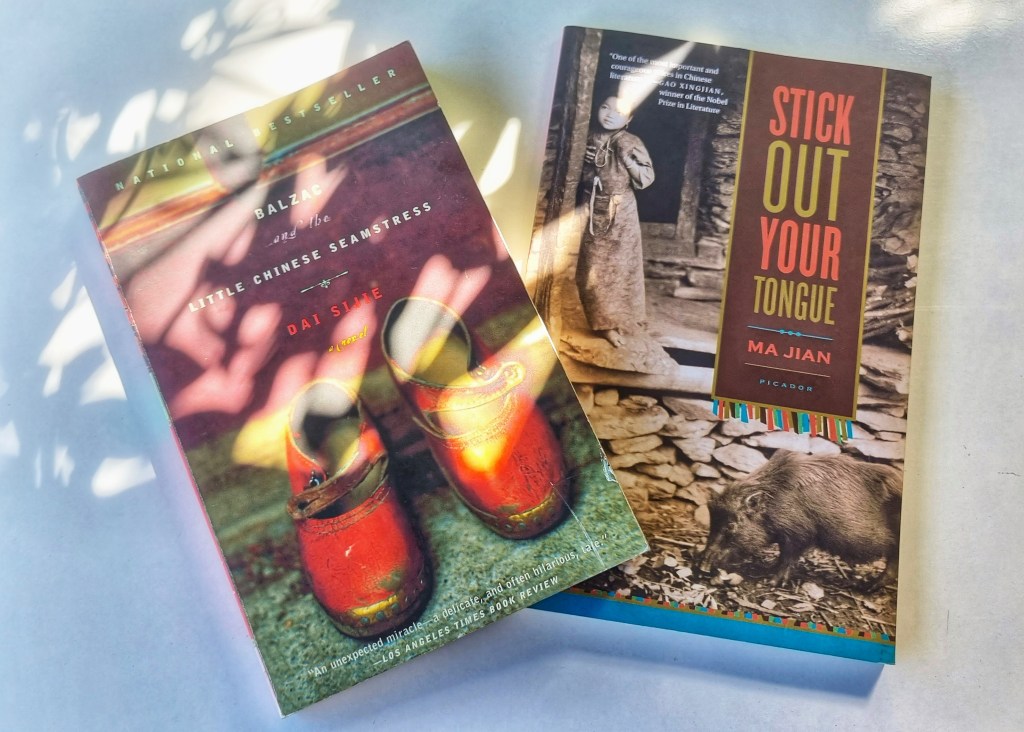
Dai Sijie’s Balzac and the Little Chinese Seamstrees is closer to Chinese fast food and so much easier and more pleasant to swallow than Ma Jian’s Stick Out Your Tongue; and I can only be glad that I read these two in succession so they could balance each other out.
Stick Out Your Tongue is the slimmer volume and yet its morbid stories of sky burials, incest, and disturbing Buddhist initiation rites juxtaposed with Tibet’s harsh landscape shakes one to the core. I cannot even think of recommending this book. But it is the afterword that I find especially striking as it draws attention to the destruction that the Chinese government has wrought in Tibet, or the fact that over a million Tibetans have died due to political persecution or famine — yet another case of a people denied control of their lands and destinies by a powerful bully.
Balzac and the Little Chinese Seamstress, on the other hand, offers more heartwarming and comic imagery as two bourgeois teenage boys navigate their “re-education” in the countryside during China’s Cultural Revolution. They were among the millions of China’s youth who were sent to the rural areas to be re-educated by peasants from the mid-60s to the mid-70s. Their lives take a turn when they meet the little Chinese seamstress, but these lives are truly altered when they unexpectedly encounter French literature at a time when “ignorance is in fashion”. It may not be classified as a literary masterpiece but it is a celebration of the transformative power of literature; and I can’t blame you if this book made you scour bookshops and the internet for a definitive English translation of Romain Rolland’s Jean-Christophe. That’s what it made me do.
A writer who merely sits behind his desk or peers at his city through a tinted car window could not have written this.
The person who has written these stories is well-acquainted with the nooks and crannies of Dumaguete (or “Dumaguet” until it becomes “Dumaguete” again in page sixty), he has sought refuge under its acacia trees, he has gone to the market for puto maya and native cocoa, has frequented the chicken inasal places, he has walked its streets, he is burdened by its secrets, he is intimate with its ghosts and the living, and knows his city like a lover knows his beloved’s face.
Wasn’t this supposed to be a collection of fantasy and science fiction? Doesn’t Neil Gaiman’s blurb on the cover further suggest this?
Yes, it is; and yes, it does. But I recognize in this book what I recognize in favorite writers like Khoury, Pamuk, and Mahfouz. Their works are celebrations of their cities. The love affair they have with their cities seep into their stories regardless of genre. And yes, it is a book of heartbreak and magic, horror and fantasy, but look deeper and see that it is a celebration of Dumaguete — it’s landscapes, seascapes, its food, and the loves lost and found on its soil.
Beirut has Elias Khoury, Cairo has Naguib Mahfouz, Istanbul has Orhan Pamuk, Dumaguete has Ian Casocot.






 The Book-Butterfly