September 21, 2023 – Ancient Thebes

Based on the rising and the setting of the sun, the pharaohs built their homes and places of worship on the east bank and their tombs and mortuary temples on the west bank of the Nile. From the Old Kingdom pharaohs who had pyramids constructed without inscriptions inside their tombs, to the New Kingdom pharaohs who preferred elaborately decorated rock-cut tombs in the Valley of the Kings, the same pattern is followed.
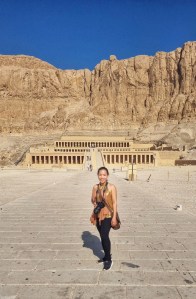
My excursion to the west bank of what once was ancient Thebes began with the grand Mortuary Temple of Hatshepsut that was exploding with sunlight by the time I arrived. At the time it was built, Egyptian architects and artists were believed to be in a phase of reinterpreting the traditional forms of architecture. The temple is said to be an exemplification of this particular period of artistic revolution, and is considered to be one of the architectural wonders of the ancient world.

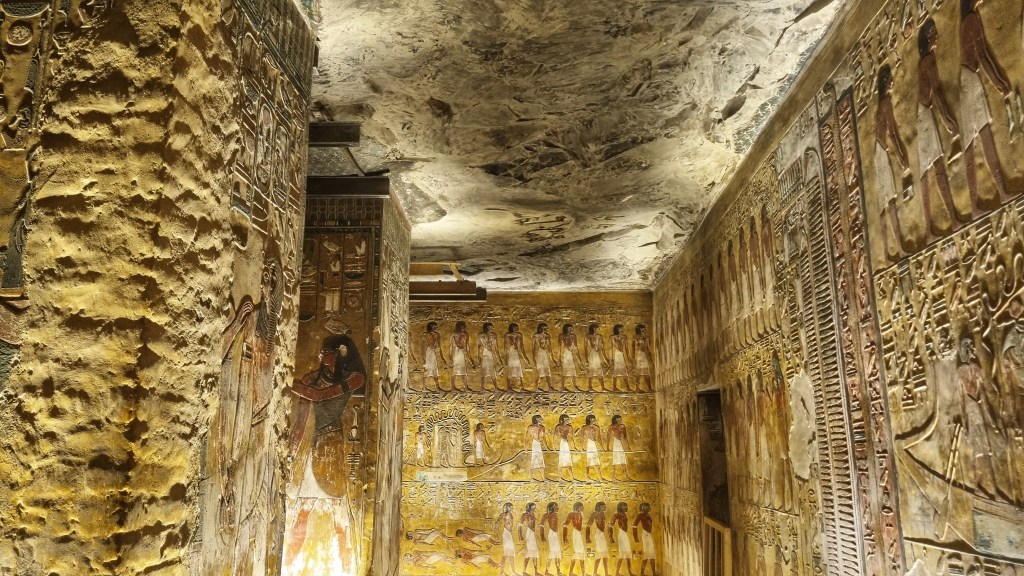
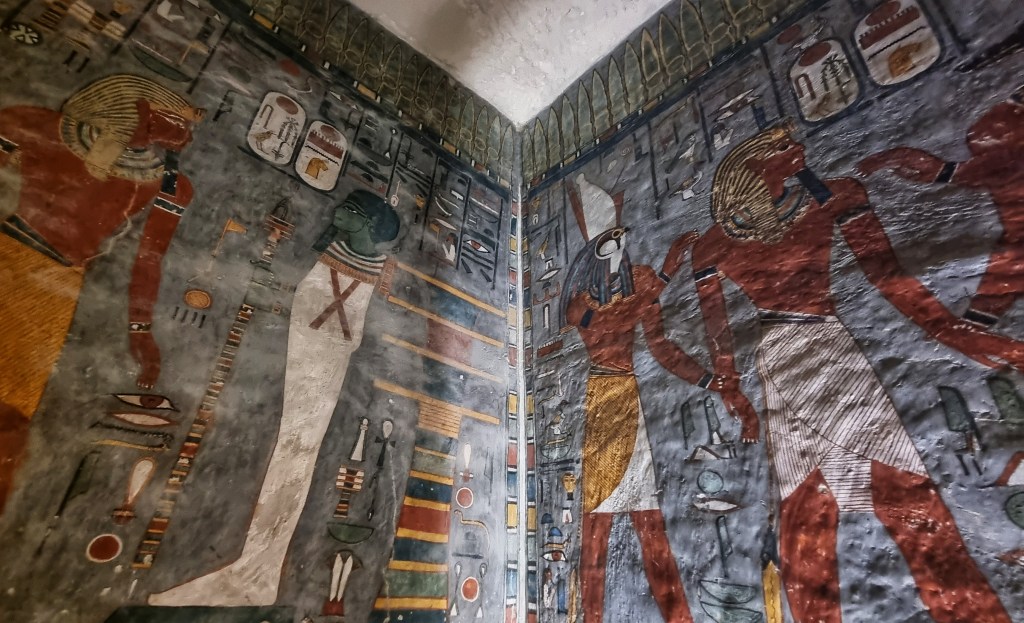
I was already overflowing with thoughts and impressions by the time I proceeded to the shadowy depths of the Valley of the Kings. By the time I finished visiting the tomb of Seti I, one of the most beautiful tombs in the valley; Tutankhamun’s, whose tomb still contains and displays his mummy; and the tombs of the Ramesseses, I was already feeling a sensory overload. But at the same time, hushed. Thoughts of life and death, light and dark. Egypt does this to you so beautifully.

September 20, 2023 – Of Ego and Sound at the Karnak and Luxor Temples

“Why do you know so much about our history?” asked my elderly guide for the Karnak and Luxor Temples.

“I don’t! There’s so much I don’t know yet that’s why you have to tell me more.”

“Well, you know more than anyone I’ve ever guided. When I ask you something you are able to answer.”

“Maybe it’s Naguib Mahfouz. He made different layers of Egypt’s history come alive for me — from the Pharaonic times up to the revolution.”

“Mahfouz?! You read Naguib Mahfouz?! This is my first time as a guide that I have met someone who reads Naguib Mahfouz! You know there’s a museum and a coffee shop in Cairo…” He trailed off when he saw me nodding, shook his head, and smiled in disbelief.

And there I was thinking how he’d be in for a pleasant surprise if he meets my friends and my book club!

After a brief silence, “Are you sure history is not part of your work?”

“It should be part of everyone’s work.”

“I think you are a genius.”

And just like that, friends. I have been promoted to genius status. I love Egypt. 😂

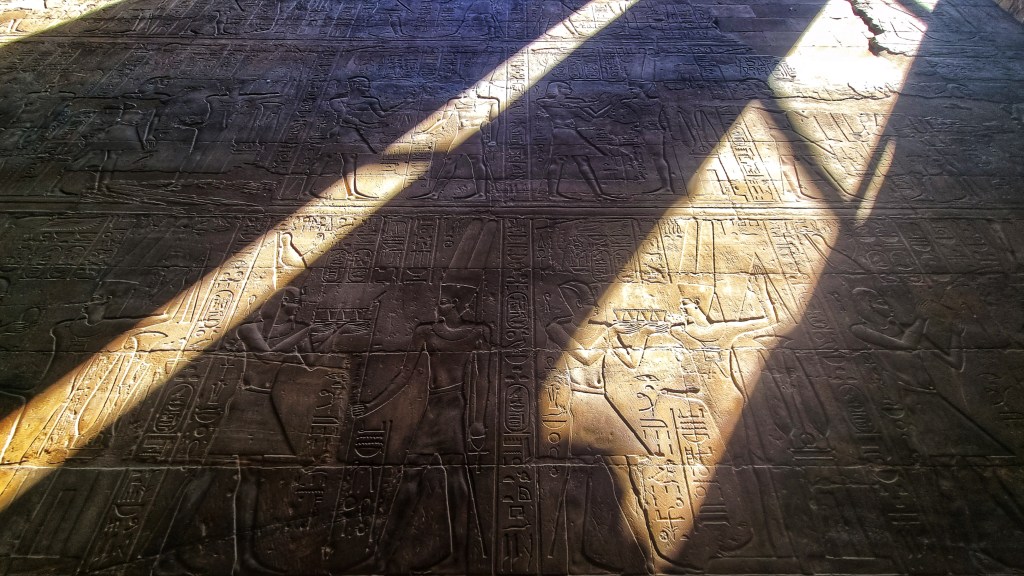
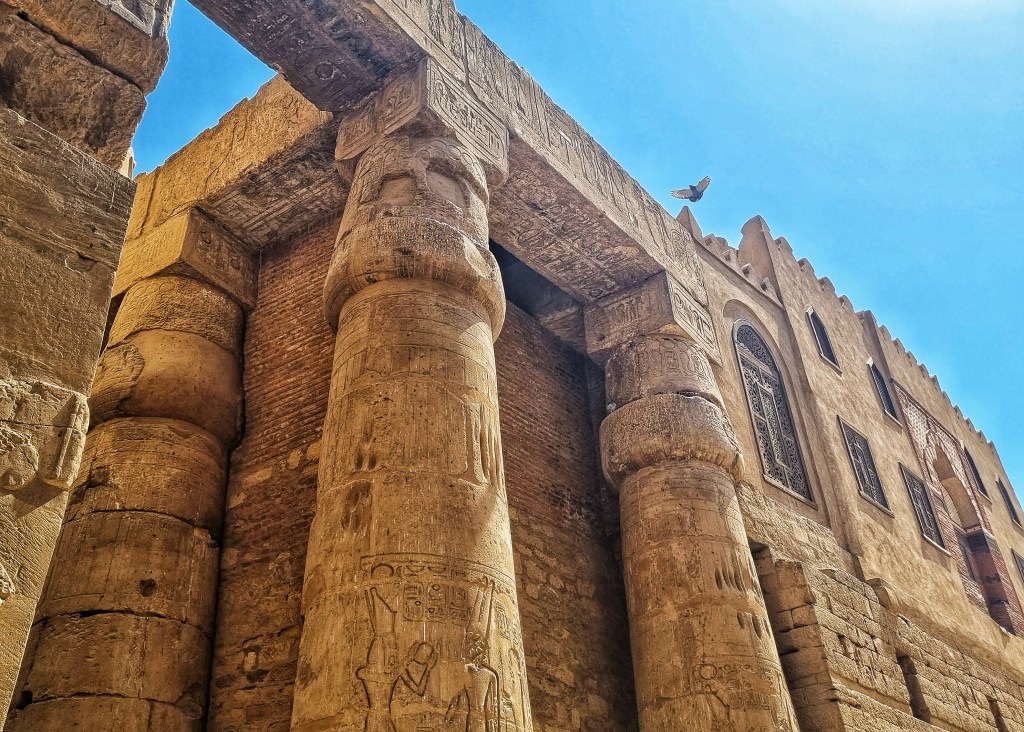
I did get one answer wrong, and the correct answer fascinates me as a musician. When he asked what the gigantic columns in the Hypostle Halls of the Karnak and Luxor Temples were for, I answered, “Ego.” Haha!

Apparently it’s for sound! The priests used it as amplifiers for their chants so that their voices would resonate far and beyond the temples!

I stand corrected. Now I know that the columns are for sound… and ego. Haha! But shhh… don’t tell him.

September 14, 2023 – Aswan: The Unfinished Obelisk, Philae Temple, and Abu Simbel

Aswan. This is where Egypt begins. It only seemed logical to begin my excursions to the ancient Egyptian archaeological sites here.

If you’re wondering what that drill is doing there… well, I wanted to finish the obelisk! Who wants unfinished business anyway?! Haha… kidding. They were constructing a ramp for tourists and the carpenter kindly offered to take my picture.

In one of Aswan’s stone quarries, one site has intrigued me almost as much as the pyramids. Had it been completed, it would have been the largest obelisk ever built by the ancient Egyptians. The speculation that it had been commissioned by Queen Hapshetsut added to my wonder. Needless to say, within an hour after landing in Aswan, I was already at the site of the Unfinished Obelisk, fascinated by the existing evidence of the ancients’ construction process.

The following day, I set out early and hired a private car to take me to Abu Simbel. The ride itself was exciting as I witnessed a most enigmatic sunrise, passed checkpoints due to the proximity to the Sudanese border, saw more Nubian villages and the place where they quarantine camels from Sudan, drove through an otherworldly terrain, and finally beheld the twin temples originally carved out of the mountainside in the 13th century BCE, during the reign of Ramesses II.

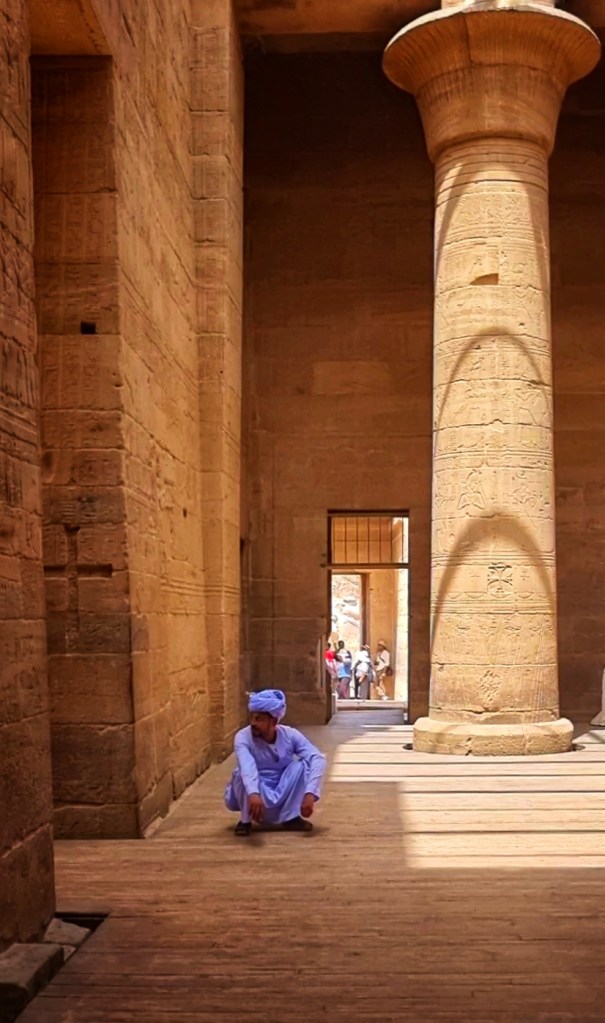
But when it comes to idyll, Philae Temple Complex takes the throne. A small ferry took me to an island on the Nile and I was immediately transported to the pages of Mahfouz’s Rhadopis of Nubia. The Temple of Isis built in the reign of Nectanebo I in 380-362 BCE is the island’s most striking feature, and yet through the different architectural structures, one could see the Pharaonic, the Ptolemaic, the Romans, and the Christians, stamping their identities on the landscape. It has never been this clear to me; how architecture IS identity.