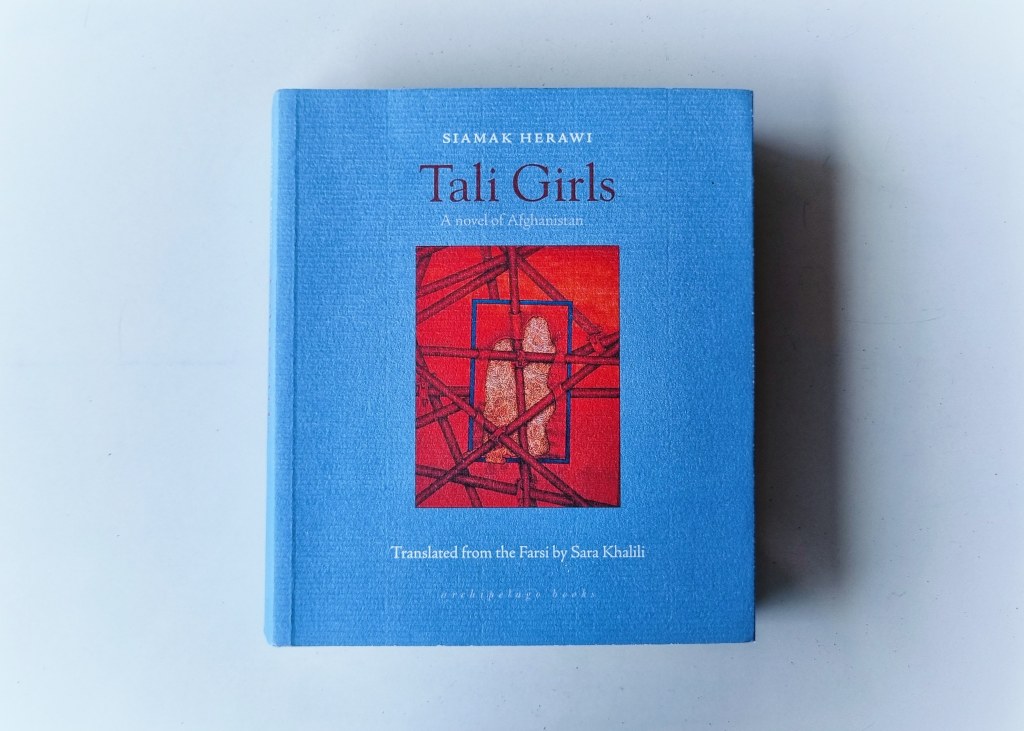
It’s almost absurd to expect happy novels from Afghanistan. I knew I had sorrow coming when I selected this as my third book of 2024. I could have shelved it for later, but how could I resist this blue from Archipelago Books, translated from the Farsi to boot? How often can one find literature translated from the Farsi?
So it was on me when it started to break my heart and made me recoil from the brutality.
Unlike most books about Afghanistan, the characters are not caught in the crossfire of any of the wars that have ravaged Afghanistan for decades. It is set in a picturesque mountain village in the early 2000s when life was simple and young girls were allowed to dream about education and love, and villagers were content with raising livestock and planting their own wheat, beans, and melons. That is until the Talibs discovered the beauty of their nine-year-olds and found their land ideal for the cultivation of poppy to be sold to the “infidels”. Tali Girls is based on true events.
The first person narration shifts from one character to another, effectively and intimately thrusting the reader into a world plucked from its innocence.
I would be reluctant to recommend this for the anguish that it contains, but I am more inclined to listen to one of this novel’s wisest characters:
“‘Remember,’ he says, sitting in his library, ‘the more your eyes open to the world, the more you are likely to suffer. But better that you learn and understand… Read, Kowsar, read to understand the world around you.”
And so, we read. We must.


 The Book-Butterfly