It was not a reading slump. My readings simply could not veer away from articles on the Israel-Hamas war. Since October 7, reading for leisure felt so much like what Gideon Lasco would call “an embarrassment of privilege”.
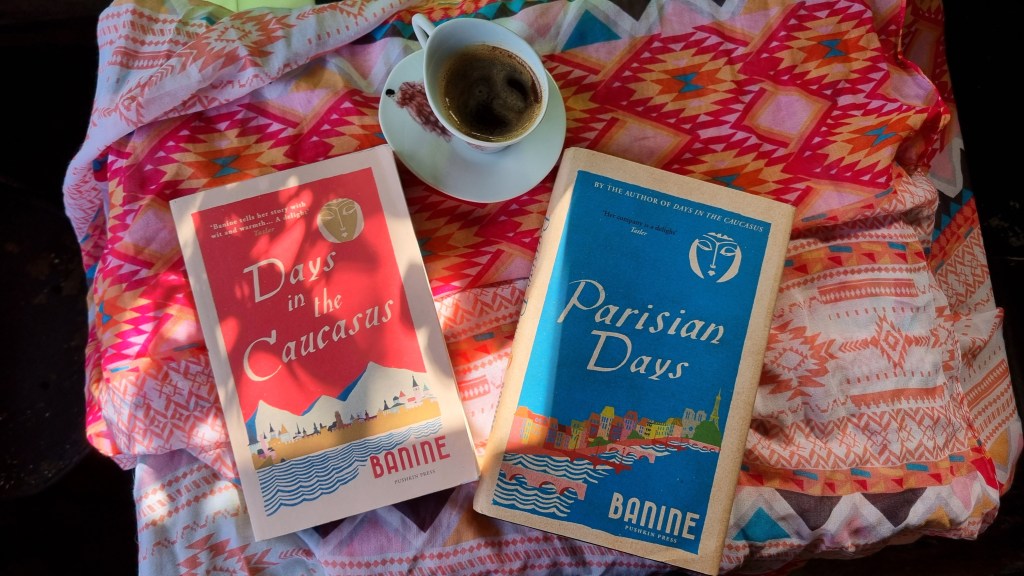
But upon arriving from another short trip to the capital, a two-month late parcel containing Pushkin Press books that I ordered for Women in Translation Month greeted me. And because I am a strong believer in the seemingly late but apt arrival of books in our lives, I couldn’t resist picking up Banine.
Although set over a century ago and published in 1946, Days in the Caucasus is not far removed from current events; freedom for women meant gaining precedence over the veil, climate change was already felt by our perceptive narrator, and it even offers a glimpse of the long-standing conflict between Azerbaijan and Armenia that made headlines again last month. As readers, we have also learned by now that a coming-of-age story is an unceasing current event.
But oh, to have Banine as a narrator is such a whiff of fresh air! There is already a Tolstoyan flavor in the first line of Days in the Caucasus when she opens with, “We all know families that are poor but ‘respectable’. Mine, in contrast, was extremely rich but not ‘respectable’ at all.” And thus begins a witty narration of an extraordinary place, an extraordinary time, and an extraordinary life.
Banine, born at the turn of the 20th century into a family of oil magnates in Baku when Azerbaijan was still part of the Russian Empire. That information alone heralds upheavals of every kind, yet she colors this turbulent part of life and history with an irresistible charm.
This heiress who lost her home, her freedom, and fortune when the Bolsheviks came into power had a special relationship with nature (“…they did not play dead with me; they replied in a simple language, sufficient for those who knew how to hear…”), loved playing the piano (“I was fortunate to have a consolation that I turned to with greater frequency — my piano …only the piano found favor with me…”), loved to read but also acknowledged its limits (“…those who claim that reading is a consolation for everything cannot feel very deeply — a powerful emotion leaves no spare mental capacity; it takes over, hypnotizes you, stops you thinking of anything else…”).
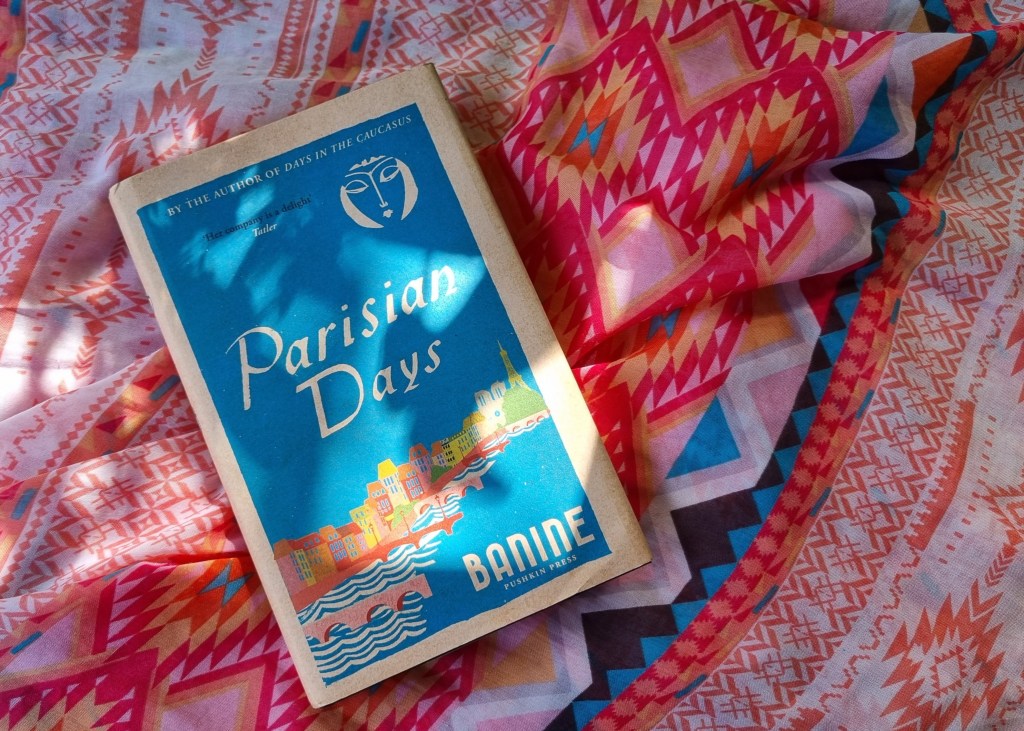
Parisian Days chronicles her subsequent life in Paris as an adult and an émigré. In it we see her humor and astute observations aging like fine wine. It makes one realize that these are some of the shoulders on which the Annie Ernaux-es of today have stood in order to write fearlessly about society and a woman’s intimate thoughts.
Banine is a lovely companion of a narrator who, whilst making light of her tragedies, makes us recognize our privilege of experiencing the loss of home and freedom only through the books and stories of others.
“It revealed to me an eternal truth: as long as the flight of a bird, the soughing of leaves, the wash of the sea bring joy to your senses and mind, life remains a precious gift.”
“Life was waiting for me. I had to go and meet it despite the burden of my reluctant heart.”
Many thanks to Anna for recommending this significant addition to my Silk Route & Fertile Crescent Reading Project! 🤍
 The Book-Butterfly
I am so glad you loved this one as much as I did! How witty and fun is she? One of my all time fave books I think! Xxx
LikeLiked by 1 person
Thank you, once again, for sharing her with me! Finished Parisian Days yesterday and her humor is even more potent there! Haha! Modified this post a bit to include snippets of Parisian Days. ❤
LikeLike
Oh I can’t wait to hit Parisian Days then! More humor is what I need during this crazy hectic time! C
LikeLiked by 1 person
Ps. Like the modified post. Two beautiful books, perfect for any collection! X
LikeLiked by 1 person