October 19, 2021
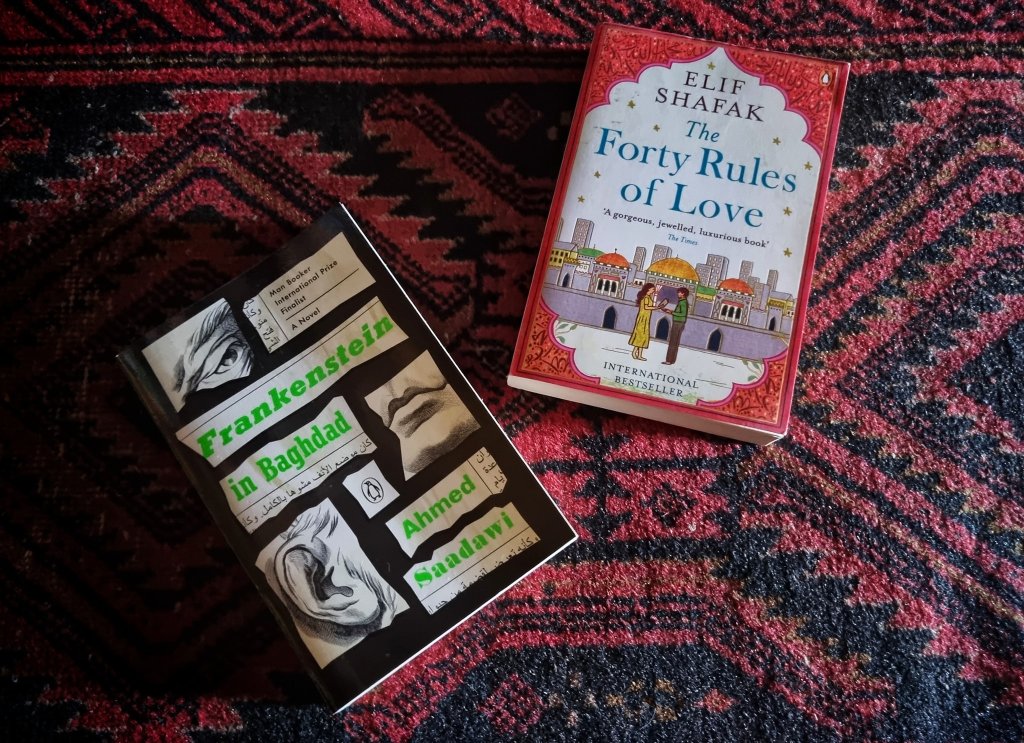
“Things We Fear” — As soon as I learned about the Ex Libris (book club) theme for this month, I immediately took Ahmed Saadawi’s Frankenstein in Baghdad from my shelf. Not a fan of the horror genre, it is one of the few I own that seems closely related to the theme.
I have this book because it is written by an Iraqi and therefore part of my current reading project.
Set in post-Saddam Hussein Baghdad, the novel is a winner of the 2014 International Prize for Arabic Fiction and a finalist of the Man Booker International Prize in 2018. However, it took me a while to process how I felt about it.
A couple of passages eventually led me to conclude that this walking corpse, stitched up from different body parts of victims of violence, is the author’s grim portrait of what it means to be an Iraqi today: “Because I’m made up of body parts of people from diverse backgrounds — ethnicities, tribes, races, and social classes — I represent the impossible mix that never was achieved in the past. I’m the first true Iraqi citizen, he thinks.”
“The definitive image of him was whatever lurked in people’s heads, fed by fear and despair. It was an image that had as many forms as there were people to conjure it.”
I think the novel is powerful in its own way, and it did give me goosebumps on the last page — but it did not really scare me.
So… If we did not have the power outage today that made me miss the book session, I would have presented The Forty Rules of Love by Elif Shafak instead.
Because, come on! Love is already scary enough! How much more if you add Forty Rules to it? Haha!
Finished only on the third attempt as a humorous attempt to present something “scary” in a bookclub session, I feel conflicted because it features a lot of what I am currently interested in — a time and place where the Crusades and Mongol conquests intersected, a time of Assassins and Mamluks, and basically the time when Rumi lived! I enjoyed the historical details but not so much the parts where the prose got syrupy and saccharine. It has its own beauty, but I think another reader might fare better.

 The Book-Butterfly