Elif Shafak: The Island of Missing Trees

October 12, 2021

“You don’t fall in love in the midst of a civil war, when you are hemmed in by carnage and by hatred on all sides… You don’t lose your heart at a time when hearts are supposed to remain sealed, especially for those who are not of your religion, not of your language, not of your blood. You don’t fall in love in Cyprus in the summer of 1974… and yet there they were…”

Yes, this novel is about a love that blossomed in Cyprus. A forbidden love between a Greek boy and a Turkish girl in that island country that cradles Nicosia, the only divided capital in the world — split between Greek and Turkish Cypriots.

But if you have been reading the author for some time, you know that she transcends her pretty book covers, and usually gives voice to those who do not have any, and calls attention to an abundance of topics and pressing issues; and you get the inkling that it cannot be entirely about love.

Aside from being delighted that a favorite poem of mine, Ithaka by C.P. Cavafy, features significantly in the story, this novel moved me so much more than I thought it would. I feel that this is where Elif Shafak has achieved a balance of the elements: culture, tradition, superstition, history, loss, grief, relationships, home, migrations, nationalism, violence, fear, mental health, feminism, eco-consciousness, intergenerational memory and trauma, inherited pain, the histories and stories in families that affect the next generation… 

Matters seemingly impenetrable to language, and yet they are carried out — narrated by a fig tree! 

Naturally, a fig tree. Can it possibly be Elif Shafak without the whimsy? And yet this is a wise fig tree who might, at length, aid the reader in understanding… what these Ithakas mean.

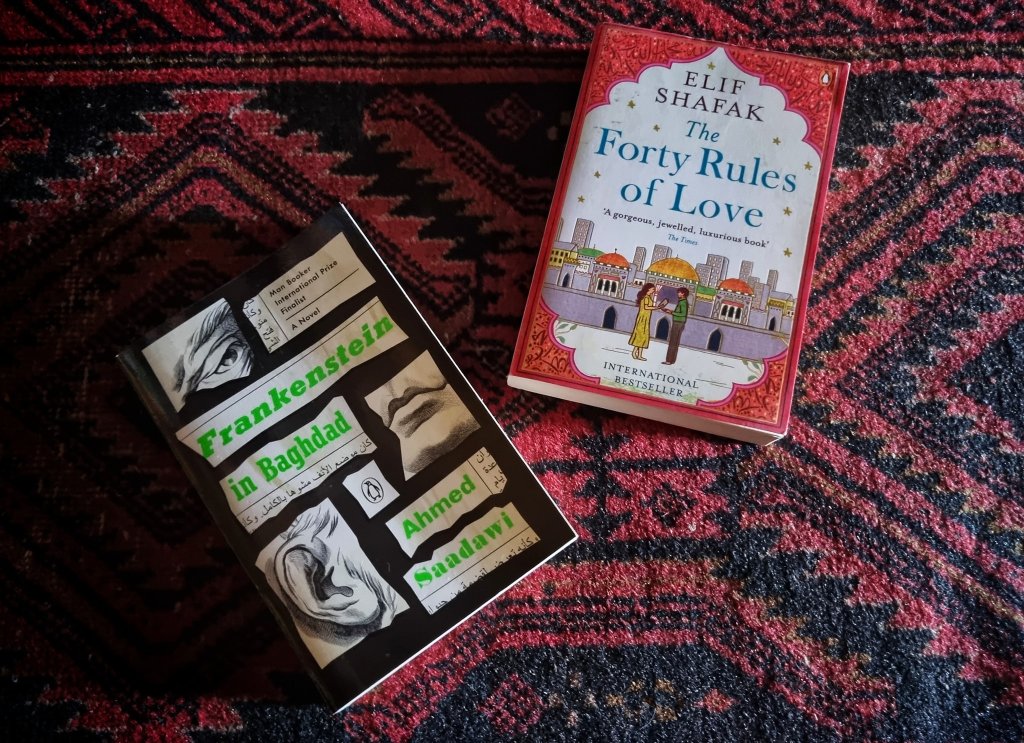
Ahmed Saadawi’s Frankenstein in Baghdad and Elif Shafak’s The Forty Rules of Love

October 19, 2021

“Things We Fear” — As soon as I learned about the Ex Libris (book club) theme for this month, I immediately took Ahmed Saadawi’s Frankenstein in Baghdad from my shelf. Not a fan of the horror genre, it is one of the few I own that seems closely related to the theme.

I have this book because it is written by an Iraqi and therefore part of my current reading project.

Set in post-Saddam Hussein Baghdad, the novel is a winner of the 2014 International Prize for Arabic Fiction and a finalist of the Man Booker International Prize in 2018. However, it took me a while to process how I felt about it.

A couple of passages eventually led me to conclude that this walking corpse, stitched up from different body parts of victims of violence, is the author’s grim portrait of what it means to be an Iraqi today: “Because I’m made up of body parts of people from diverse backgrounds — ethnicities, tribes, races, and social classes — I represent the impossible mix that never was achieved in the past. I’m the first true Iraqi citizen, he thinks.”

“The definitive image of him was whatever lurked in people’s heads, fed by fear and despair. It was an image that had as many forms as there were people to conjure it.”

I think the novel is powerful in its own way, and it did give me goosebumps on the last page — but it did not really scare me.

So… If we did not have the power outage today that made me miss the book session, I would have presented The Forty Rules of Love by Elif Shafak instead. 

Because, come on! Love is already scary enough! How much more if you add Forty Rules to it? Haha!

Finished only on the third attempt as a humorous attempt to present something “scary” in a bookclub session, I feel conflicted because it features a lot of what I am currently interested in — a time and place where the Crusades and Mongol conquests intersected, a time of Assassins and Mamluks, and basically the time when Rumi lived! I enjoyed the historical details but not so much the parts where the prose got syrupy and saccharine. It has its own beauty, but I think another reader might fare better.

Elif Shafak: How to Stay Sane in an Age of Division

October 22, 2021

“It is mostly through stories that we learn to think, perceive, feel and remember the world in a more nuanced and reflective way. As we gain a better understanding of the struggles of people from different backgrounds, and start to imagine lives beyond the one we are living, we recognize the complexity and richness of identities and the damage we do to ourselves and to others when we seek to reduce them to a single defining characteristic.”

“If wanting to be heard is one side of the coin, the other side is being willing to listen.”

“…we have become bad listeners and even worse learners. Whether in public or digital spaces nuanced debates are not welcome anymore. Instead there are clashing certainties… They are not there to listen and they are not there to learn.”

“If and when I am a reluctant listener, I will also become a poor learner. I will interact less and less with theories and opinions that do not agree with mine. And there will come a point when I will simply stop talking to people who are different from me.”

“When coexistence is undermined in this way societies become extremely polarized and bitterly politicized, ever wary of the ‘other side and their intentions’. Democracy, which is essentially about compromise and negotiation, conflict resolution and pluralism, a system of checks and balances, suffers from this constant tension and escalating antagonism… It is not a coincidence that all across the world authoritarian demagogues go to great lengths to incite and inflame polarization. They know they will benefit from it.”

Written by Elif Shafak during the pandemic and reading this amidst the cacophony of the Philippine political menagerie, this little book cannot be more relevant.

What if we can transform this age of division into an age of reading, connecting, engaging, listening, learning, examining our assumptions and stereotypes, expanding our minds, and softening our hearts? Who is willing?

Amin Maalouf: Samarkand

November 20, 2021

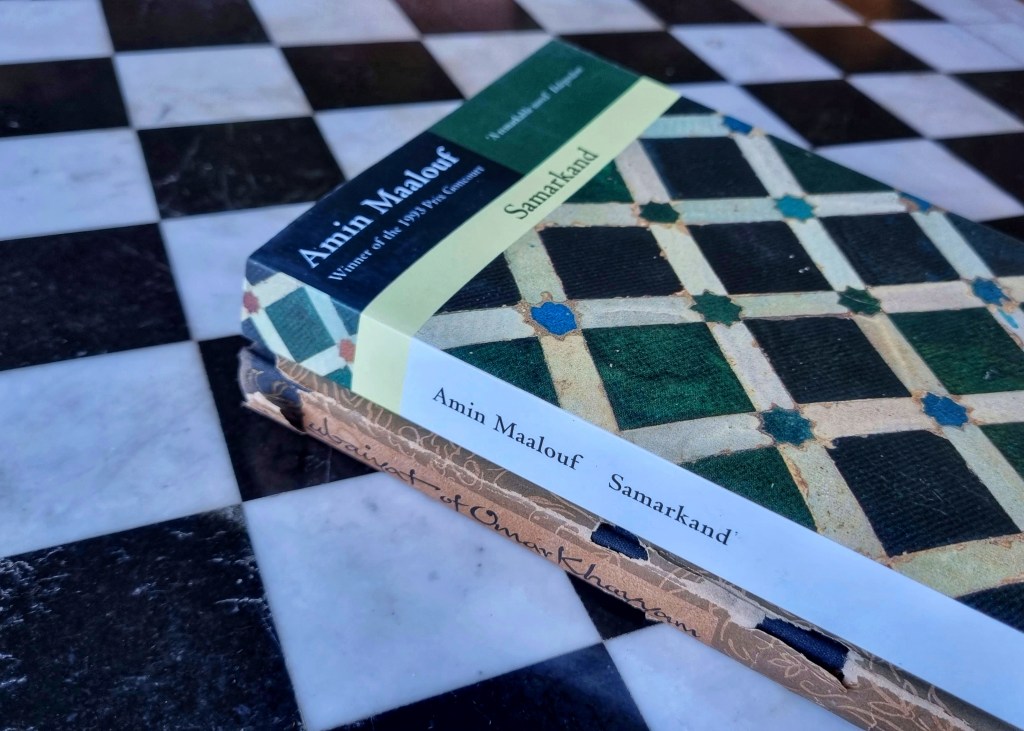
It is almost impossible to tell a story of Omar Khayyam without involving his contemporaries: Hassan-i Sabbah, founder of the Order of Assassins, and Nizam Al-Mulk, Persian history’s most famous vizier — the very first victim of the Assassins. Their destinies and of Persia’s are so entwined that it would also be impossible to discuss Persian history without touching on this legendary trio. Amin Maalouf takes these characters and animates history with his seamless blending of fact and imagination, making Samarkand an entertaining read for any Persophile.

Chapter one wrests the reader from the present to vibrant 11th century Samarkand where a qadi tells Omar Khayyam, after the latter is nabbed in the marketplace and recognized as a failasuf (a philosopher or a person associated with the sciences widely considered profane at such a time and place), “The Almighty has granted you the most valuable things that a son of Adam can have — intelligence, eloquence, health, beauty, the desire for knowledge and a lust for life… I hope that He has not deprived you of the wisdom of silence, without which all of the foregoing can neither be appreciated nor preserved.”

The wise judge proceeds to present the young Omar a blank book wherein he could write his thoughts instead of speaking them out loud to a populace unprepared for his unconventional views. The pages would then be filled and would persevere through time to become what we know as The Rubaiyat.

The Rubaiyat is a collection of ruba’i or quatrains that would establish Khayyam’s name as a poet centuries later in the West, but the work of poetry would ironically make readers oblivious to the complete man — a polymath: mathematician, astronomer, scientist, philosopher, among many other things. Born eleven years after the death of the great Ibn Sina (Avicenna), Khayyam is considered his intellectual successor.

Although Samarkand is mainly about the imagined fate of The Rubaiyat’s original manuscript, in my mind these all took a backseat to a man whose genius was irrespective of the mode of expression. It made me feel wistful when the novel’s timeline left Omar Khayyam and the 11th century. It feels as if something of myself, sitting in a Persian garden while listening to him speak, remained in Samarkand.

“I am old now and need to know that I have a trusty man at my side — because of the manuscript. That is the most precious thing I possess. In order to take on the world, Hassan-i Sabbah has built Alamut (the Assassins’ fortress), whereas I have only constructed this minuscule paper castle, but I choose to believe that it will outlive Alamut.”

It did. It continues to…

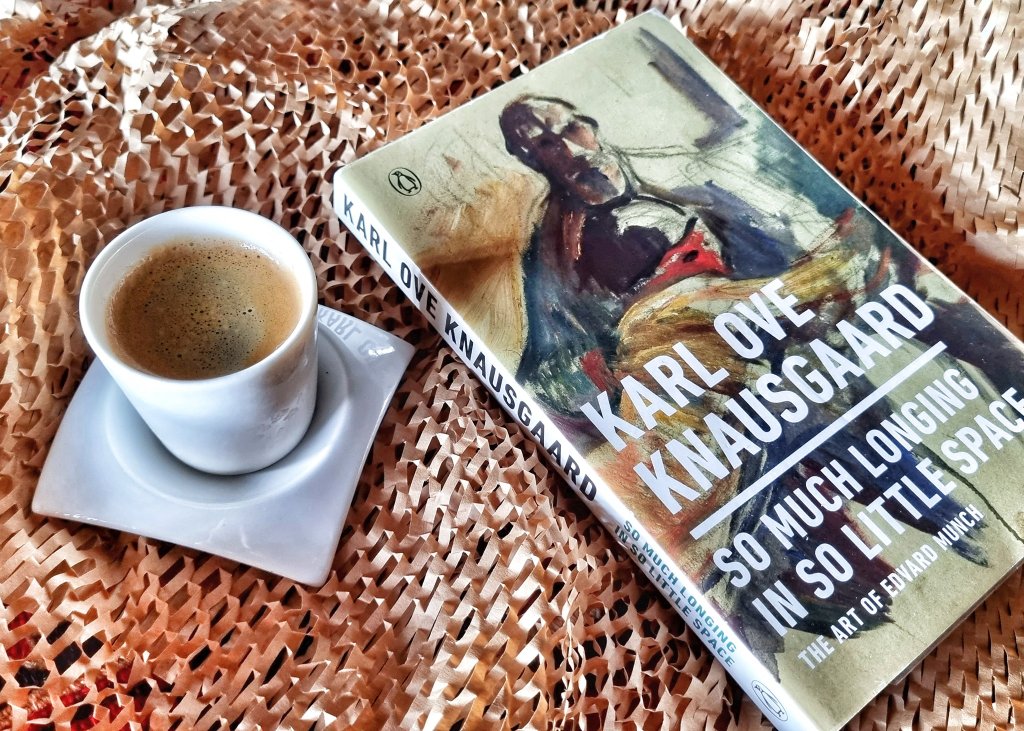
Karl Ove Knausgaard: So Much Longing in So Little Space

November 26, 2021

Edvard Munch beyond and behind 𝘛𝘩𝘦 𝘚𝘤𝘳𝘦𝘢𝘮, written by Karl Ove Knausgaard beyond and behind the bestselling memoirs.

It reads like a personal meditation on the driving force for art, literature, music, the impact of emotional and psychological experiences on the artistic process. In essence, it is enlightening art investigation, history, and criticism… but after all of these, splendidly rendered inconsequential by Knausgaard who ultimately acknowledges that real art transcends words.

“𝘈𝘯 𝘢𝘤𝘵 𝘰𝘧 𝘢𝘳𝘵 𝘪𝘴 𝘱𝘳𝘦𝘤𝘪𝘴𝘦𝘭𝘺 𝘴𝘦𝘦𝘬𝘪𝘯𝘨 𝘴𝘰𝘮𝘦𝘵𝘩𝘪𝘯𝘨 𝘵𝘩𝘢𝘵 𝘤𝘢𝘯’𝘵 𝘣𝘦 𝘴𝘢𝘪𝘥 𝘰𝘳 𝘥𝘰𝘯𝘦 𝘪𝘯 𝘢𝘯𝘺 𝘰𝘵𝘩𝘦𝘳 𝘸𝘢𝘺… 𝘐𝘵’𝘴 𝘢 𝘸𝘢𝘺 𝘰𝘧 𝘴𝘦𝘦𝘪𝘯𝘨 𝘵𝘩𝘪𝘯𝘨𝘴, 𝘢 𝘸𝘢𝘺 𝘰𝘧 𝘣𝘦𝘪𝘯𝘨…”

Iran’s Trees

Iran’s trees. The arboreal titles led me to read this as a pair.

The cypress and the greengage now adorn landscapes and orchards around the world, but it was in Persia that they originated; and although these books are not about the history of trees, these sing of the Iranian soul — finding enlightenment through a greengage, or ever-bending like the cypress. 

The Cypress Tree can stand as a refresher or introduction to Iran’s history. Kamin Mohammadi does not make it seem like she is merely listing events chronologically. The melody in her language is retained despite summarizing a civilization and sharply criticizing its rulers.

Of Khomeini, “Hadn’t he dug up the earth in which we thrived and condemned the nutrients that fed our beings as unhealthy, corrupt and un-Islamic?” Of its culture she accurately expresses how, throughout history, it “infiltrates the dominant culture of the invader, transforming it to glory.” Of its food, their day shapes itself around it. Of its language “made so absolutely for amusement and love.”

As cliche as it may sound, this is truly a love letter to Iran — the Iran “not one of mullahs and fundamentalism, but a place of kindness and love, an abundant paradise of mountains and deserts and turquoise seas… not populated by implacable priests and unshaven blood-hungry young men… but where the language even of strangers was affectionate and poetic.”

The Enlightenment of the Greengage Tree is written by none other than the first Iranian woman to hitchhike the entire length of the Silk Road, Shokoofeh Azar. 

When it comes to Magic Realism, our favorite Latin American writers come to mind. But this work reminds us that as far as recorded literature goes, this region goes way back to the Arabian Nights and further.

For readers who are not fans of the genre, this can be overwhelming and chaotic. Having read mostly non-fiction in November, it took me a few chapters to adjust and warm up to it. But for those who have the patience for Magical Realism suffused with Persian mythology and superstition, this can be an exceptional experience. It was shortlisted for the 2020 International Booker Prize, after all.

By chapter 5, you will begin to understand that a dead person is narrating the story. There will be indelible scenes of Khomeini’s death reimagined, of musical instruments and books being burned, of a mother’s heart becoming a graveyard… but the political, the poetic, the evocative, the profound figures of speech, crescendo toward the end, and by then, you will realize that you have a forceful piece of literature in your hands. 

“Write. Write all you remember. The characters in novels, their loves, war, peace; their adventures, hates, betrayals… write down anything you remember from the books.”

I will.

Lawrence Durrell: Prospero’s Cell

“Somewhere between Calabria and Corfu the blue really begins. All the way across Italy you find yourself moving through a landscape severely domesticated — each valley laid out after the architect’s pattern, brilliantly lighted, human. But once you strike out from the flat and desolate Calabrian mainland towards the sea, you are aware of a change in the heart of things: aware of the horizon beginning to stain at the rim of the world: aware of islands coming out of the darkness to meet you.

In the morning you wake to the taste of snow on the air, and climbing the companion-ladder, suddenly enter the penumbra of shadow cast by the Albanian mountains — each wearing its cracked crown of snow — desolate and repudiating stone.

A peninsula nipped off while red hot and allowed to cool into an antarctica of lava. You are aware not so much of a landscape coming to meet you invisibly over those blue miles of water as of a climate. You enter Greece as one might enter a dark crystal; the form of things becomes irregular, refracted. Mirages suddenly swallow islands, and wherever you look the trembling curtain of the atmosphere deceives.

Other countries may offer you discoveries in manners or lore or landscape; Greece offers you something harder — the discovery of yourself.”

And this is only the first page. This year has brought me to the most adventurous prose and most daring forms of the novel, but writing like Durrell’s feels like home.

This is that famous book about Corfu — “not a history but a poem” — where I, already envious of his way with words when he sings about its olives in the middle section, had to close the book and say, “That’s it. I am going to Corfu.”

But this is not merely about a place, but of an irredeemable time and innocent way of life at the brink of the Second World War that we can only relive through the music he makes with his words.

“History with her painful and unexpected changes cannot be made to pity or remember; that is our function.”

Nawal El Saadawi

I did not read these books. I inhaled the force of these books — in big and small gasps, and by the end of the third, I could not part with her. I do not think I can ever part with her. You would want to acquire her strength through osmosis!

She is my writer. Belonging to that rare breed who, even when writing about their lives, call attention to matters beyond themselves. Her words insist that you come out of her books knowing more about yourself, about the world.

Indeed, there are authors whose lives are as intense as their books. Nawal El Saadawi is one of them. Writer, activist, physician, and psychiatrist, her eventful life consists of losing her job as Director of Public Health Education due to political pressure, being imprisoned as a vocal critic of President Anwar Sadat and released only a month after his assassination, running for the Egyptian presidency in 2004, appearing on an Islamic fundamentalist death list, and being a potential Nobel laureate in literature until her death in March this year.

When it is Doris Lessing herself who says this is something we should all be reading, what is there left for me to say?

Dalia Sofer: Man of My Time

June 15, 2021


The clues appear unhurriedly through sardonic remarks and thoughts, a twisted streak here and there, and then it suddenly registers. You are inside the mind of an antihero — someone you are not meant to like, but a character necessary for probing into an individual and a nation’s psyche beyond the conventional point of view.

 
Hamid Mozaffarian carries the cracks of his dysfunctional childhood into adulthood as a broken man and hurts those closest to him.  He becomes an idealistic revolutionary and lands a position as an interrogator for the new regime.  And in what he describes as the germinal act of his downfall, he betrays his own father.


But didn’t his father, under the corrupt regime of the Shah, also betray his closest friend to the dreaded secret police? So we see how the same vein of treachery and weakness course through history, albeit under different regimes.


Yet this is a man who is aware of his brokenness and his faults. Hamid wrestles with himself as he begins to become disillusioned with the Revolution: “How can we become the very beast we combatted? How do we reconcile… what we could have been with what we are becoming?”


“Homemade alcohol, black-market gasoline, glassy-eyed addicts, smugglers, pushers, sweaty men passing the hours in downtown teahouses amid the clatter of saucers and cups, people blindfolded and spirited away only to be distilled later into names on execution lists in newspapers—these things, which I, like others, had been witnessing, flashed in my mind.  These were the makings of an underground parallel city shadowing the so-called pious city above, the scaffolding of a professed republic that like the monarchy preceding it did not dare to look at its own reflection save in a draped mirror. So our revolution had been accomplished, but what of it? And what of us?”


Through the darkness, we see slivers of hope as he attempts to become a better man, but the consequences of his past sins continue to engulf him, and he often allows it to drown him.

Written with the command of a great 20th century existentialist, the clarity with which Dalia Sofer navigates the absurdities of human contradiction and the perplexing intricacies of the Iranian Revolution is astounding. This book, although published in 2020, can make the reader believe that it came from that golden era of novelists who also identified as philosophers and psychologists.


It is a series of painful events, but one passage reduced me to tears. It is when his father dies and leaves him an old edition of The Epic of Gilgamesh with the inscription: “To my son, Hamid, this was my first copy of this timeless tale, which I studied in school, in 1948.  I hope you will one day receive from it all the beauty that I failed to teach you. With love, Sadegh Mozaffarian.”


This is where we grasp Dalia Sofer’s genius in subtleties by alluding to the region’s literary treasures. The Babylonian society in The Epic of Gilgamesh was an Eastern society where community was also most likely upheld over the individual; and where, despite the ephemerality of the individual, his actions are believed to affect not only himself but his community and their collective destiny and history.


Hamid also ponders on the Persian classic, Attar’s The Conference of the Birds — the story where a flock of birds go in search of the mythical bird, the Simorgh. At the end of the life-changing journey, it is only then that they discover that in the Persian language “si” means thirty, and “morgh” means bird. Thirty birds. Together, they find, and together they are, the Simorgh. 


In Sofer’s words, “There is no such thing as a solitary act in family life or in history.” 

For isn’t the dissolution of the individual the downfall of a nation, the same way the betterment of the individual is to a nation’s advantage?
Colum McCann: Apeirogon

October 26, 2021

That the structure becomes a container for the human music.

In an interview about Apeirogon, Colum McCann likened novelists to architects who create a structure aspiring that it will house the best of human endeavor and hope for it to endure, and for people to enter and be changed by it… and so that it becomes “a container for the human music”.

Isn’t that the definition of a classic? But isn’t that a most beautiful definition of a classic?

I have not come upon a review that has done this book justice, and I will not attempt to write one; because perhaps it is one of those novels that is done justice only by being read.

Shattered and sobbing by the middle of the book, and yet I come out of this changed and brimming. I had no inkling that form-wise, it would also be one of the most extraordinary I would encounter — and to think I have just been through the Lebanese. Written in 1001 cantos, a nod to A Thousand and One Nights.

You’d think you already know how the story goes; it is based on the real story of two fathers, after all. One Palestinian, one Israeli, whose daughters are killed; one by a rubber bullet, one by suicide bombers. You’d think you already know how the story will be told. Apeirogon will prove you wrong in the most wondrous way.

It is about people who have experienced the profoundest pain but who choose to soften instead of harden their hearts, who have learned the distinction between justice and revenge; people violently nonviolent.

And it is especially for those who are trapped in the thinking that there is only one side, or two sides; for those imprisoned in their convictions that one side is purely evil and one side is purely innocent.

“𝐖𝐞 𝐜𝐚𝐧𝐧𝐨𝐭 𝐢𝐦𝐚𝐠𝐢𝐧𝐞 𝐭𝐡𝐞 𝐡𝐚𝐫𝐦 𝐰𝐞’𝐫𝐞 𝐝𝐨𝐢𝐧𝐠 𝐛𝐲 𝐧𝐨𝐭 𝐥𝐢𝐬𝐭𝐞𝐧𝐢𝐧𝐠 𝐭𝐨 𝐨𝐧𝐞 𝐚𝐧𝐨𝐭𝐡𝐞𝐫.”

This book has many sides. Apeirogon: a shape with a countably infinite number of sides. From the Greek word apeiron, which means to be boundless, to be endless. Something that cannot be drawn, it can only be suggested. This book has art, mathematics, music, architecture, literature.

This book is art, mathematics, music, architecture, and literature.