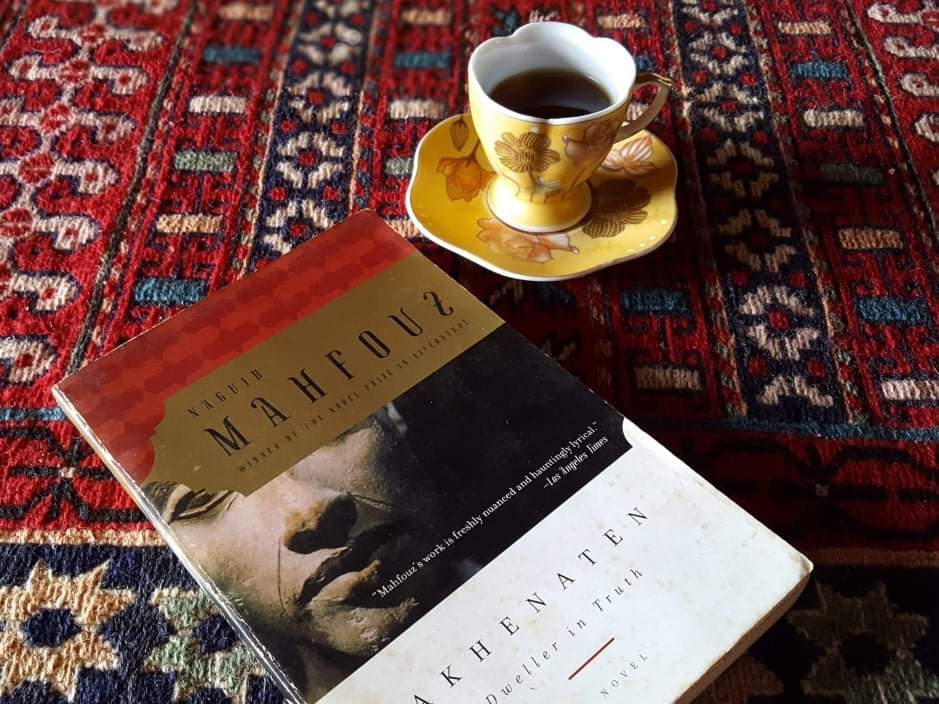
For its size, this book is surprisingly so many things at once! It is a subtle commentary on religion and faith aside from being an inquiry into the life of Egypt’s most controversial pharaoh who was persecuted and known as the “heretic pharaoh” for his monotheistic beliefs.
There is something so simple and elegant in the way Egyptian Nobel laureate Naguib Mahfouz allows Akhenaten’s story to unfold through the fictional narrator’s quest for the truth as he interviews the pharaoh’s contemporaries. Each chapter is named after these characters and it is through them that the reader is shown conflicting opinions and theories about the pharaoh and his powerful and beautiful queen, Nefertiti.
“…to set off along the path of history in search of truth, a path that has no beginning and no end, for it will always be extended by those who have a passion for eternal truth.”
What gave me goosebumps after reading it was when I learned that, out of all the days, The Metropolitan Opera was also streaming the premiere staging of Philip Glass’s Akhnaten! It became a mesmerizing continuation to what I had just read.
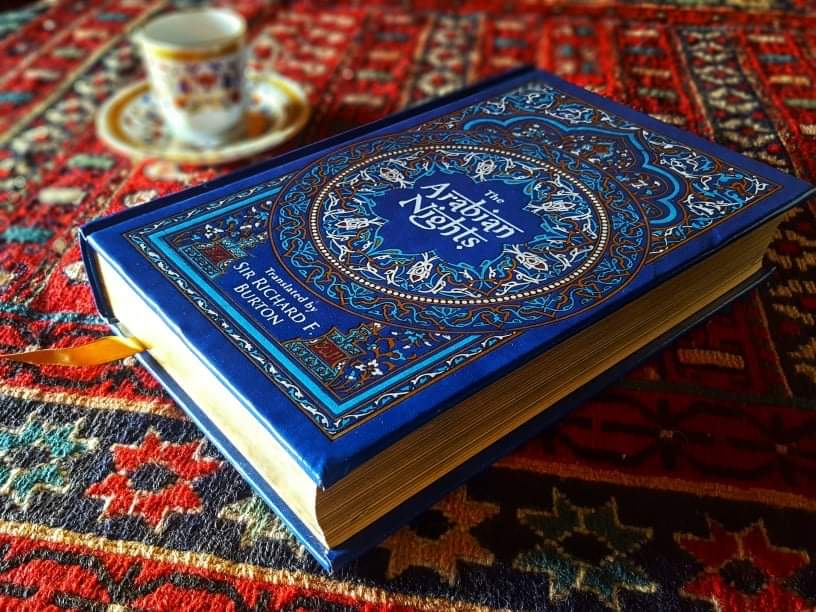
For this reading venture, I chose the controversial translation by Sir Richard Burton (1821-1890). I had to wade through hundreds of pages of old-fashioned language, terminology that are deemed politically incorrect nowadays, some unusual words that Burton coined himself, and content that was considered pornography in Burton’s time. (On a side note, Burton also translated the Kama Sutra and its Tunisian counterpart, The Perfumed Garden. Given those inclinations, this was not one of the watered-down versions we used to find lying around our grandparents’ living rooms.)
This edition has fine and tastefully-colored illustrations that are oases from the antiquated writing style that 21st Century eyes are no longer accustomed to. A collection of Eastern folk tales and stories compiled during the Islamic Golden Age, I enjoyed coming across real historical figures from that era that were woven alongside the fictional characters.
Haroun al-Rashid, the fifth Abbasid Caliph who ruled from 786-809 appears in many of the stories along with his Persian vizier Jafar who, by the way, was not a villain. The Islamic Empire was said to be at its most powerful under this caliph’s reign. They traded and maintained diplomatic ties with China, and because stories were also traded along the Silk Roads, it may not be too surprising that in the Arabian Nights, Aladdin is actually Chinese.
On the year Al-Rashid became caliph, his son Al-Mamun was born, and it would be Al-Mamun’s obsession for knowledge and a large-scale commissioning of translations of ancient texts from Mesopotamia, Persia, Greece, and India that would result into the Translation Movement — and perhaps, in addition, this compilation.
As one who finds this region of the world and that period of history intriguing, I still find this worthy of any book-lover’s shelf space. However, I now understand why later writers feel compelled to refashion the stories into something more relatable, or make adaptations for younger audiences without the sexual imagery, or modify the individual stories with a more discernible moral aim.
But whether we like it or not, the Arabian Nights in its entirety has revolutionized and influenced storytelling for centuries. After having read it myself, I realized that there is an aspect that is not emphasized enough: Hers was an unselfish act. Scheherazade volunteered herself at the risk of death to prove King Sharyar’s stereotypes wrong. By so doing, she saved not only her life, but other women’s lives as well — and through an unlikely medium!
After all, isn’t there inside each of us a Scheherazade, a being who depends on the magic of stories to survive?
The first page of this book quotes a passage from William Wordsworth’s The Prelude: “I had melancholy thoughts… A strangeness in my mind, A feeling that I was not for that hour, Nor for that place.”
For someone who has felt like an anachronism all her life, I felt like I owned these lines. It was as if I was meant to read the book just for this, and having come across it right at the start, the rest of the book was an additional literary present.
Ever since I read My Name is Red, I have been looking for the Orhan Pamuk I encountered there in each of his books. (I even looked for the actual Pamuk in Istanbul, persuading the whole family to visit his Museum of Innocence on the European side of the city in the hope of bumping into him.) I never seemed to find that Pamuk again.
But there is something in common with this book and My Name is Red. It is the way he allows different characters to gain control over the narration, thereby lending the reader a fuller grasp.
There are things Pamuk writes that make me uncomfortable, but these simultaneously compel me to admire a straightforwardness about life that only the most courageous writers can execute.
It is only through this book that I have seen for myself what all his works have in common — aside from providing details that escape the average consciousness, perhaps a result of having gone to architecture school — every book is a love story, no matter the plot or the characters: A love story between a writer and a place; between a writer and Istanbul, or Kars; between a writer and Turkey; a love story about the effects of the bittersweet passing of time on a place; about someone who recognizes a nation profoundly inside out, from its complicated politics to its inner conflicts and issues, its customs and traditions, from its spectacular buildings to its impoverished slums, from its most magnificent cities to its humble villages, from its splendid past to what it is now; a love story with a viewpoint only a lasting lover can deliver who, after having seen its glories and deepest flaws and undesirable secrets, remains and continues to love.
“There is nothing new in the world except the history you do not know.”
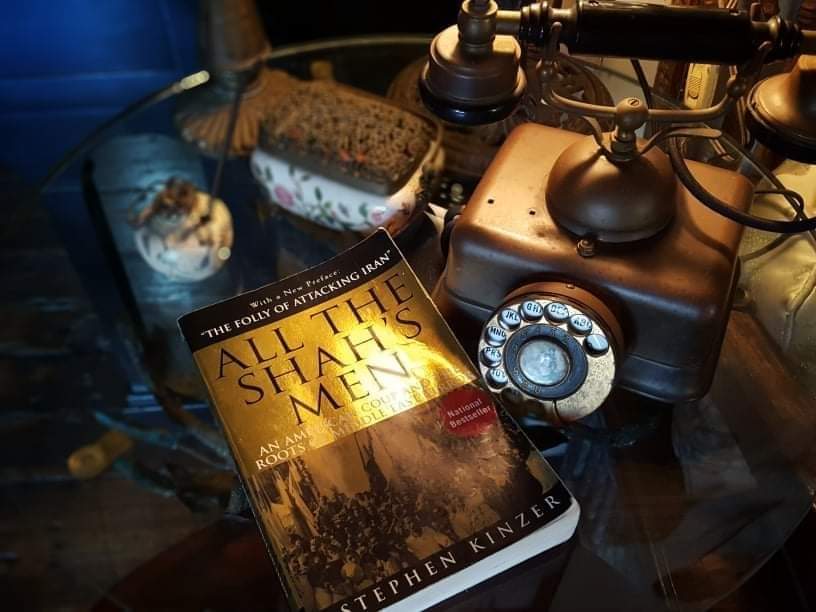
This quote by Harry Truman launches the book into previously confidential details about the 1953 Iranian coup d’état that had me gasping in shock from beginning to end!
It reads like espionage fiction but it is disquieting for the fact that it is nonfiction. It is by far the most comprehensive book I have read on Iran’s modern history. My notes and thoughts will remain private because I wish for my social media accounts to remain zones of peace haha, but I have to say that reading this reinforced my thoughts on Iran’s significance. It made me realize that many major circumstances around the world are ripples of a pivotal event that occurred in Iran more than half a century ago and that this nation continues to be a crucial piece on the chessboard of world history.
Ordered by my best friend as a gift in preparation for a trip to La Serenissima in 2020, it finally arrived in 2021, two weeks shy of Venice’s 1600th founding anniversary! It is disappointing that the trip got postponed and that the book took over a year to get delivered because of the pandemic, but part of me is glad that I did not return to Venice without having read this! The details in this book are so rich and they would enrich any traveler.
Jan Morris writes beautifully, intimately, but most of all, truthfully; sometimes even bluntly. She takes us not merely along the lesser known nooks of Venice but also through the unvisited alleys of her tumultuous and mysterious history. “Nothing in the story of Venice is ordinary!”
I especially find it fascinating that even though my readings of late have been focused on the East, Venice is usually part of the narrative. After all, “In Venice, as any gilded cockatrice will tell you, the East begins.” A major part of the Silk Route, Morris also notes that it is, in fact, the only Christian city marked in Ibn Khaldun’s map. It will not come as a surprise that my favorite chapter is the seventeenth — Arabesque, because “the allusions of Venice are arabesque.”
Reading this already felt like a return and the book made it possible for me to be there — “through literary proxy,” as Gaston Bachelard would say. It should also teach the reader about how and how not to travel: “Alas, the truth is that most visitors to Venice, in any case, move among her wonders mindlessly, pumped briskly through the machine and spewed out along the causeway as soon as they are properly processed.” Morris writes, too, of how the city’s “ingrained sadness is swamped with an effulgence of money-making.”
But despite its faults and tourism’s faults… it is still Venezia, which, according to Morris, is “an amphibious society peculiar to herself”; “half land, half sea… somewhere between a freak and a fairytale”; “a sexy city”; “a melancholy city at heart”; “a hall of curiosities.”
“The genuinely wild is not interested in ‘seeing the world’; it is exclusively interested in being.”
Freya Stark excellently reiterates Ruskin’s view as quoted by De Botton in The Art of Travel. This is the attitude towards traveling that I truly resonate with, and for this to be repeated in two books that I happened to read successively accentuates its significance!
“With Freya Stark one doesn’t know where the traveller stops and the writer begins,” observes The Illustrated Virago Book ofWomen Travellers. And yet in Beyond Euphrates, Stark constantly mentions the inadequacy of words in describing what she has seen and experienced in her travels: “No medium has yet been devised for the translation of life into language…” But other passages also show that she knew the power of words: “I often think how heavy a responsibility we should feel, how careful we should be, if we realized how great an influence casual words may have… If one’s words have been ever a help and never a hindrance, that surely is a useful life and no other justification needed for it.”
Reading while traveling, as I also usually do, she often weaves her contemplations on her literary companions — the Arabian Nights, having “the same charm as one finds in some travel books” and “far more like real life than many stories”; the Odyssey, a “triumph of beautiful words!”
We seem to prepare for a trip the same way, too: “The foundation of such travel is careful planning; I read all I could, plotted out days and distances.” But these are not the only things we have in common. We are drawn to the same countries! “I am going to Persia in a few weeks. One’s dreams come true.” A few chapters later, “It is wonderful to be writing from Persia… it is just Persia, some high land in the centre of the world, getting near the tableland where all history began.”
_ _ _
I was introduced to the writings of Gertrude Bell and Freya Stark at the same time in 2017 when I received The Illustrated Virago Book ofWomen Travellers as a birthday present, and which travelled with me to Nepal. Since then I have been looking for both their books: I have scored two for Gertrude Bell, zero for Freya Stark.
To my delight, Beyond Euphrates came in the mail on World Book Day! My literary tastes are not easily influenced by contemporary trends but I have friends who know me well enough to know exactly what books I would enjoy! I am grateful to have such friends that are even rarer than the books!
“One can have a very lofty idea of literature, and at the same time have a good-natured laugh at it,” Proust said in reply to a friend’s question on how seriously books should be taken.
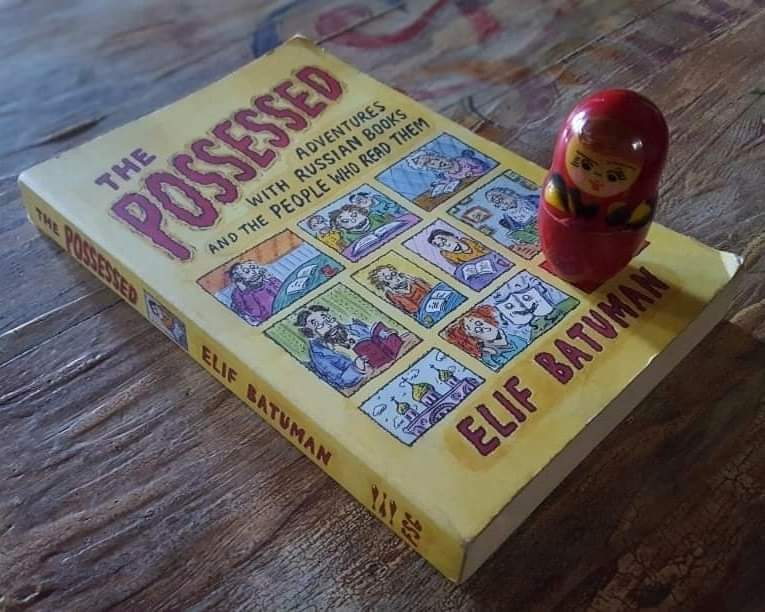
This is exactly what Elif Batuman does in this essay collection that doubles as a memoir. The title is lengthy and self-explanatory, and based on her book titles, one can tell how influenced she is by Russian literature: The Idiot , which I read in March, and The Possessed. It is entertaining how she manages to write such serious topics with a candid humor.
Although written seven years earlier than The Idiot I seem to have enjoyed this more as it does away with much of the the main character’s adolescent romantic concerns present in the former. Perhaps it was the three sections of her summer in Samarkand that made this more appealing to me, where she learns that the Old Uzbek language has a hundred different words for crying! Or maybe it was that passing line that I really loved, “Wasn’t the point of love that it made you want to learn more?”
Despite not being able to say that this will be a favorite, it’s funny how it contains passages that I know will stay with me forever.
Frankopan’s The Silk Roads was the first book I finished reading this year. By the time a dozen friends sent me messages that Joanna Lumley’s Silk Road Adventure on Netflix reminded them of me, the Silk Route had already taken over my neural pathways. Haha! When I was finally able to watch it, I noticed that at the end of the show, Joanna Lumley thanks Peter Frankopan and Colin Thubron. I did not know who the latter was. She led me to this book.
While Frankopan gives the reader a sweeping aerial view, Thubron walks down the roads and creates a more intimate experience. The two would be beautiful to read in succession — Frankopan for the historical details, Thubron for making history felt through intimacy. Aside from his own poetic voice, his writing becomes the voice of places and people who would have otherwise been destined to remain absent or silent in our consciousness.
“Sometimes a journey arises out of hope and instinct, the heady conviction, as your finger travels along the map: Yes, here and here… and here. These are the nerve-ends of the world… A hundred reasons clamor for your going. You go to touch on human identities, to people an empty map. You have a notion that this is the world’s heart.
Yet to follow the Silk Road is to follow a ghost. It flows through the heart of Asia, but it has officially vanished, leaving behind the pattern of restlessness: counterfeit borders, unmapped peoples. The road forks and wanders wherever you are. It is not a single way, but many: a web of choices.”
I did not want this book to end, and yet, even the best books do, but only to give us a deeper yearning to continue the journey beyond the pages.
The Library of Alexandria was not the first systematically organized library in the world. There was another one that was much older: The great library of Nineveh built circa 668 BCE by Assyrian King Ashurbanipal. Although it shared Alexandria’s fate through destruction by fire, it had another advantage — its clay tablets. Alexandria’s papyrus were reduced to ashes, but Nineveh’s cuneiform clay tablets that exceeded twenty thousand in number were merely baked afresh. Not only did this library preserve the Epic of Gilgamesh for future generations, the Nineveh excavation has become a prime source of information about the Assyrians and the Babylonians whose knowledge and culture they inherited.
We all know Nineveh — this wonder of the ancient world, for a time the largest city in the world — from the Old Testament account of Jonah, but for thousands of years, it could have remained a fictional city for unbelievers until its unearthing. “Without the evidence that these monuments afford, we might almost have doubted that the great city ever existed,” writes Austen Henry Layard.
“Existing ruins show that Nineveh had acquired its greatest extent in the time of the Assyrian kings mentioned in the Old Testament. It was then that Jonah visited it, and that reports of its size and magnificence were carried to the West, and gave rise to those traditions from which the Greeks mainly derived the information they have handed down to us concerning the city.” On a footnote, Layard adds, “With regard to the connection between the ornaments mentioned in the text and those of Greek architecture, it is now impossible to doubt that all that is Ionic in the arts of Greece is derived from the valleys of the Tigris and Euphrates.”
Austen Henry Layard, a name no longer too familiar to our generation, was once a household name in Europe when he discovered Nineveh in the 1840s. Quoting from the introduction, his journals “took Europe by storm and became one of those books that everyone had to read.” It has never gone out of print and is still considered to be among the greatest archaeological books of all time.
Layard being an art historian, a draughtsman, a cuneiformist, and a diplomat, among other things, this book is also so many things at once! The journals have occasional sketches of details from the excavations, he ponders on art, history, religion, civilizations, and takes the reader on his expeditions while painting a vibrant portrait of the time, places, the tribes and people that he encounters on his journeys, and writes vividly of life-threatening experiences. But the best parts are those moments of discovery that lead to spine-tingling wonder! He can be quite poetic, too: “On all sides, as far as the eye could reach, rose the grass-covered heaps marking the site of ancient habitations. The great tide of civilisation had long since ebbed, leaving these scattered wrecks on the solitary shore. Are those waters to flow again, bearing back the seeds of knowledge and of wealth that they have wafted to the West? We wanderers were seeking what they had left behind, as children gather up the coloured shells on the deserted sands.”
Reading this book recalls and intensifies the question that Jason Elliot posed in his book on Iran: “What will future archaeologists think of us when they find what we’ve left for them?”
This is a story about Egypt. The Egypt that seldom comes to mind when we think of Egypt. The awkward Egypt that won a nominal independence from a fading Ottoman Empire and finds itself ruled by the British. The Egypt in the 1900s and, a hundred years later, the Egypt on the cusp of the Millennium.
This is a scathing commentary about the relationship of East and West where the West is accused of holding one system of values dear to themselves while denying it to their fellows in the East; of foreign intervention; of emasculated natives accused in turn of being unfit to rule themselves; of world powers playing nations and people like chess pieces and waging dishonest wars.
This is about three intelligent women across time, the family that connects them, the men they love, and how they love differently. This is a story written with, and about, beautiful words: “‘Hubb’ is love, ‘ishq’ is love that entwines two people together, ‘shaghaf’ is love that nests in the chambers of the heart, ‘hayam’ is love that wanders the earth, ‘teeh’ is love in which you lose yourself, ‘walah’ is love that carries sorrow within it, ‘sababah’ is love that exudes from your pores, ‘hawa’ is love that shares its name with ‘air’ and with ‘falling’, ‘gharam’ is love that is willing to pay the price.”
But categorizing this as a romance novel would be to miss the point. This is very much a political novel, and Ahdaf Soueif is a gift to those who recognize the power of fiction to embody the intricacies of politics, history, and ethics as painstakingly as a work of nonfiction. Then again, love is a political act. Maybe we can call it a love story, too.





 The Book-Butterfly