Dalia Sofer: Septembers in Shiraz

The Iranian Jewish main character adds a layer of complexity to an already convoluted political terrain, and that is what sets it apart from the few books I have read about the Iranian Revolution.

Isaac Amin, a poet turned wealthy gemologist, is arrested and accused of being an Israeli spy.  His ethnicity and his status incriminates him. He is guilty of the blatant sin of being a wealthy Jew.

But who can hope for a fair trial? “If you think there is going to be a trial you’re going to be very disappointed.” There is only interrogation and torture.

Dalia Sofer writes with a slow burning suspense and unravels difficult matters with a remarkable ease.  From affecting scenes of prisoners reciting poetry to each other, to dialogues that confront social issues, to thoughts about religion and family, she breathes into them beautiful subtleties and realities that are literary pearls.

I judged this book by its cover. There seemed something saccharine about it that it took me a while to pick it up. But because of a long-standing personal intention to piece together a literary tapestry of the Fertile Crescent, I finally read it.

How wrong I was! There is absolutely nothing saccharine about post-Revolution Iran or in the physical and psychological tortures of their prisons.

The novel moves back and forth between Isaac in prison, his wife and daughter who take control of their situation in individual ways in Tehran, and a son studying architecture in New York.  We see almost nothing of Shiraz, and it takes a while to understand that Septembers of Shiraz is a wistful metaphor and allusion to brighter days that have become irredeemable.

Jasmine Darznik: Song of a Captive Bird

She is known in the West as the Sylvia Plath of Iran. As if the name Forugh Farrokhzad is not enough.

Although I understand the comparison because of the early and tragic deaths, of troubled lives we wouldn’t hope to emulate but whose courage to immortalize raw emotion we secretly envy, the turbulent relationships, also their notoriety of speaking against the constraints that society imposed on women and paving the way for other women in literature — but Forugh Farrokhzad is Forugh Farrokhzad to me. The rebel poet of Iran.

“𝐓𝐡𝐢𝐧𝐤 𝐚𝐛𝐨𝐮𝐭 𝐭𝐡𝐞 𝐰𝐫𝐢𝐭𝐞𝐫𝐬 𝐲𝐨𝐮’𝐯𝐞 𝐦𝐨𝐬𝐭 𝐚𝐝𝐦𝐢𝐫𝐞𝐝. 𝐖𝐡𝐚𝐭 𝐡𝐚𝐬 𝐠𝐢𝐯𝐞𝐧 𝐲𝐨𝐮 𝐬𝐨𝐥𝐚𝐜𝐞 𝐢𝐧 𝐭𝐡𝐞𝐢𝐫 𝐰𝐨𝐫𝐝𝐬? 𝐖𝐡𝐚𝐭 𝐡𝐚𝐬 𝐠𝐢𝐯𝐞𝐧 𝐲𝐨𝐮 𝐜𝐨𝐮𝐫𝐚𝐠𝐞? 𝐈 𝐜𝐚𝐧 𝐠𝐮𝐞𝐬𝐬 𝐭𝐡𝐚𝐭 𝐰𝐡𝐞𝐧 𝐲𝐨𝐮 𝐡𝐚𝐯𝐞 𝐛𝐞𝐞𝐧 𝐦𝐨𝐯𝐞𝐝, 𝐢𝐭’𝐬 𝐛𝐞𝐞𝐧 𝐛𝐲 𝐚 𝐰𝐫𝐢𝐭𝐞𝐫 𝐰𝐡𝐨 𝐡𝐚𝐬 𝐫𝐢𝐬𝐤𝐞𝐝 𝐡𝐨𝐧𝐞𝐬𝐭𝐲.”

Hers is one of the strongest female voices in Iranian literature. I first came across her poems in an anthology featuring a thousand years of Persian poetry by women and in a film by Abbas Kiarostami, and subsequently the haunting poetry that she extended to filmmaking in 𝘛𝘩𝘦 𝘏𝘰𝘶𝘴𝘦 𝘪𝘴 𝘉𝘭𝘢𝘤𝘬. It is an extremely moving and artistic documentary about a leper colony in Azerbaijan, from where she afterwards adopted a son of the colony’s two inhabitants.

When I learned that Jasmin Darznik had written a well-researched book on her life, I was intrigued. Written in the first person in a most lyrical and revealing voice with generous layers of pain and art, this is that book.

“𝐎𝐧𝐜𝐞, 𝐰𝐡𝐞𝐧 𝐦𝐲 𝐩𝐨𝐞𝐦𝐬 𝐰𝐞𝐫𝐞 𝐛𝐚𝐧𝐧𝐞𝐝 𝐛𝐲 𝐭𝐡𝐞 𝐧𝐞𝐰 𝐫𝐞𝐠𝐢𝐦𝐞 𝐚𝐧𝐝 𝐚 𝐩𝐮𝐛𝐥𝐢𝐬𝐡𝐞𝐫 𝐰𝐨𝐮𝐥𝐝𝐧’𝐭 𝐬𝐭𝐨𝐩 𝐩𝐫𝐢𝐧𝐭𝐢𝐧𝐠 𝐭𝐡𝐞𝐦, 𝐡𝐢𝐬 𝐩𝐫𝐞𝐬𝐬 𝐰𝐚𝐬 𝐛𝐮𝐫𝐧𝐞𝐝 𝐭𝐨 𝐭𝐡𝐞 𝐠𝐫𝐨𝐮𝐧𝐝. 𝐀𝐬 𝐢𝐟 𝐩𝐨𝐞𝐭𝐫𝐲 𝐜𝐨𝐮𝐥𝐝 𝐛𝐞 𝐝𝐞𝐬𝐭𝐫𝐨𝐲𝐞𝐝 𝐥𝐢𝐤𝐞 𝐚 𝐛𝐮𝐢𝐥𝐝𝐢𝐧𝐠 𝐨𝐫 𝐚 𝐛𝐨𝐝𝐲. 𝐁𝐮𝐭 𝐚𝐫𝐭 𝐰𝐚𝐬𝐧’𝐭 𝐥𝐢𝐤𝐞 𝐭𝐡𝐚𝐭. 𝐀𝐫𝐭 𝐜𝐨𝐮𝐥𝐝 𝐬𝐮𝐫𝐯𝐢𝐯𝐞; 𝐞𝐯𝐞𝐧 𝐰𝐡𝐞𝐧 𝐬𝐮𝐩𝐩𝐫𝐞𝐬𝐬𝐞𝐝, 𝐞𝐯𝐞𝐧 𝐰𝐡𝐞𝐧 𝐨𝐮𝐭𝐥𝐚𝐰𝐞𝐝, 𝐢𝐭 𝐜𝐨𝐮𝐥𝐝 𝐬𝐮𝐫𝐯𝐢𝐯𝐞 𝐟𝐚𝐫 𝐰𝐨𝐫𝐬𝐞 𝐟𝐚𝐭𝐞𝐬 𝐭𝐡𝐚𝐧 𝐟𝐢𝐫𝐞.” 

Amir Ahmadi Arian: Then the Fish Swallowed Him

SEPTEMBER 3, 2021

Out of all the post-Iranian Revolution books I have encountered, this one is rather unusual. Here, the revolution takes a backseat. Or does it?

Published in 2020, perhaps it is heralding the era of significant literature on the revolution’s longterm effects.

Named after the prophet Jonah, Yunus is a bus driver arrested during a strike, and sent to Tehran’s most notorious prison where his descent into absurdity deepens.

At first glance, the physical belly of the whale is Evin prison. But given a closer look, the psychological belly of the whale is madness and totalitarian politics from which there is no reprieve for this Yunus; and its haunting effects on the psyche, lasting.

The novel is unnerving, but even more so when the reader remembers scripture and realizes… Wasn’t the prophet Jonah sent to warn the people?

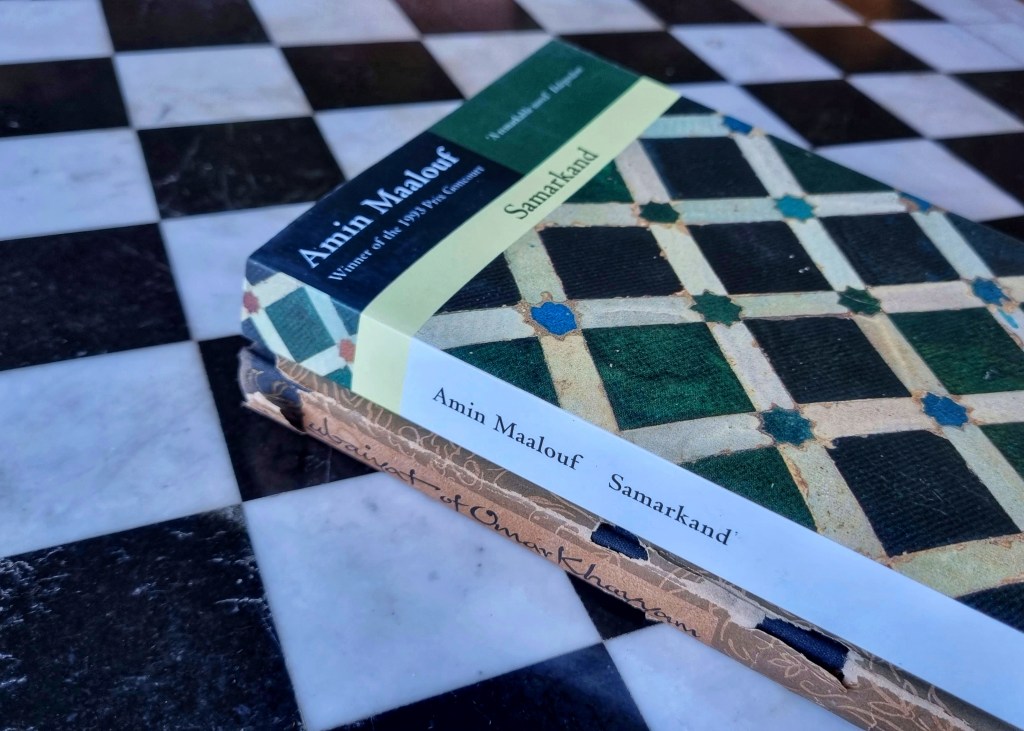
Amin Maalouf: Samarkand

November 20, 2021

It is almost impossible to tell a story of Omar Khayyam without involving his contemporaries: Hassan-i Sabbah, founder of the Order of Assassins, and Nizam Al-Mulk, Persian history’s most famous vizier — the very first victim of the Assassins. Their destinies and of Persia’s are so entwined that it would also be impossible to discuss Persian history without touching on this legendary trio. Amin Maalouf takes these characters and animates history with his seamless blending of fact and imagination, making Samarkand an entertaining read for any Persophile.

Chapter one wrests the reader from the present to vibrant 11th century Samarkand where a qadi tells Omar Khayyam, after the latter is nabbed in the marketplace and recognized as a failasuf (a philosopher or a person associated with the sciences widely considered profane at such a time and place), “The Almighty has granted you the most valuable things that a son of Adam can have — intelligence, eloquence, health, beauty, the desire for knowledge and a lust for life… I hope that He has not deprived you of the wisdom of silence, without which all of the foregoing can neither be appreciated nor preserved.”

The wise judge proceeds to present the young Omar a blank book wherein he could write his thoughts instead of speaking them out loud to a populace unprepared for his unconventional views. The pages would then be filled and would persevere through time to become what we know as The Rubaiyat.

The Rubaiyat is a collection of ruba’i or quatrains that would establish Khayyam’s name as a poet centuries later in the West, but the work of poetry would ironically make readers oblivious to the complete man — a polymath: mathematician, astronomer, scientist, philosopher, among many other things. Born eleven years after the death of the great Ibn Sina (Avicenna), Khayyam is considered his intellectual successor.

Although Samarkand is mainly about the imagined fate of The Rubaiyat’s original manuscript, in my mind these all took a backseat to a man whose genius was irrespective of the mode of expression. It made me feel wistful when the novel’s timeline left Omar Khayyam and the 11th century. It feels as if something of myself, sitting in a Persian garden while listening to him speak, remained in Samarkand.

“I am old now and need to know that I have a trusty man at my side — because of the manuscript. That is the most precious thing I possess. In order to take on the world, Hassan-i Sabbah has built Alamut (the Assassins’ fortress), whereas I have only constructed this minuscule paper castle, but I choose to believe that it will outlive Alamut.”

It did. It continues to…